
Say this three times fast: 四是四,十是十,十四是十四,四十是四十. If your tongue tripped around the third 十四, good — you just found the fastest tones workout in Chinese. Chinese tongue twisters are silly sentences built to tangle your tongue, and every tangle is a tones lesson in disguise.
Mandarin has four tones, and they change meaning completely: 妈 (mā, mum), 麻 (má, hemp), 马 (mǎ, horse) and 骂 (mà, to scold) are one sound with four tunes. Most learners hear the difference in a drill — the trouble starts when real sentences come at normal speed. That is exactly what tongue twisters train.
Why tongue twisters fix tones faster than drills
A tone drill is a gym machine: one muscle, one movement, very controlled. A tongue twister is a game of football: everything moves at once. When you say 四是四,十是十 at speed, your brain cannot think about each tone one by one — it has to feel the pattern, and feeling the pattern is what fluent speech is.
They also make mistakes funny instead of embarrassing. Nobody feels judged for tripping over 葡萄皮 (pútáo pí, grape skin) — the sentence is designed to trip you. Laugh, try again, go slower. That loop, try-stumble-laugh-retry, is how pronunciation improves, and it beats repeating 妈麻马骂 into a mirror.
How to practise tongue twisters (slow beats fast)
Speed is the reward, not the starting point. Run every twister through these four steps:
Step 1 — Read it slow. One word at a time, hand on the tone marks. Say each syllable clearly. Slow and right beats fast and wrong.
Step 2 — Clap the tones. Clap once per syllable — higher for a rising tone, lower for a falling one. Your hands will teach your voice the shape of the sentence.
Step 3 — Speed up in threes. Say it three times: slow, medium, then fast. If the fast one falls apart, drop back to medium. Never practise the mistake — practise the version you can say.
Step 4 — Record yourself. Your phone’s voice recorder is the honest teacher. Listen back: did my 四 sound like 十? One recording a day shows progress your ears miss in the moment.
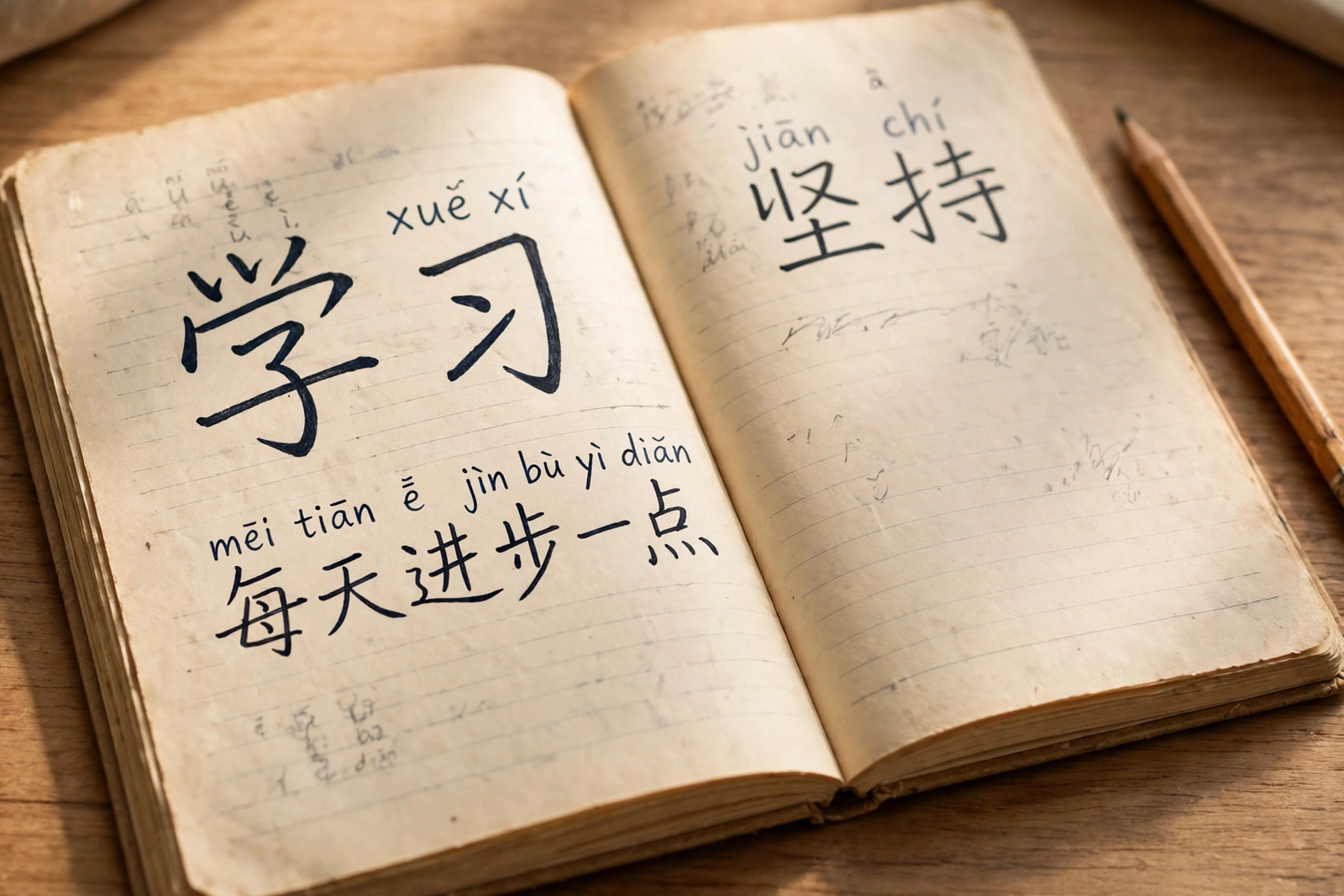
10 Chinese tongue twisters that train your tones
Start with numbers 1 to 3 — the easiest and most useful. Save number 10 for when you are feeling brave: it is about a hundred years old, and it has defeated better speakers than us.
| # | Twister | Pinyin | Meaning | Trains |
|---|---|---|---|---|
| 1 | 四是四,十是十,十四是十四,四十是四十。 | Sì shì sì, shí shì shí, shísì shì shísì, sìshí shì sìshí. | Four is four, ten is ten, fourteen is fourteen, forty is forty. | sì vs shí |
| 2 | 吃葡萄不吐葡萄皮,不吃葡萄倒吐葡萄皮。 | Chī pútáo bù tǔ pútáo pí, bù chī pútáo dào tǔ pútáo pí. | Eat grapes, don’t spit the skin; don’t eat grapes, yet spit the skin. | p, t, ch |
| 3 | 妈妈骑马,马慢,妈妈骂马。 | Māma qí mǎ, mǎ màn, māma mà mǎ. | Mum rides a horse; it’s slow, so mum scolds it. | mā, mǎ, mà |
| 4 | 黑化肥发灰,灰化肥发黑。黑化肥发灰会挥发,灰化肥挥发会发黑。 | Hēi huàféi fā huī, huī huàféi fā hēi. Hēi huàféi fā huī huì huīfā, huī huàféi huīfā huì fā hēi. | Black fertiliser turns grey, grey turns black — and it evaporates. | h vs f |
| 5 | 红凤凰,粉凤凰,红粉凤凰,粉红凤凰。 | Hóng fènghuáng, fěn fènghuáng, hóng fěn fènghuáng, fěn hóng fènghuáng. | Red phoenix, pink phoenix, red-pink phoenix, pink-red phoenix. | hóng vs fěn |
| 6 | 你会炖我的炖冻豆腐吗? | Nǐ huì dùn wǒ de dùn dòng dòufu ma? | Can you stew my frozen stewed tofu? | dùn vs dòng |
| 7 | 牛郎恋刘娘,刘娘恋牛郎,牛郎年年念刘娘,刘娘年年恋牛郎。 | Niú láng liàn Liú niáng, Liú niáng liàn Niú láng, Niú láng nián nián niàn Liú niáng, Liú niáng nián nián liàn Niú láng. | The cowherd loves Miss Liu, Miss Liu loves the cowherd — year after year. | niú, liú, nián, niàn |
| 8 | 老龙恼怒闹老农,老农恼怒闹老龙。 | Lǎo lóng nǎo nù nào lǎo nóng, lǎo nóng nǎo nù nào lǎo lóng. | The old dragon angrily troubles the old farmer; the old farmer angrily troubles the old dragon. | lǎo, nǎo, nào |
| 9 | 出东门,过大桥,大桥底下一树枣。 | Chū dōng mén, guò dà qiáo, dà qiáo dǐ xià yì shù zǎo. | Out the east gate, over the bridge — under it, a jujube tree. | dōng, dà, qiáo |
| 10 | 石室诗士施氏,嗜狮,誓食十狮。 | Shí shì shī shì Shī Shì, shì shī, shì shí shí shī. | Scholar Shi loves lions and swears to eat ten. | shí vs shī vs shì |
A quick note on number 2: 不 (bù) is written with a fourth tone, but before a third tone like 吐 (tǔ) it is spoken as bú. That little change is real Mandarin, not a mistake.
Number 10 is the famous “Lion-Eating Poet in the Stone Den,” written about a hundred years ago as a joke: nearly every word sounds like “shi.” Native speakers trip over it too — say it slowly and clearly and you are doing something genuinely impressive.
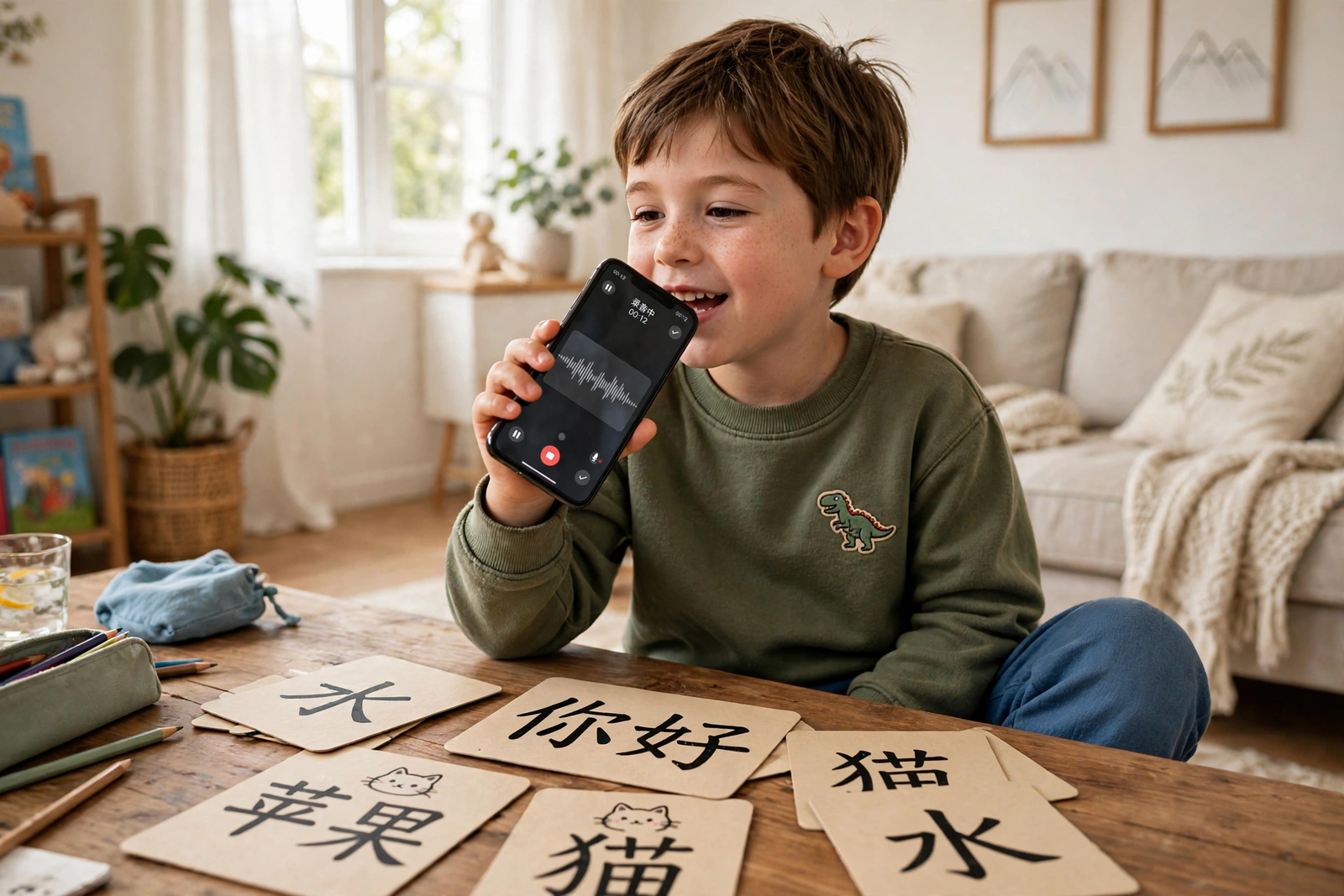
Your 7-day tongue twister plan
One twister a day, five minutes, at the dinner table or on the school run:
| Day | Twister | Goal |
|---|---|---|
| Day 1 | #1 四是四 | Say it slowly, 5 times |
| Day 2 | #2 葡萄皮 | Clap the tones as you say it |
| Day 3 | #3 妈妈骂马 | Record yourself and listen back |
| Day 4 | #4 黑化肥 | Medium speed, no stumbles |
| Day 5 | #5 + #6 | Two in one day — you are ready |
| Day 6 | #7 + #8 | Say them to someone else |
| Day 7 | #9 + #10 | Fast round — then teach one to a friend |
Mistakes that stop your tones improving
The first is racing. Practise fast and wrong and you memorise the wrong tones. Slow down until it is clean, then speed up.
The second is whispering. Tones live in your voice, and a mumbled tone is no tone at all. Say it out loud, at full volume — the neighbours will survive.
And the third is practising alone forever. Tones are for other people to hear — say your twister to a parent, a classmate or your teacher once a week and ask which words sounded off. That one honest answer is worth ten solo repetitions.
Quick Quiz
Test yourself on tongue twisters and tones. Click an answer to see if you are right — your score is at the top.
Score: 0/5
1. Why do 妈, 麻, 马 and 骂 mean completely different things?
2. What is step 1 when you practise a tongue twister?
3. In twister 3, 妈妈骑马,马慢,妈妈骂马, why does mum scold the horse?
4. What happens to 不 (bù) when it comes before a third tone like 吐 (tǔ)?
5. Which twister is the famous “Lion-Eating Poet in the Stone Den”?
Quick answers about Chinese tongue twisters
Do tongue twisters really help with tones?
Yes — they force you to produce tones at real speed, in real sentences, instead of one word at a time. They supplement your tone drills; they don’t replace them. Add five minutes of twisters a day.
Which twister should a beginner start with?
Number 1, 四是四,十是十. It uses only two sounds, teaches the tones of numbers you use every day, and you can master it in one sitting.
My child finds them too hard. What now?
Go shorter, not easier. Take half a twister — just 四是四,十是十 — and make it a game: who can say it three times without laughing? Fun first, speed later.
Pick one twister and say it out loud right now — slow, then faster. Feel how your mouth has to work? That is your tones getting stronger. Keep going with us: our Chinese programme teaches every HSK 1 word with pinyin, audio and characters side by side — and if you want to start today, try the free HSK 1 trial lessons and practise your tones with a real teacher.