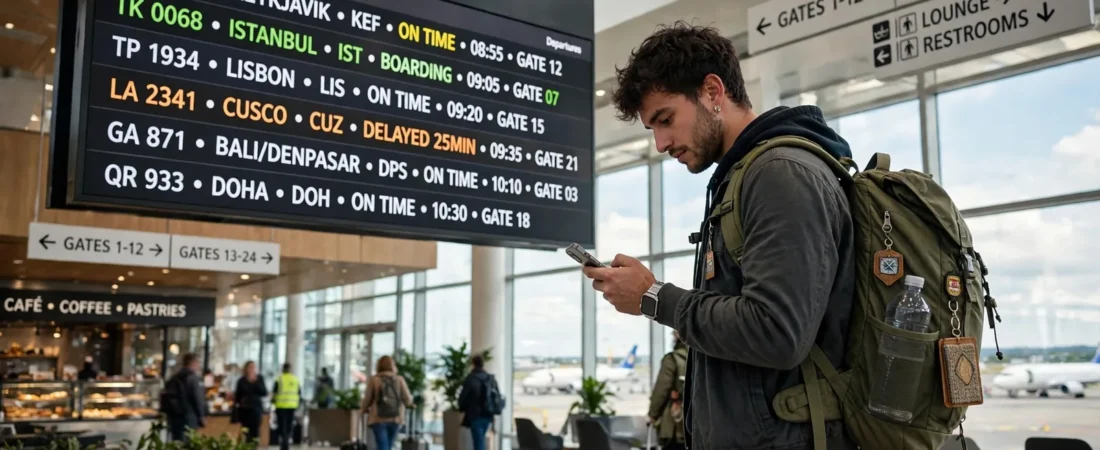
There is a moment in every trip when your phrasebook fails you: a town you cannot pronounce, a menu that is a mystery, a person waiting. Here is the secret experienced travellers know: you do not need the local language. You need 20 travel phrases — the same 20, in any language — and the confidence to say them badly, with a smile.
The phrases are not magic. The attitude is: say them slowly, point when you need to, and let people help you. They almost always want to.
Travel phrases for greetings and politeness in any language
Every language has a hello, a thank you, and a sorry. Learn those three first, in the local language — not in English.
Hello. In any country, greeting people in their language is the single most powerful thing a traveller can do. It says: I respect where I am. It takes five seconds to learn and it changes how every stranger treats you.
Thank you. Say it after every meal, every purchase, every direction. Travellers who say thank you in the local language get better service, better smiles, and sometimes an extra portion. It is the best deal in travel.
Excuse me / I’m sorry. One phrase, two jobs: getting attention politely, and apologising when you bump into someone or get something wrong. Learn it early and use it often. It buys you patience in every language.
Please. The word that turns a demand into a request. “Please” plus a pointing finger orders food, buys tickets, and asks for help in any country on Earth.
Do you speak English? Ask this in the local language first — even a clumsy attempt earns you goodwill. Then, whatever the answer, smile. Most people will try, and “a little” is usually more than enough.
Travel phrases for directions that work in any language
Getting lost is part of travelling. Staying lost is a choice. These five lines get you found again, anywhere.
Where is…? Add a pointing finger or a picture on your phone: where is the station, the bathroom, the hotel, the beach. The structure is the same everywhere — a question word, a place, and a hopeful face.
How far is it? Ask before you walk. What looks like ten minutes on a map can be an hour up a hill. Locals know the real distance, and they will tell you if you ask.
Left / right / straight ahead. Learn to recognise these three in the local language, even if you cannot say them yet. Every set of directions you will ever receive uses them.
Can you show me on the map? Hold out your phone. A finger on a screen crosses every language barrier. This one sentence has saved more travellers than any phrasebook ever printed.
I’m lost. Say it plainly, with a smile. In most of the world, a lost traveller is a guest, not a nuisance — and people compete to help.
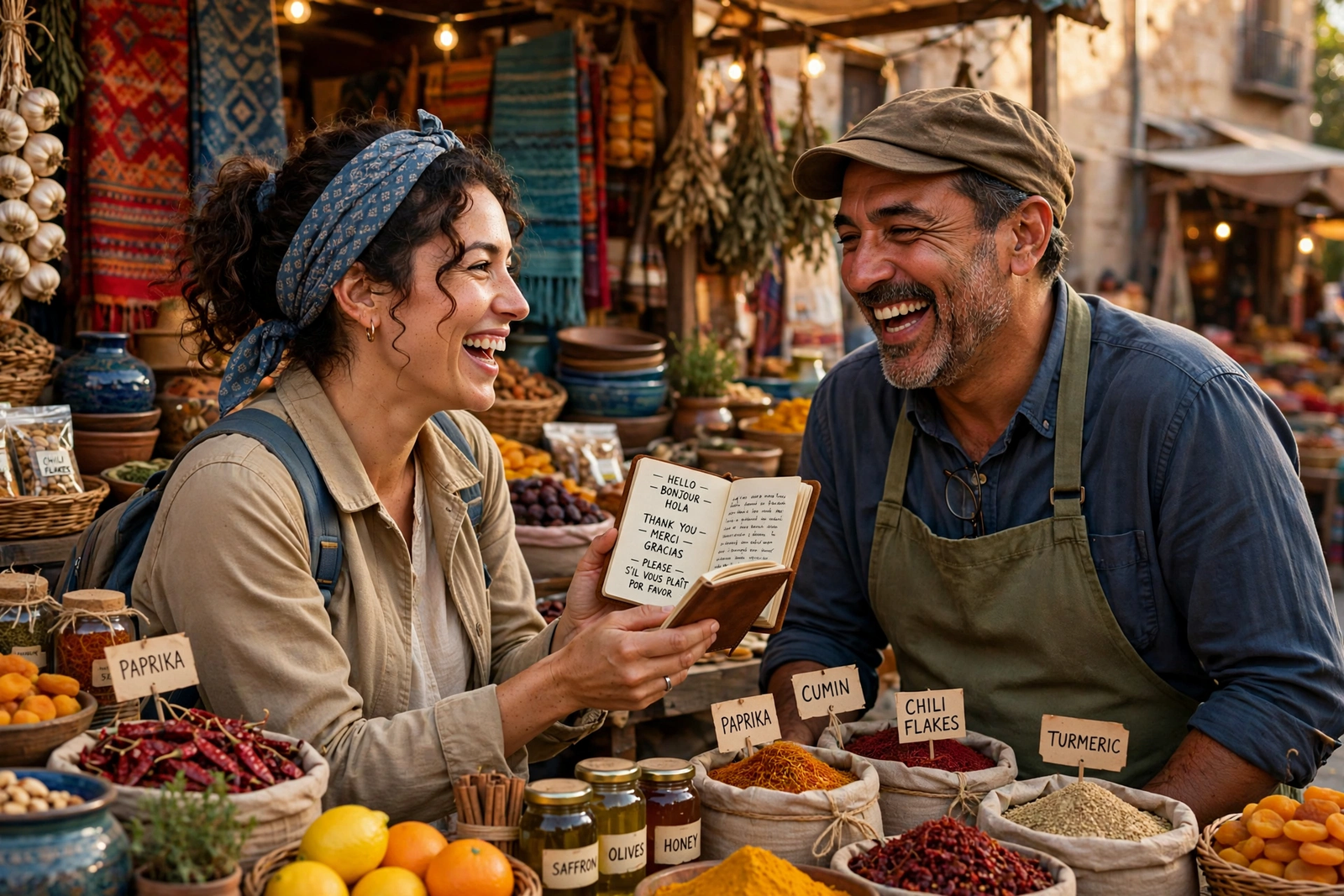
Travel phrases for eating, shopping and paying
Food is where travellers spend most of their money and have most of their fun. These five lines cover almost every meal you will eat abroad.
This one, please. Point at the menu, the dish on the next table, the item on the shelf. This single sentence orders food in every restaurant on the planet. It is the most useful travel phrase ever invented.
How much is it? Prices are rarely written the way you expect. Ask before you buy, not after — especially in markets, taxis, and anywhere without a printed menu.
The bill, please. In many countries the bill never arrives on its own. You have to ask. Learn this line before your first restaurant meal, or you will sit waiting while the staff wonder why you are still there.
Do you take cards? Cash is still king in many places. Ask before you order, not when the bill comes.
It’s delicious. Learn this one line in the local language and say it to the cook. It is the highest compliment a traveller can pay, and it is remembered. Travellers who praise the food get invited back — sometimes to the kitchen.
Travel phrases for problems and emergencies
You will probably never need these. Learn them anyway — the way you learn where the fire exit is.
Help, please. Short, loud, and universal. In a real emergency, nobody grades your grammar. Say the local version clearly and people will move.
I need a doctor / a hospital. Learn it before you need it, not after. Save the address of the nearest hospital in your phone on the first day of every trip.
I lost my bag / my passport. Know the words for bag and passport in the local language. Losing either is stressful enough without a language barrier on top.
Can you call a taxi for me? Hotels, restaurants and shops will do this happily. It is safer and cheaper than finding one yourself in an unfamiliar city at night.
Slowly, please. The phrase that saves every other phrase. When someone answers you in a rush of words you cannot follow, this one line fixes it. People slow down immediately — nobody minds being asked.
Your before-you-fly checklist
Do this once, before every trip, in whatever language you are visiting:
☐ Learn hello, thank you, excuse me and please — in the local language, out loud
☐ Save your hotel name and address in the local language, with a screenshot
☐ Practise “this one, please” while pointing at pictures of food
☐ Learn the words for bathroom, station, hospital and police
☐ Write down the local emergency number and your hotel’s number on paper
☐ Download an offline map and a translation app before you leave home
Twenty phrases, one afternoon of practice, and every trip gets easier. That is the best return on investment in travel.
Quick Quiz
Test yourself on the 20 travel phrases that work in any language. Click an answer to see if you are right — your score is at the top.
Score: 0/5
1. According to the post, which phrase should you learn first?
2. “This one, please” is described as…
3. When should you ask “Do you take cards?”
4. What fixes it when someone answers in a rush of words you cannot follow?
5. The post says twenty phrases take how long to practise?
Quick answers about travel phrases
Is it rude to speak English abroad?
Not if you try the local language first. Open with a local hello, ask “Do you speak English?” in the local language, then switch. Effort is what people notice — not fluency.
What if I pronounce everything wrong?
You will, and it does not matter. Locals can hear the difference between trying and not trying. A wrong word said with a smile beats a perfect sentence never spoken.
Should I learn phrases or grammar before a trip?
Phrases, every time. Grammar is for living somewhere; phrases are for visiting. Twenty useful sentences carry you further in a week than a month of verb tables.
What is the one phrase I should learn first?
Thank you, in the local language. It costs nothing, it works everywhere, and it is the phrase people remember you by long after you have gone home.
Travel is not about speaking perfectly. It is about showing up, trying, and letting people help you. Learn these 20 travel phrases before your next trip. If you want a guided path with audio, real dialogues and practice built in, explore our English programme and our Chinese programme for learners who love the same everyday, speak-first method.