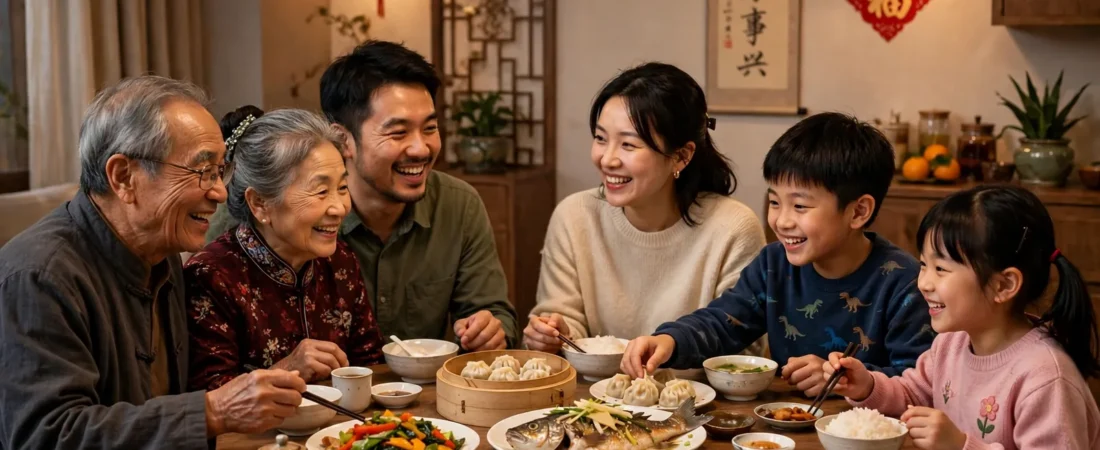
You meet your friend’s mother at a family dinner in Beijing. “Call her 阿姨,” your friend whispers. Then an older woman arrives — “叫奶奶”, call her grandma. Then a man your own age walks in and everyone calls him 叔叔 — uncle. Welcome to Chinese family words, the warmest and most confusing corner of the language. This guide sorts out the relatives English speakers keep mixing up.
The secret: Chinese family words are not about blood. They are about respect, age, and which side of the family someone belongs to. Learn the logic once, and the whole tree falls into place.
Chinese family words for grandparents: two grandmas, two grandpas
English has one word for grandma. Chinese has two — the difference is which side of the family she is on.
奶奶 nǎinai — father’s mother (paternal grandma). This is the grandma on your dad’s side — warm, close, and the first grandma word most learners meet.
外婆 wàipó — mother’s mother (maternal grandma). The 外 (wài, “outside”) marks the mother’s side. It sounds distant in translation, but it is not distant in feeling — 外婆 is just as beloved.
爷爷 yéye — father’s father (paternal grandpa). The grandpa on your dad’s side. Children say 爷爷 with real affection — he is the one with the stories and the sweets.
外公 wàigōng — mother’s father (maternal grandpa). Again, 外 marks the mother’s side. Same love, different label. Once you see the pattern — plain word for dad’s side, 外 for mum’s side — you can work out the whole older generation.
Chinese family words for parents, uncles and aunts
Parents are simple. Uncles and aunts are where English speakers get lost — Chinese sorts them by age and by side, and English does not.
爸爸 bàba and 妈妈 māma — dad and mum. Easy, warm, universal. Adults talking about their parents say 我爸 wǒ bà and 我妈 wǒ mā, the short forms.
伯伯 bóbo — father’s older brother. Your dad’s big brother gets his own word. He is senior to your dad, so he is senior to you.
叔叔 shūshu — father’s younger brother. Your dad’s little brother. And here is the surprise: 叔叔 is also what you call any man roughly your parents’ age, even a stranger. That man at the dinner was probably a family friend, and 叔叔 was a sign of respect, not a statement about his age.
姑姑 gūgu — father’s sister. Your dad’s sister, on either side of the age line. Her husband is 姑父 gūfu.
舅舅 jiùjiu — mother’s brother. Your mum’s brother. His wife is 舅妈 jiùmā. Same pattern again: one set of words for dad’s side, another for mum’s side.
阿姨 āyí — mother’s sister, and also any woman your parents’ age. Your mum’s sister is 阿姨, and so is the neighbour, the teacher, the family friend. When your friend said “call her 阿姨”, they were not saying she was your aunt — they were saying: treat her with the warmth you would give family.
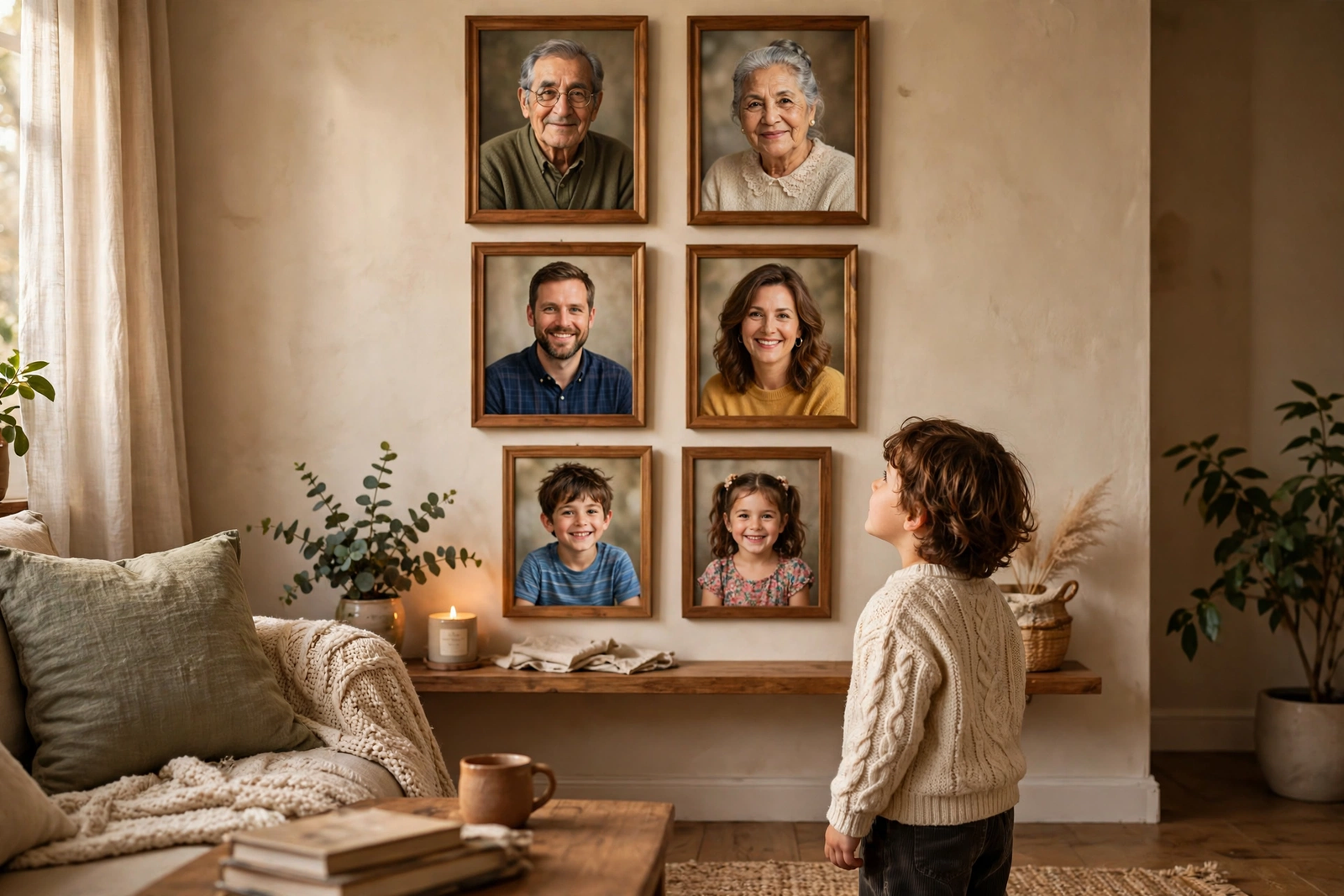
Chinese family words for brothers, sisters and cousins
Chinese does not have one word for “brother”. It has four — and they record birth order, which matters a great deal in Chinese families.
哥哥 gēge — older brother. 弟弟 dìdi — younger brother. The older one is 哥, the younger one is 弟. You never just say “my brother” in Chinese without saying which one — the order decides who looks after whom.
姐姐 jiějie — older sister. 妹妹 mèimei — younger sister. Same logic: a 姐姐 looks after you; a 妹妹 is the one you look after.
堂哥/堂弟/表哥/表弟 — cousins, sorted by side and age. 堂 (táng) marks cousins on your father’s side; 表 (biǎo) marks your mother’s side. Then 哥, 弟, 姐, 妹 mark older and younger. It sounds complicated — until you realise it is just the same two rules applied again.
孩子 háizi — child. 儿子 érzi — son. 女儿 nǚ’ér — daughter. A grandchild is 孙子 sūnzi (son’s child) or 外孙 wàisūn (daughter’s child) — the side rule again.
The relatives English speakers mix up most
Three confusions cause almost all the mistakes. Fix these and you are most of the way there.
奶奶 vs 外婆. Both are “grandma”: 奶奶 is dad’s mum, 外婆 is mum’s mum. Using the wrong one at a family gathering is like calling your teacher by the wrong name — everyone smiles, but everyone notices. When in doubt, copy what the children call her.
叔叔 vs 阿姨 as respect words. English speakers hear “uncle” and “aunt” and assume blood relation. In Chinese, 叔叔 and 阿姨 are also respect titles for any adult of your parents’ generation. Call a family friend 叔叔 and you have paid them a compliment; use their first name and you have done the opposite.
哥哥/姐姐 for strangers. Young adults often call a slightly older stranger 哥哥 or 姐姐 — “big brother”, “big sister” — as a friendly address: a shop assistant, a fellow student, a kind stranger on the train. It sounds strange in English and perfectly warm in Chinese.
Your one-week family words checklist
Family words stick best when you attach them to real people:
☐ Draw your own family tree and label everyone in Chinese — both sides
☐ Learn 奶奶, 外婆, 爷爷 and 外公, and say which grandparent is which
☐ Practise 哥哥, 弟弟, 姐姐 and 妹妹 with your own brothers and sisters
☐ Learn 叔叔 and 阿姨 as respect words, and notice who gets called what
☐ Watch a Chinese family drama and listen for the family words — count how many you catch
☐ Teach one family member to say “grandma” both ways, and explain why there are two
A family tree with Chinese labels is the best vocabulary poster you will ever make — personal, visual, and on your wall every day.
Quick Quiz
Test yourself on Chinese family words. Click an answer to see if you are right — your score is at the top.
Score: 0/5
1. 奶奶 is your…
2. What does the character 外 mark in family words like 外婆 and 外公?
3. Your father’s younger brother is your…
4. 姐姐 means…
5. Why might a family friend be called 叔叔 or 阿姨?
Quick answers about Chinese family words
Why does Chinese have so many words for relatives?
Because the words carry information English leaves out: which side of the family, and who is older. In a culture where family order matters, the language records it.
What should I call my Chinese friend’s parents?
叔叔 and 阿姨 — “uncle” and “aunt” — unless they invite you to use their names. It is warm, respectful, and exactly what a Chinese friend would do.
Is 外婆 less close than 奶奶?
Not at all. 外 means “mother’s side”, not “outsider”. Many children are closer to their 外婆 than anyone else. The word is a label, not a ranking.
Do young Chinese people still use all these words?
Yes — especially with family. Young people might simplify with friends, but at family gatherings the full set comes out. Learn them, and you will understand every Chinese dinner table you sit at.
Chinese family words look like a maze, but they are really a map. Learn the two rules — which side, older or younger — and the maze opens up. If you want a guided path with audio, real dialogues and practice built in, explore our Chinese programme and our English programme for learners who love the same everyday, speak-first method.