
Forty questions. About thirty-five minutes. And every recording plays exactly once. That is the HSK 3 listening test in one breath — and it is the section that surprises more learners than any other, because reading and writing let you pause and think, while listening does not wait for you.
The good news: HSK 3 listening practice is the most trainable part of the exam. The audio is slower than real life, the topics are everyday — trains, weather, dinner plans — and the questions ask about facts, not tricks. This guide shows you what the test actually plays, plus a four-week plan to get your ears ready.
What the HSK 3 listening test actually asks
The current HSK 3 paper has 80 questions and takes about 90 minutes. Listening comes first: 40 questions in about 35 minutes, worth 100 of the 300 points, and you need 180 overall to pass. The audio plays once — at HSK 1 and HSK 2 each item plays twice, but from HSK 3 on, once is all you get.
The 40 questions come in four parts of ten: short dialogues matched to a picture or a simple answer first, then longer conversations and short talks, each followed by one or two questions. The topics stay close to daily life: shopping, school, work, travel, health and the weather.
One date to know: from the 13 December 2026 sitting, a revised HSK 3 paper begins, with listening cut to 30 questions and a short speaking paper added. Check the format with your test centre if your date falls after that change — the practice here works for both versions.
HSK 3 listening practice: the three kinds of audio you will hear
Nearly all HSK 3 listening falls into three kinds of audio. Recognise each one, and you will know what to listen for.
1. Everyday conversations
Most of the test is two people talking about ordinary plans. The question usually asks about a time, a place or a decision.
明天早上八点,我们在学校门口见。
Míngtiān zǎoshang bā diǎn, wǒmen zài xuéxiào ménkǒu jiàn.
“Tomorrow at 8 in the morning, let’s meet at the school gate.”
Notice how much sits in one short sentence: a day (明天), a time (八点), a place (学校门口). Exam questions love exactly these details, so train your ear to catch numbers and places first.
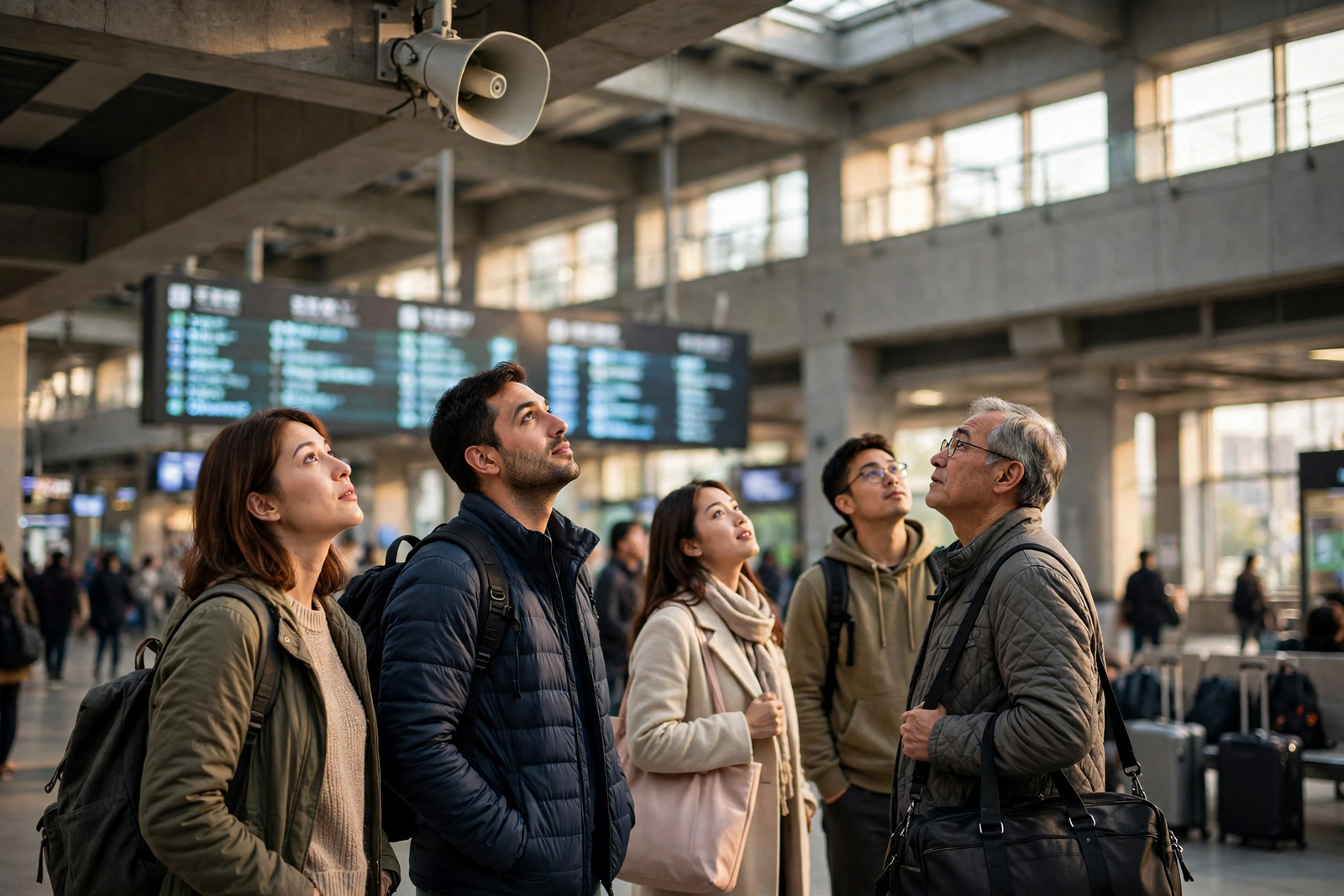
2. Announcements — the loudspeaker voice
Announcements are the audio type beginners fear most — the voice sounds formal and the sentences run long. In practice they are the easiest to predict: who should listen, what is happening, and what to do.
各位旅客请注意,前往上海的列车就要开车了,请大家排队上车。
Gèwèi lǚkè qǐng zhùyì, qiánwǎng Shànghǎi de lièchē jiù yào kāichē le, qǐng dàjiā páiduì shàngchē.
“Attention, all passengers: the train to Shanghai is about to depart. Please queue up and board.”
Learn these announcement words: 各位旅客 (all passengers), 请注意 (please note), 就要 (about to), 排队 (queue up). Once you know them, an announcement stops sounding like noise.
3. News and weather — short and factual
The short talks in the later parts often sound like a newsreader: a few facts, delivered in order, with no small talk. Weather reports are the classic example.
今天天气晴,最高温度二十五度。
Jīntiān tiānqì qíng, zuìgāo wēndù èrshíwǔ dù.
“Today is sunny, with a high of 25 degrees.”
And a warning you will hear in real life as often as in the exam:
请注意,明天有雨,出门别忘了带伞。
Qǐng zhùyì, míngtiān yǒu yǔ, chūmén bié wàng le dài sǎn.
“Please note, it will rain tomorrow. Don’t forget your umbrella when you go out.”
News audio rewards a different habit: listen for the facts in order. Who, what, when, how much — the question asks for one of those four.
Five listening habits that actually work
Technique beats talent here. These five habits separate learners who freeze from learners who keep scoring.
Read the question before the audio starts. You get a few seconds of silence before each recording — use them. If the question asks “什么时候?” listen for a time; “在哪里?” means listen for a place. Guessing blind wastes your one play.
Catch the question words. 谁 (who), 什么 (what), 哪里 (where), 什么时候 (when), 为什么 (why), 怎么 (how). Most HSK 3 listening questions begin with one of these. Hear the question word and you already know what kind of answer to hunt for.
Let one missed word go. This is the hardest habit and the most important. One unknown word is one word — but stopping to think about it costs you the next two sentences, and the answer is usually there.
Listen twice in practice, never in the test. At home, play a clip once and answer, then play it again and check what you missed. That gap is where your learning lives — and on test day, the single play will feel normal.
Shadow the audio out loud. Repeat what you hear a half-second behind the speaker, like an echo. It feels silly for a week — then your mouth starts recognising sounds your eyes never taught it.
Your four-week HSK 3 listening plan
Fifteen to twenty minutes a day is enough — the plan builds from slow dialogues to real-speed news, one small step at a time.
| Week | Daily practice | Minutes |
|---|---|---|
| Week 1 | Slow HSK 3 dialogues; write down every time and place you hear | 15 |
| Week 2 | Short announcements and weather reports; shadow each clip once | 15 |
| Week 3 | Full practice listening section, timed, one play only | 20 |
| Week 4 | Real Chinese news clips plus one timed practice test every other day | 20 |
Keep a small notebook for the words you keep missing — usually the same ten or twenty, and once they are yours, whole sentences unlock. By week four, the exam pace feels familiar, not frightening.

Quick Quiz
Test yourself on HSK 3 listening. Click an answer to see if you are right — your score is at the top.
Score: 0/5
1. How many listening questions are on the current HSK 3 paper?
2. How many times does the HSK 3 listening audio play?
3. What does 各位旅客请注意 mean at the start of an announcement?
4. In the weather clip, what is the high temperature today?
5. What should you do if you miss a word during the test?
Quick answers about HSK 3 listening practice
How long is the HSK 3 listening section?
About 35 minutes for 40 questions on the current paper, audio played once. A revised paper from 13 December 2026 has 30 listening questions instead — confirm the format with your test centre.
Does the audio really play only once?
Yes. HSK 1 and 2 play each item twice, but from HSK 3 the recording plays once, with no pause or replay. That is why timed, one-play practice matters more than extra vocabulary.
What should I do if I miss a word during the test?
Keep listening. Mark your best guess and move on. One missed word costs one question; freezing over it can cost you the next three.
How much listening should I do every day?
Fifteen to twenty focused minutes beats an hour of background noise. Listen actively — pen in hand, answering a question — and your ears improve fast.
Listening is the one HSK 3 skill you cannot cram the night before — but fifteen minutes a day of real news, announcements and conversations builds it faster than you think. Start tonight: pick one short Chinese news clip, listen twice, and write down the number or time you heard. For a guided path with audio lessons and practice built in, explore our Chinese programme or start free with our free HSK 1 trial — your ears will thank you on test day.