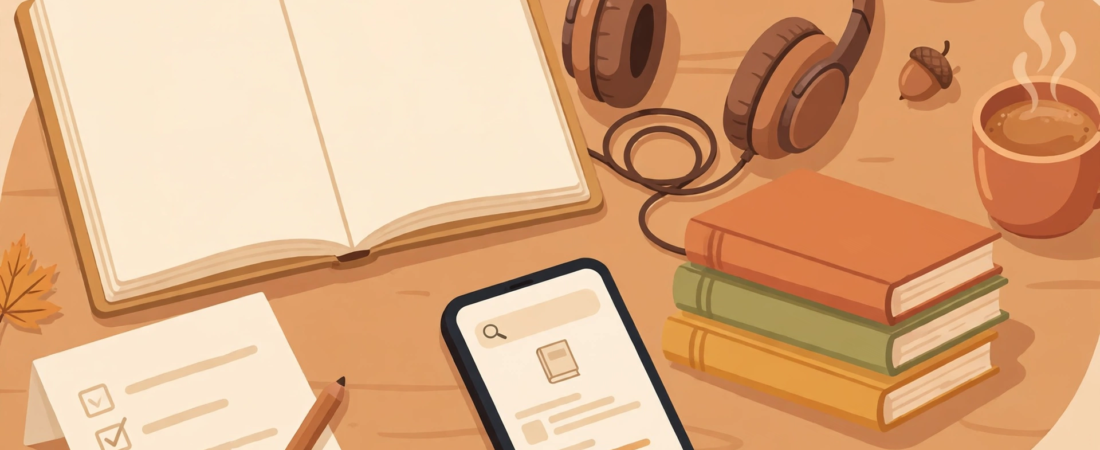
Black Friday is coming on Friday, November 27, 2026, and your feed is about to fill up with “learn any language in 30 days” deals. Some of them are genuinely good. Most of them are not. So before you tap “buy now” on anything, let us sort the real bargains from the traps — because the best language purchase is the one you actually use in January.
Here is the honest truth nobody on a sale page will tell you: a discounted app you open twice is still wasted money. A full-price notebook you fill cover to cover is a bargain. This guide is about that difference. Seven things worth buying when the price drops, three things to walk past no matter how red the discount tag looks, and a simple checklist to run through before you spend a single dollar.
1. A Good Dictionary App Subscription
A real dictionary is not the same as a free translator. A good dictionary app shows you example sentences, common collocations, and how a word changes meaning in different contexts. If you are learning Chinese, that means seeing 你好 (nǐ hǎo) next to the situations where people actually say it. If you are learning Spanish, it means knowing when “embarazada” does not mean what you think it means.
What to check before paying: does it work offline? Does it include audio for every entry? Can you save words into your own lists? A subscription is worth it only if you will open it at least a few times a week. If you mostly guess words from context and never look anything up, skip it — a free dictionary will do the same job for you.
2. Quality Headphones for Listening Practice
Listening is the skill most learners neglect, and the reason is simple: bad audio makes it miserable. Tinny phone speakers blur tones in Chinese, swallow endings in Korean, and turn fast Spanish into a mumble. A decent pair of headphones changes that overnight. Suddenly you can hear the difference between shì and sì, or between “pero” and “perro.”
You do not need the most expensive pair on the shelf. You need comfortable ones you can wear for thirty minutes without your ears hurting, with clear sound and a microphone good enough for shadowing practice. Try them on if you can. If you study on the bus or while the kids are playing, noise isolation matters more than brand names. Check the return policy before you buy — headphones that hurt after twenty minutes are useless, whatever the discount.
3. A Graded Reader Set
Here is a secret from every teacher I know: the learners who finish books are the learners who read books at their level. Graded readers are stories written with limited vocabulary, so you can read a whole chapter without stopping every sentence. That feeling — finishing a real story in your target language — is worth more than a hundred flashcards.
Look for a set that matches your level honestly, not the level you wish you were at. A set with audio included is a bonus: read along while you listen, and your pronunciation improves without extra study time. If you are buying for a child, let them pick the cover that catches their eye. The best graded reader is the one that gets opened.

4. A Paper Notebook System That Fits Your Life
Yes, paper. In a world of apps, a notebook still does something no screen does well: it slows you down just enough to think. A simple system works best. One page for new words with example sentences, one page for mistakes you keep making, one page for phrases you want to steal from shows and songs.
What makes a notebook worth buying? Paper thick enough that ink does not bleed through, a size you will actually carry, and a layout that does not fight you. Dotted or lined, hardcover or soft — that is personal taste, not quality. Buy the one you will reach for at breakfast, not the prettiest one on the shelf. And if you already have three half-empty notebooks at home? That is your answer. Use those first.
5. An Online Course You Have Already Trialled
This one has a rule, and the rule is the whole point: only buy a course you have already tried. Most good courses offer a free lesson or a trial week. Take it. Do one full lesson. Did you finish it? Did you enjoy it? Could you see yourself doing lesson twelve?
If the answer is yes, a Black Friday discount on that course is one of the best purchases on this list. If you have never opened the course, a discount is not a reason to start. Courses do not teach you by sitting in your account. They teach you when you show up. Buy the course you have already shown up for — and check whether the discount applies to the level you actually need, not just the beginner bundle.
You can keep building on what you have started with the free lessons on LingoBubbo — try the English hub, the Chinese hub, the Korean hub, or the Spanish hub and see which one pulls you back the next day.
6. A Kids’ Picture-Book Bundle
If you are raising a bilingual child, or teaching one, picture books are the single highest-value purchase you can make. A child who hears the same story ten times learns the rhythm of the language before they learn the rules. They point, they repeat, they ask “again!” — and that is real language acquisition happening on your lap.
What to check: are the sentences short and natural? Do the pictures actually match the words on the page? Is there audio, or can you read it aloud confidently yourself? A bundle works when the books grow with the child — a few very simple ones, a few slightly harder ones. Avoid bundles where every book is the same level; your child will outgrow them in a month.
7. A Language Exam Prep Book
Planning to take the HSK, TOPIK, DELE, or an English test like the TOEFL or IELTS? A solid prep book is worth every cent — but only if the exam date is real. Buy it when you have a test date on the calendar, or at least a month you have committed to. A prep book bought “someday” becomes a paperweight with a very official cover.
Check three things: does it match the current version of the exam? Does it include full practice tests with answer explanations, not just answer keys? And does it explain why the wrong answers are wrong? That last one is what separates a good prep book from a stack of photocopied questions. If you are preparing for HSK, make sure the book states clearly whether it follows the HSK 2.0 or HSK 3.0 syllabus — they are not the same test.
3 Things to Skip — No Matter How Big the Discount
Now the other side. These three show up in every Black Friday sale, and they catch smart people every year.
Lifetime deals for apps you have never tried. “Pay once, use forever” sounds wonderful until you realize you hate the app’s teaching style. Forever is a long time to avoid opening something. Try the free version for two weeks first. If you are still using it on day fourteen, then look for a deal. Lifetime offers come back around; your money does not.
Bulk flashcard packs you will never finish. Ten thousand flashcards sounds impressive. It is also a mountain nobody climbs. Most learners use the first few hundred cards and abandon the rest — and a half-finished deck teaches you guilt, not vocabulary. Smaller, focused sets beat giant packs every time. Learn the words you actually need this month, then buy the next set when you are ready.
Cheap gadgets that distract. Talking pens, translation earbuds that promise to translate the world, tiny devices that claim to teach you while you sleep. If it sounds like magic, it is marketing. The tools that work — headphones, books, a notebook, a good course — are boring. Boring is fine. Boring is what gets used on a Tuesday night when nobody is watching.

The 30-Second Decision Checklist
Before you buy anything this Black Friday, run through this list. Buy it only if you can say yes to all five.
- Have I tried it, or at least a free version of it? If no, try first, buy later.
- Will I use it at least three times a week for the next month? Be honest. “Maybe” is a no.
- Does it match my real level, not my wishful level? Too hard gathers dust just as fast as too easy.
- Do I already own something that does this job? Check the drawer before you check out.
- Would I buy it at full price? If the only reason is the discount, the discount is the product — and you do not need it.
If an item passes all five, congratulations: you found a real deal. If it fails even one, close the tab. The sale will be back next year. Your learning time will not.
Try It Yourself: The Shopping List Exercise
Here is a small exercise to do before the sales start. It takes ten minutes, and it will save you from most impulse buys.
Take a piece of paper and write down three things: the language you are learning, your current level in one honest sentence, and the one skill you most want to improve before spring — listening, speaking, reading, or writing. Now look at the seven buys above and circle only the ones that serve that one skill. That is your shopping list. Everything else is noise.
Then, for each circled item, write one sentence about how you will use it in a normal week. “I will listen to one graded reader chapter with headphones on my commute.” “I will write five new Spanish phrases in my notebook after dinner.” If you cannot write that sentence, cross the item off. A purchase without a plan is just a receipt.
Share your list in the comments — what made your list, and what did you cross off? Other learners read those comments, and your “I almost bought this but did not” might save someone else the same money.
Frequently Asked Questions
Is Black Friday actually a good time to buy language courses? Often, yes — many course providers run their biggest discounts of the year around Black Friday, and if you have already trialled a course you like, this is a sensible time to commit. Just check the current price on the provider’s own site before you buy, and make sure the discount applies to the level and length you actually need.
What is the single best Black Friday buy for a complete beginner? A graded reader set at your level, or a kids’ picture-book bundle if you are learning with a child. Beginners need wins, and finishing a whole story is the biggest win there is. Headphones come a close second if you plan to listen every day.
Should I buy a lifetime app subscription if I have never used the app? No. Try the free version for at least two weeks first. A lifetime deal is only a deal if you still love the app after the novelty wears off.
What if I already own a lot of language materials I never finished? Then your best Black Friday purchase costs nothing: open what you already own. Pick one unfinished book or course, set a tiny daily goal — ten minutes, one page, one lesson — and start there. New materials will still be on sale next year.
The Real Deal Is the Habit
Here is the thing about Black Friday and language learning: the sale ends on a Friday, but the learning happens on all the ordinary Tuesdays after it. The headphones, the books, the course — none of them learn the language for you. They just make the hours you put in a little easier, a little more pleasant, a little more likely to happen again tomorrow.
So buy the things that help you show up. Skip the things that only help you feel like you showed up. And if you are not sure which is which, start free: pick a lesson on LingoBubbo — English, Chinese, Korean, or Spanish — do one lesson tonight, and see if you come back tomorrow. That is the only test that matters.
What is on your Black Friday list this year? Tell us in the comments — and if this guide saved you from a bad buy, send it to a friend who is learning a language too. They will thank you in January.