
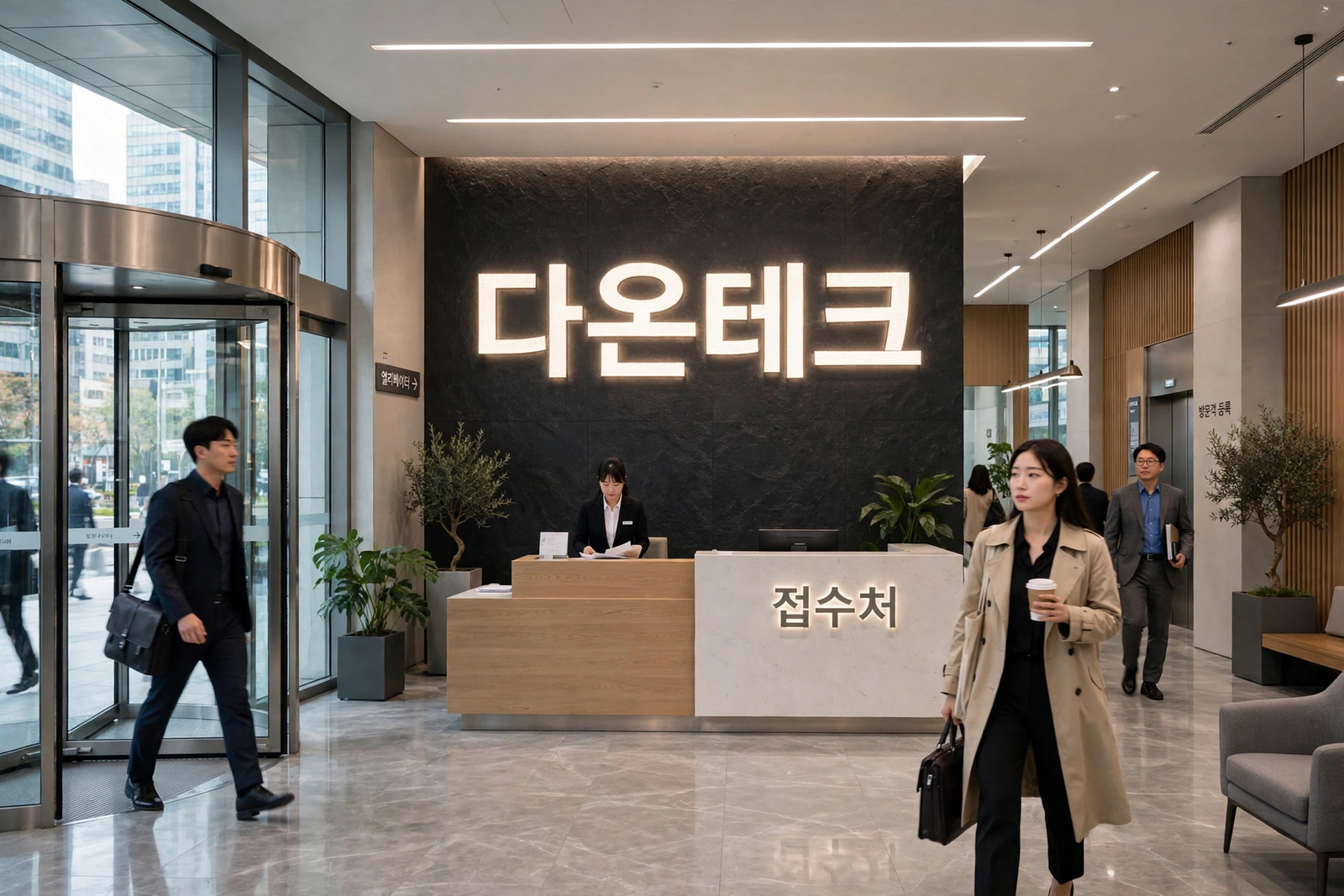
Picture this: you walk into a glass office in Seoul, three interviewers look up, and your first ten seconds decide more than your resume ever will. The right korean job interview phrases will not just help you answer questions — they show respect before you say a single thing about your skills.
That is the part most learners miss. A Korean interview tests how you carry yourself as much as what you can do: how you greet people, how you sit down, how you say “I don’t know” without losing face. You do not need fluent Korean — about fifteen polite sentences, said slowly, will carry you through.
Why polite Korean wins interviews
In Korean workplaces, hierarchy starts at the interview door. Interviewers expect 존댓말 (jondaenmal), polite speech — the formal style ending in -습니다 (-seumnida) and -입니다 (-imnida).
Slip into casual 반말 (banmal) and even a perfect answer sounds rude.
Seven Korean job interview phrases to learn first
Start here. These seven cover the whole interview: walking in, introducing yourself, answering, and leaving.
| Korean | Romanization | Meaning |
|---|---|---|
| 안녕하세요 | annyeonghaseyo | Hello |
| 저는 …입니다 | jeoneun …imnida | I am … |
| 잘 부탁드립니다 | jal butakdeurimnida | I look forward to working with you / please take care of me |
| 감사합니다 | gamsahamnida | Thank you |
| 열심히 하겠습니다 | yeolsimhi hagesseumnida | I will work hard |
| 저는 이 일에 관심이 많습니다 | jeoneun i ire gwansimi manseumnida | I am very interested in this job |
| 제 강점은 …입니다 | je gangjeomeun …imnida | My strength is … |
Say them out loud five times each before moving on. In the interview, these words should come out without thinking.
Listen: greeting the interviewers, introducing yourself, and asking them to take care of you
Your 30-second self-introduction script
Almost every Korean interview opens the same way: “자기소개를 해 주세요” (jagisogaereul hae juseyo) — “Please introduce yourself.” They want thirty seconds, not your life story: who you are, what you have done, and why you are here.
Here is a script to adapt — fill in your own name, field, and years of experience:
안녕하세요. 저는 민준입니다. (Annyeonghaseyo. Jeoneun Minjunimnida.) “Hello. I am Minjun.”
저는 마케팅 분야에서 3년 동안 일했습니다. (Jeoneun maketing bunyaeseo samnyeon dongan ilhaetseumnida.) “I worked in the marketing field for three years.”
제 강점은 팀워크와 문제 해결 능력입니다. (Je gangjeomeun timwokeuwa munje haegyeol neungnyeogimnida.) “My strengths are teamwork and problem-solving ability.”
이 일에 관심이 많습니다. 열심히 하겠습니다. 잘 부탁드립니다. (I ire gwansimi manseumnida. Yeolsimhi hagesseumnida. Jal butakdeurimnida.) “I am very interested in this job. I will work hard. I look forward to working with you.”
Keep it short and stop there. A long introduction makes interviewers check the clock; a short one makes them lean in.

Answering “Why this company?” politely
Sooner or later you will hear “왜 우리 회사에 지원했습니까?” (Wae uri hoesa-e jiwonhaetseumnikka?) — “Why did you apply to our company?” This is where many candidates freeze.
Build your answer from two parts: something you admire, and something you can offer:
귀사에 지원한 이유는 귀사의 성장 가능성에 관심이 많기 때문입니다. (Gwisae jiwonhan iyuneun gwisaui seongjang ganeungseonge gwansimi manki ttaemunimnida.) “The reason I applied to your company is that I am very interested in your company’s growth potential.”
Notice 귀사 (gwisa) — “your esteemed company.” One word, a lot of goodwill.
Listen: a self-introduction, your experience, and your strengths
Phrases for the tricky moments
Not every question has a ready answer. Interviewers respect a candidate who handles a hard moment politely far more than one who bluffs:
When you did not hear the question. 죄송합니다. 다시 말씀해 주시겠습니까? (Joesonghamnida. Dasi malsseumhae jusigetseumnikka?) “I’m sorry. Could you please say that again?”
When you do not know the answer. 잘 모르겠습니다. (Jal moreugetseumnida.) “I’m not sure.” Short, honest, polite.
When the interview ends. 시간을 내주셔서 감사합니다. (Siganeul naejusyeoseo gamsahamnida.) “Thank you for your time.” Say it with a small bow as you leave.
Listen: saying you are interested in the job, promising to work hard, and thanking the interviewers
Common mistakes that cost candidates the job
Most interview mistakes in Korea are not about grammar — they are about manners.
| The mistake | Why it hurts | Do this instead |
|---|---|---|
| Using 반말 (banmal), casual speech | It sounds disrespectful to senior interviewers | Stick to -습니다 / -입니다 endings the whole time |
| Skipping the greeting and bow | The first impression is already made | 안녕하세요 (annyeonghaseyo) with a small bow as you enter |
| Sitting down before being invited | It looks pushy in a formal setting | Wait, then ask: 앉아도 되겠습니까? (Anjado doegetseumnikka?) “May I sit down?” |
| Saying “응” (eung) for yes | It is casual — fine with friends, not here | 네, 그렇습니다 (Ne, geureoseumnida) — “Yes, that’s right” |
Listen: apologising politely, asking for the question again, and thanking them for their time
Your interview-day checklist
Tick each one off:
☐ Practise your self-introduction out loud three times
☐ Memorise 안녕하세요, 잘 부탁드립니다, and 감사합니다
☐ Prepare one sentence about why this company
☐ Prepare one strength and one honest weakness: 제 단점은 …입니다 (Je danjeomeun …imnida) — “My weakness is …”
☐ Bring your 이력서 (iryeokseo, resume) and a pen
☐ Arrive ten minutes early, knock, bow, and greet first
☐ End with 시간을 내주셔서 감사합니다 and a small bow
Do all seven and you will walk in looking like you have done this before.
Quick answers about Korean job interviews
How formal should my Korean be in an interview?
Very formal — 존댓말 (jondaenmal) with -습니다 / -입니다 endings for everything, from greeting to goodbye.
Should I bow at a Korean job interview?
Yes. A small bow with 안녕하세요 when you enter, and another with 감사합니다 when you leave, is expected. Keep it brief — about fifteen degrees, not a deep bow.
What if I don’t understand a question?
Say 죄송합니다. 다시 말씀해 주시겠습니까? — “I’m sorry, could you please say that again?” Interviewers would much rather repeat a question than hear the wrong answer.
How long should my self-introduction be?
About thirty seconds: your name, your experience, one strength, and your interest in the job.
Polite Korean is not about sounding fancy. It is about showing the people across the desk that you respect their time and the chance they gave you. Learn these phrases, practise them out loud, and walk in ready. When you want to keep building your Korean, our Korean programme takes you from first phrases to real conversations, one small step at a time.
Quick quiz: are you interview-ready?
Tap an answer and see right away if you have got it.
Question 1. What does 잘 부탁드립니다 (jal butakdeurimnida) mean?
Question 2. Which endings make a sentence formal and polite in Korean?
Question 3. What should you say, with a small bow, when you first enter the interview room?
Question 4. What is 반말 (banmal), and why should you avoid it in an interview?
Question 5. How do you say “I will work hard” politely?