
You bought Chinese flashcards for your child to learn with, and after a week the cards are nowhere to be found? That is because children aged 3–6 memorise language through daily life, not at a desk. A sentence heard at just the right moment (just as they sit down at the table, just as they snuggle under the blanket) stays in a child’s head far longer than ten vocabulary words learnt on paper.
The “one Chinese sentence a day with your child” method is very simple: each day you teach your child exactly one sentence from the list below — say it at the exact right moment and repeat it all day. After 30 sentences (one month), your child will have a stock of “everyday-life Chinese” that many people don’t gain even after a whole year of book study. Every sentence comes with pinyin so parents can pronounce it correctly.
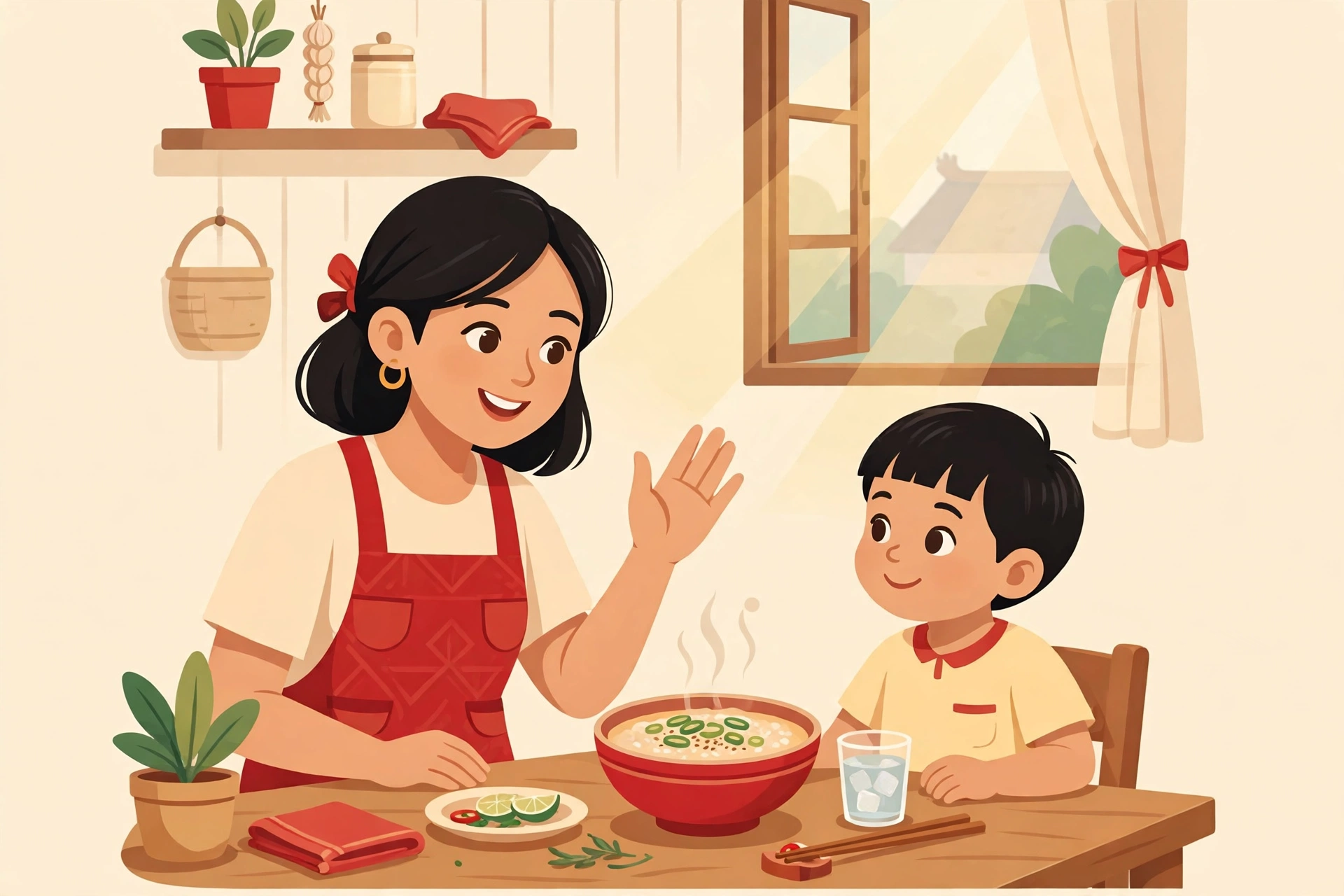
Listen and repeat: 5 morning sentences
Before reading on, have a listen to the 5 morning sentences in this post. The voice reads slowly, with every tone clear — listen once, then say it after the voice once, then play it for your child to listen along. Children aged 3–6 imitate very quickly when they hear a clear, correct voice right from the start.
🎧 Listen to the 5 morning sentences: greeting the new day in Chinese
Morning: 5 sentences to greet the new day
- 早上好! (zǎoshang hǎo!) — Good morning!
- 你好吗? (nǐ hǎo ma?) — How are you?
- 我很好。 (wǒ hěn hǎo.) — I’m very well.
- 起床了! (qǐchuáng le!) — Time to get up!
- 去刷牙。 (qù shuā yá.) — Go and brush your teeth.
Mornings are the easiest time to start, because every day follows exactly the same script: open your eyes, greet each other, brush your teeth, have breakfast. You only need to attach one sentence to exactly one of those moments and you’re done. On the very first morning, try the sentence 早上好 just as your child opens their eyes — they will remember this sentence fastest of all 30, because it comes together with your good-morning hug.
Mealtimes: 6 sentences for enjoying your food
- 吃饭了! (chī fàn le!) — Time to eat!
- 很好吃。 (hěn hǎo chī.) — It’s delicious.
- 谢谢妈妈。 (xièxie māma.) — Thank you, Mum.
- 我要喝水。 (wǒ yào hē shuǐ.) — I want to drink some water.
- 多吃一点。 (duō chī yì diǎn.) — Eat a little more.
- 我吃饱了。 (wǒ chī bǎo le.) — I’m full.
The dining table is the best “classroom” in the house: it is there every day, every child gets excited about it, and there is plenty to talk about. A small tip: when your child says 很好吃 about a dish they chose themselves, praise them straight back in Chinese — the child will link the praise sentence with the happy feeling, and next time they will say it on their own without being reminded. And the sentence 我要喝水 is extremely practical: once your child can say this sentence, they can look after a real need of their own, rather than just learning by rote.
Playtime: 6 sentences for exploring with your child
- 我们一起玩。 (wǒmen yìqǐ wán.) — Let’s play together.
- 这是什么? (zhè shì shénme?) — What is this?
- 这是小狗。 (zhè shì xiǎo gǒu.) — This is a puppy.
- 我喜欢红色。 (wǒ xǐhuan hóngsè.) — I like the colour red.
- 你画得真漂亮。 (nǐ huà de zhēn piàoliang.) — Your drawing is so beautiful.
- 再来一次! (zài lái yí cì!) — Again! One more time!
Of these six sentences, 这是什么? is the most “all-purpose” one: your child can use it for every object in the house, from a spoon to the cat out in the yard. Just answer using the pattern 这是…… then swap the last word: 这是苹果 (this is an apple), 这是汽车 (this is a car). Play like this for a few days and your child will start making up new sentences on their own, without you teaching any more. That is exactly when Chinese begins to become a real language in your child’s head, rather than just 30 sentences learnt by heart.
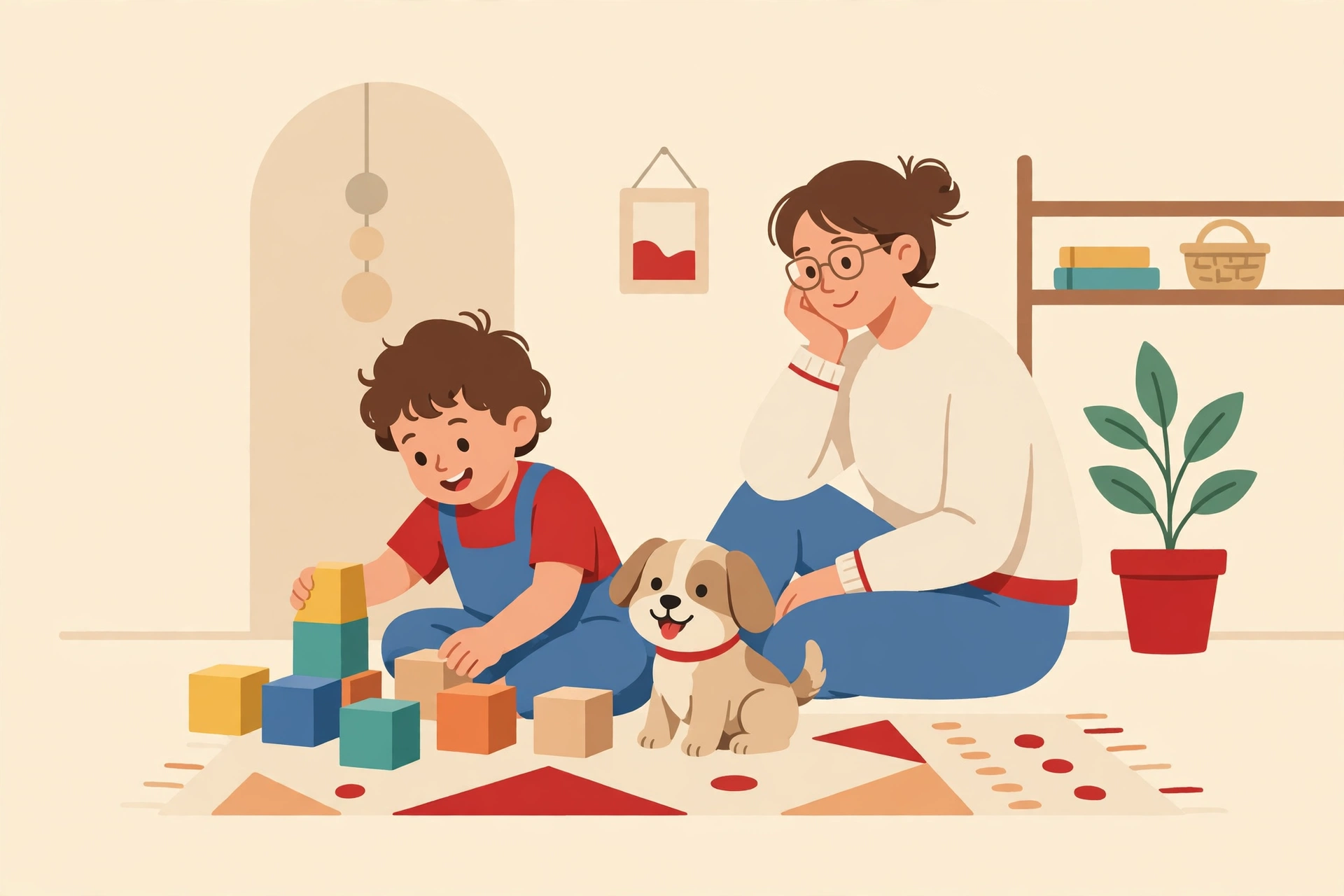
🎧 Listen to the mealtime and playtime sentences
Good manners: 5 polite sentences worth remembering
- 请。 (qǐng.) — Please.
- 谢谢。 (xièxie.) — Thank you.
- 对不起。 (duìbuqǐ.) — I’m sorry.
- 没关系。 (méi guānxi.) — That’s OK.
- 不客气。 (bú kèqi.) — You’re welcome.
These five sentences are the shortest in the post but they last the longest — your child will still be using them every day when they are grown up. Remember to teach them in pairs so they are easy to understand: when someone says 对不起 then we reply 没关系; when someone says 谢谢 then we reply 不客气. Children aged 3–4 don’t need to understand the deeper meaning yet; they only need to know “this sentence goes with that sentence”, and that is enough. Once good manners become a reflex from a young age, nobody will need to remind them when they grow up.
Feelings: 3 sentences that say words of love for you
- 我很开心。 (wǒ hěn kāixīn.) — I’m so happy.
- 别哭。 (bié kū.) — Don’t cry.
- 我爱你。 (wǒ ài nǐ.) — I love you.
There are only three sentences, but these are the three most precious sentences in the whole post. Young children often cannot yet name their own feelings — when they are happy they laugh, when they are sad they cry, but they cannot yet say “I’m happy” or “I’m sad”. Teach your child to say 我很开心 when they are beaming with a huge smile, and say 我爱你 every night before going to sleep, and you are giving your child both the language and a way to express their feelings. Many parents have shared that the first sentence their child ever managed to say in Chinese was not a greeting at all, but 我爱你 — because that is the sentence the child hears in their mother’s arms every night.
Bedtime: 5 sentences to end the day ever so gently
- 洗澡了。 (xǐzǎo le.) — Time for a bath.
- 晚安! (wǎn’ān!) — Good night!
- 明天见。 (míngtiān jiàn.) — See you tomorrow.
- 早点睡觉。 (zǎo diǎn shuìjiào.) — Get to bed early.
- 做个好梦。 (zuò ge hǎo mèng.) — Sweet dreams.
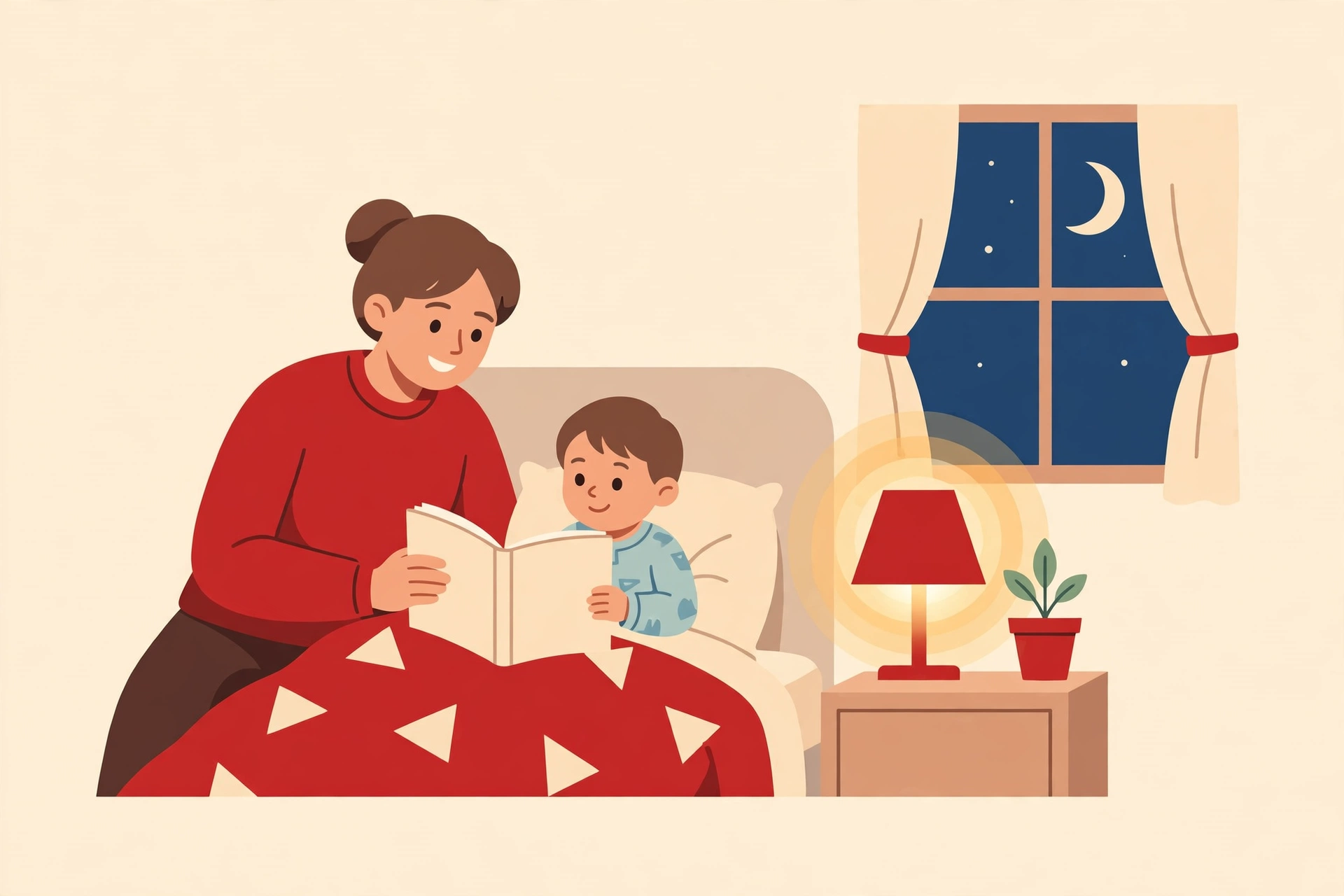
🎧 Listen to the polite sentences and the good-night sentences
Bedtime is when a child’s memory works best: a sentence heard just before sleep usually stays with them until the next morning. Give it a try — tonight, just say 晚安 then 做个好梦, and tomorrow morning your child may come out with those two sentences again before you even remind them. The sentence 明天见 is lovely in that it gives your child a happy feeling of looking forward to something: tomorrow you will meet again, keep playing, and learn more new sentences.
Suggested 30-day schedule: learning without feeling like you are learning
You don’t need to learn all 30 sentences in one week and then stop. Learning slowly but steadily is how children remember in the long term. This suggested schedule divides the 30 sentences following your child’s own daily-life rhythm, one group per week:
- Week 1 (days 1–7): The 5 morning sentences + the first 2 mealtime sentences (吃饭了, 很好吃). Every morning, greet each other in Chinese; at every meal, praise how tasty the food is in Chinese.
- Week 2 (days 8–14): The remaining 4 mealtime sentences + the first 3 playtime sentences (我们一起玩, 这是什么, 这是小狗). Your child starts asking “what is this?” about their own toys.
- Week 3 (days 15–21): The remaining 3 playtime sentences + the 5 polite sentences. This week you will hear your child say 谢谢 and 对不起 at just the right moments without being reminded.
- Week 4 (days 22–30): The 3 feelings sentences + the 5 bedtime sentences + review. Every evening, you and your child recount together how many of the sentences you managed to use today.
After 30 days, don’t stop there. Go back round to the beginning — the second time round your child will speak faster, more accurately, and far more confidently. Once your child knows a few sentences by heart, let them have a go at LingoBubbo’s Chinese vocabulary games — playing while reviewing the very words they have just learnt in daily life, making a loop of learning through playing and remembering through playing. And if your child loves counting, you can teach them more through the post teaching your child numbers and dates in Chinese — also short sentences that can be used straight away during the day.
4 tips to make “1 sentence a day” really work
- Say it at the right time, in the right place: the sentence 吃饭了! is only said when the food is served; 晚安! is only said when the lights go off. Context is the “glue” that keeps the sentence in your child’s memory.
- Repeat it during the day: a sentence heard 5–7 times in different moments will become a reflex. Hear it once and drop it, and your child will have forgotten it by the very next day.
- Add movements for little ones: when you say 你好吗? wave your hand; when you say 谢谢 bow your head. Children aged 3–4 remember through their bodies better than through their ears.
- Don’t correct, don’t push: getting a tone wrong is normal in the first month. Praise your child every time they dare to speak — the confidence to speak up is the goal; accuracy will come later.
Common mistakes parents make when teaching their child their first Chinese sentences
The most common mistake is teaching lots of sentences at once to “get it done quickly”. A child aged 3–6 can only keep one new sentence a day — teach 5 sentences in one sitting and by the evening they will remember one, and by the next morning they will have forgotten all five. The second mistake is teaching but never using: the child learns 我要喝水 from the book but at home still says “Mum, can I have some water please” — and then the Chinese sentence never gets any ground to live on. The third mistake is correcting pronunciation too harshly: the child has barely got one tone wrong when they are interrupted and corrected on the spot; after a few times like that, the child will shy away from speaking altogether. Just let your child get it wrong during the first month, praise them for daring to speak, then read the correct sentence back for them to hear — they correct themselves faster than you would think.
If your child is afraid of speaking wrong, you can read the post my child is learning Chinese but afraid to speak: 5 ways parents can help their child — there are lots of ways to coax your child into opening their mouth without forcing them. And as for your own pronunciation, don’t worry: children learn by imitating the adult closest to them — that is you.
Parents have to pronounce it correctly too, so the child can imitate you
Children learn pronunciation by imitating the adult closest to them — that is you. If you want these 30 sentences to work to their full effect, spend 10 minutes reading the post Pinyin and the 4 tones in 10 minutes from LingoBubbo first: when you read the tones correctly, every sentence your child hears will “land in their ears” correctly.
Want to go further after these 30 sentences? Drop by LingoBubbo’s Chinese learning hub — HSK vocabulary by level, pronunciation practice from the very basics, and a roadmap for beginners, all free. One sentence a day today, a bilingual journey for your child tomorrow.
Frequently asked questions
Can a 3-year-old learn already, or do you have to wait until they are 5–6?
A 3-year-old can learn already, as long as you teach through daily life rather than making them sit down and study. At this age children remember through listening and repeating, so a short sentence like 早上好 or 谢谢 is just right for them. Children aged 5–6 learn faster and start putting together new sentences themselves from the pattern 这是…….
If the parents don’t know Chinese, how can they teach their child?
You learn alongside your child, one sentence a day. Listen to the audio in this post, read the pinyin that comes with it, say the sentence with your child during the day — you don’t need to be ahead of your child by much, just one sentence ahead. The pinyin in this post is all written out ready, so you can pronounce it correctly right from the start.
Once the 30 sentences are done, what should we learn next?
Go round a second time to make them stick, then learn more numbers and vocabulary for things around the house. The post teaching your child numbers and dates in Chinese is the most natural next step, because numbers can also be used straight away in everyday life.
Quick Quiz
Let’s see how many sentences you remember! Tap one answer for each question — right or wrong, you get feedback straight away. Score: 0/5
1. Which sentence is used to wish someone good night?
2. What does “我吃饱了” mean?
3. When your child has drawn something beautiful, how do you praise them in Chinese?
4. How is “谢谢妈妈” read in pinyin?
5. Which sentence do you use when you want to say sorry to someone?
How many points did you score? If you didn’t quite reach 5/5, listen to the 3 audio clips above again and take the quiz one more time — the second attempt is usually remembered far better than the first. And don’t forget to share this post with other parents whose children are learning Chinese: one Chinese sentence a day with your child — the more families speaking along, the more of an environment your child has to use it in. Is there a sentence you would like to teach your child but don’t yet know how to say in Chinese? Leave a comment below, and the teacher will explain it in the next post. Wishing you and your little one happy learning!
Want to learn with a 90-day roadmap?
HSK 1 lessons on LingoBubbo are always free — and the roadmap package gives you a day-by-day study schedule + an exclusive workbook (not on the website) + a weekly “what have I learnt to say” checklist + 186 flashcards, learning as if you had a teacher right beside you. From just $4.99, a one-off purchase, no subscription.