
You already know ser, estar, and ir — but when you open your mouth to speak, the words just are not there. The problem is rarely your grammar. It is your verb vocabulary. You need the verbs you actually use every day: wake up, eat, go, talk, buy, help, decide, meet friends.
This post gathers exactly 100 of those verbs, already conjugated in the present tense, first person singular (yo — “I”). They are sorted into 10 everyday groups so you can learn and look them up in one master table. The keyword for this whole guide is Spanish verbs present tense — and by the end you will have a working set you can speak with today, not someday.
How to Use This Table
Learn one group a day — ten verbs at a time. For each verb, make one real sentence about your own life. Learning comer → como is fine; saying Yo como arroz todos los días (I eat rice every day) is far better. Once you own the yo form, the other persons fall into place much faster.

Quick Recap: How the Present Tense Works for “Yo”
- -ar verbs: drop -ar, add -o. Example: hablar → hablo.
- -er and -ir verbs: drop -er/-ir, add -o. Example: comer → como, vivir → vivo.
- Irregular verbs: the yo form has to be memorized, because it does not follow the rule above. Example: ser → soy, tener → tengo, hacer → hago. Group 1 below is full of these — learn it first.
- Stem-changing verbs: some verbs change a vowel in the stem, for example o → ue (dormir → duermo), e → ie (entender → entiendo), e → i (pedir → pido). When you meet one, note it down; do not try to guess.
Two special cases in the table deserve a note. Haber → he is mostly used as a helping verb (for example he comido — I have eaten). And gustar → me gusta works backwards compared to English: me gusta el café means “I like coffee,” but literally it is closer to “coffee pleases me.” If gustar confuses you, you are not alone — it confuses nearly everyone at first.
100 Spanish Verbs in the Present Tense (Yo Form)
Group 1: The 10 Core Verbs — Learn These First
| Verb | Yo | Meaning | Example |
|---|---|---|---|
| ser | soy | I am (essence) | Soy estudiante. |
| estar | estoy | I am (state / location) | Estoy en casa. |
| haber | he | I have (helping verb) | He comido. |
| ir | voy | I go | Voy a la escuela. |
| tener | tengo | I have | Tengo dos hermanos. |
| hacer | hago | I do / make | Hago la tarea. |
| decir | digo | I say / tell | Digo la verdad. |
| poder | puedo | I can | Puedo ayudarte. |
| saber | sé | I know (facts, skills) | Sé hablar español. |
| querer | quiero | I want | Quiero un café. |
These ten verbs do a shocking amount of work. With just soy, estoy, voy, tengo, hago, and quiero you can already say who you are, where you are, where you are going, what you have, what you are doing, and what you want. If you only memorize one group this week, make it this one.
Group 2: Daily Routine
| Verb | Yo | Meaning | Example |
|---|---|---|---|
| levantarse | me levanto | I get up | Me levanto a las siete. |
| ducharse | me ducho | I shower | Me ducho por la mañana. |
| vestirse | me visto | I get dressed | Me visto rápido. |
| desayunar | desayuno | I eat breakfast | Desayuno con mi familia. |
| almorzar | almuerzo | I eat lunch | Almuerzo a las doce. |
| cenar | ceno | I eat dinner | Ceno a las siete. |
| acostarse | me acuesto | I go to bed | Me acuesto a las diez. |
| dormir | duermo | I sleep | Duermo ocho horas. |
| trabajar | trabajo | I work | Trabajo en una escuela. |
| descansar | descanso | I rest | Descanso el domingo. |
Try narrating your whole morning with this group alone: Me levanto, me ducho, me visto, desayuno, trabajo. Five verbs, one real day. That is the fastest possible speaking practice — no textbook needed, just your own routine.
Listen: daily routine verbs in real sentences — waking up, eating, working, sleeping
Group 3: Getting Around
| Verb | Yo | Meaning | Example |
|---|---|---|---|
| venir | vengo | I come | Vengo mañana. |
| salir | salgo | I go out / leave | Salgo de casa. |
| entrar | entro | I go in | Entro en la clase. |
| caminar | camino | I walk | Camino al parque. |
| correr | corro | I run | Corro por la mañana. |
| viajar | viajo | I travel | Viajo a Madrid. |
| llegar | llego | I arrive | Llego a las nueve. |
| volver | vuelvo | I return | Vuelvo a casa. |
| seguir | sigo | I continue / follow | Sigo las instrucciones. |
| pasar | paso | I pass by / spend time | Paso por tu casa. |
Group 4: Talking to People
| Verb | Yo | Meaning | Example |
|---|---|---|---|
| hablar | hablo | I speak / talk | Hablo español. |
| escuchar | escucho | I listen | Escucho música. |
| preguntar | pregunto | I ask | Pregunto al profesor. |
| responder | respondo | I answer | Respondo en español. |
| llamar | llamo | I call | Llamo a mi madre. |
| escribir | escribo | I write | Escribo un mensaje. |
| leer | leo | I read | Leo un libro. |
| contar | cuento | I tell / count | Cuento una historia. |
| explicar | explico | I explain | Explico la lección. |
| entender | entiendo | I understand | Entiendo la lección. |
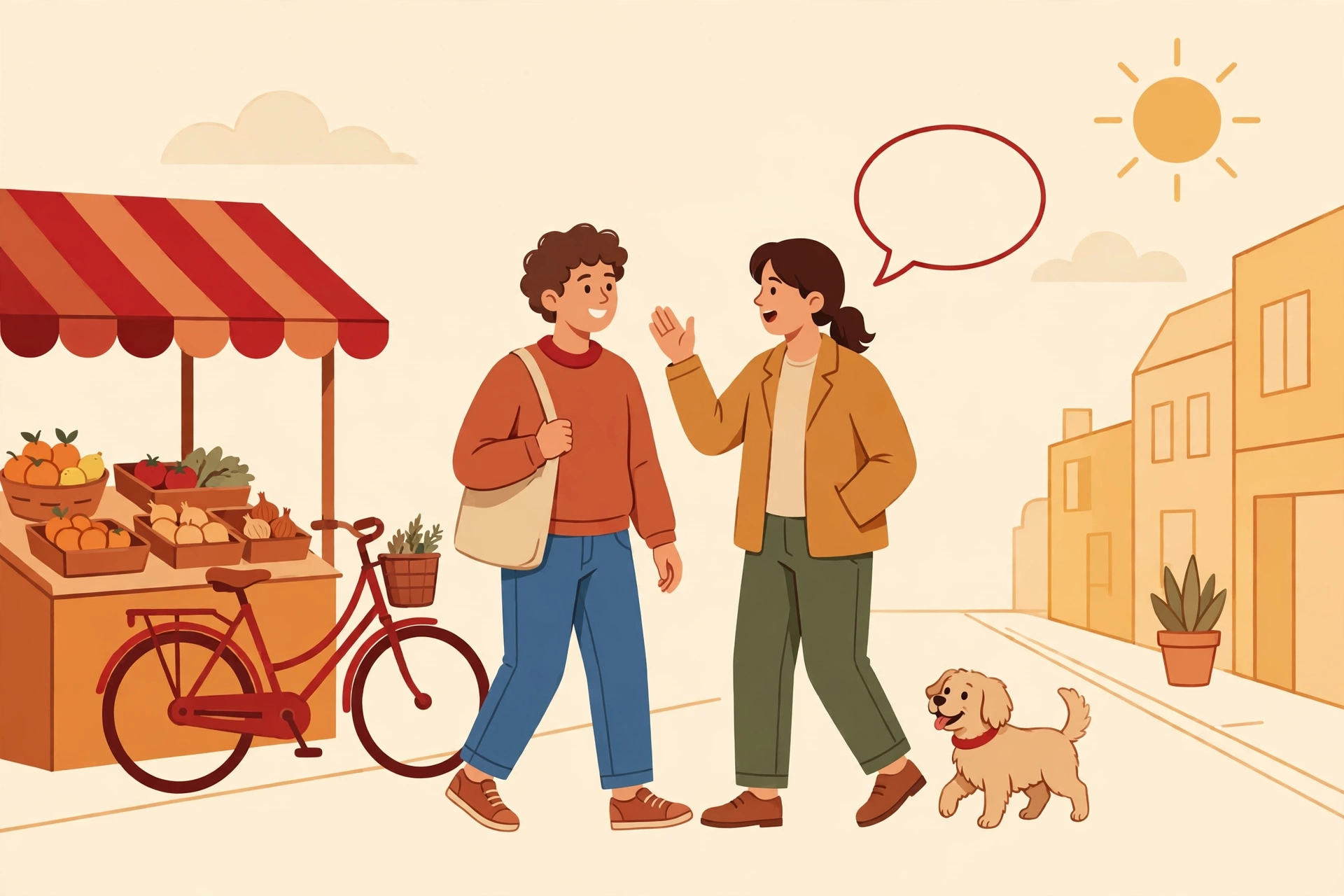
Listen: movement and conversation verbs — going, coming, speaking, listening, understanding
Group 5: Food and Housework
| Verb | Yo | Meaning | Example |
|---|---|---|---|
| cocinar | cocino | I cook | Cocino arroz. |
| comer | como | I eat | Como arroz todos los días. |
| beber | bebo | I drink | Bebo agua. |
| comprar | compro | I buy | Compro pan. |
| limpiar | limpio | I clean | Limpio la casa. |
| lavar | lavo | I wash | Lavo la ropa. |
| abrir | abro | I open | Abro la puerta. |
| cerrar | cierro | I close | Cierro la ventana. |
| buscar | busco | I look for | Busco mis llaves. |
| encontrar | encuentro | I find | Encuentro mis llaves. |
Group 6: Study and Work
| Verb | Yo | Meaning | Example |
|---|---|---|---|
| estudiar | estudio | I study | Estudio español. |
| aprender | aprendo | I learn | Aprendo mucho. |
| enseñar | enseño | I teach | Enseño matemáticas. |
| practicar | practico | I practice | Practico todos los días. |
| mirar | miro | I look / watch | Miro una película. |
| ver | veo | I see / watch | Veo la televisión. |
| conocer | conozco | I know (a person, a place) | Conozco Madrid. |
| empezar | empiezo | I start | Empiezo la clase. |
| terminar | termino | I finish | Termino a las cinco. |
| ayudar | ayudo | I help | Ayudo a mi amigo. |
Notice the useful pair saber and conocer, both meaning “to know.” Sé hablar español is knowing how to do something; conozco Madrid is knowing a place or a person. Mixing them up is common and harmless at first, but the distinction is one of those small things that makes you sound much more natural once it clicks.
Group 7: Feelings and Thoughts
| Verb | Yo | Meaning | Example |
|---|---|---|---|
| amar | amo | I love | Amo a mi familia. |
| gustar | me gusta | I like (special structure) | Me gusta el café. |
| esperar | espero | I wait / hope | Espero el autobús. |
| creer | creo | I believe | Creo que sí. |
| pensar | pienso | I think | Pienso en ti. |
| sentir | siento | I feel | Siento alegría. |
| reír | río | I laugh | Río mucho. |
| llorar | lloro | I cry | Lloro a veces. |
| sonreír | sonrío | I smile | Sonrío siempre. |
| olvidar | olvido | I forget | Olvido las llaves. |
Group 8: Giving, Taking, Holding
| Verb | Yo | Meaning | Example |
|---|---|---|---|
| dar | doy | I give | Doy un regalo. |
| poner | pongo | I put / place | Pongo el libro aquí. |
| traer | traigo | I bring | Traigo café. |
| llevar | llevo | I carry / wear | Llevo una chaqueta. |
| tomar | tomo | I take / drink | Tomo un café. |
| dejar | dejo | I leave / allow | Dejo las llaves aquí. |
| pedir | pido | I ask for / order | Pido un café. |
| pagar | pago | I pay | Pago la cuenta. |
| jugar | juego | I play | Juego al fútbol. |
| recibir | recibo | I receive | Recibo un mensaje. |
Pedir and preguntar are another pair worth separating early. Pedir is asking for something (pido un café — I order a coffee), while preguntar is asking a question (pregunto al profesor — I ask the teacher). One small distinction, and suddenly café orders and classroom questions stop getting tangled.
Group 9: Deciding and Changing
| Verb | Yo | Meaning | Example |
|---|---|---|---|
| decidir | decido | I decide | Decido estudiar. |
| elegir | elijo | I choose | Elijo este libro. |
| preferir | prefiero | I prefer | Prefiero el té. |
| probar | pruebo | I try / taste | Pruebo la sopa. |
| intentar | intento | I try / attempt | Intento hablar español. |
| cambiar | cambio | I change | Cambio de idea. |
| usar | uso | I use | Uso el teléfono. |
| necesitar | necesito | I need | Necesito ayuda. |
| recordar | recuerdo | I remember | Recuerdo tu nombre. |
| soñar | sueño | I dream | Sueño con viajar. |
Group 10: Meeting People and Having Fun
| Verb | Yo | Meaning | Example |
|---|---|---|---|
| visitar | visito | I visit | Visito a mis amigos. |
| invitar | invito | I invite | Invito a María. |
| celebrar | celebro | I celebrate | Celebro mi cumpleaños. |
| bailar | bailo | I dance | Bailo en la fiesta. |
| cantar | canto | I sing | Canto en el coro. |
| nadar | nado | I swim | Nado en el mar. |
| pasear | paseo | I go for a walk | Paseo con mi familia. |
| dibujar | dibujo | I draw | Dibujo un gato. |
| charlar | charlo | I chat | Charlo con amigos. |
| quedar | quedo | I meet up / stay | Quedo con Ana. |
Listen: a mini day in Spanish — studying, cooking, walking, and traveling, all with verbs from this table
How to Remember All 100
Never learn a verb without a sentence. Every verb needs to live inside a sentence about your life. Yo trabajo en una escuela sticks far longer than trabajo = to work, because your brain remembers stories, not dictionary lines.
Review by group, not by alphabet. The brain remembers by topic. Going to the market? Review Group 5. Going out with friends? Review Group 10. Tie each group to a part of your day and the review happens almost by itself.
Mark the stem-changing verbs and review them separately. Dormir, almorzar, acostarse, volver, contar, entender, cerrar, encontrar, empezar, pensar, sentir, pedir, preferir, probar, recordar, soñar, jugar, elegir, seguir, vestirse — this is the group most likely to trip you up, and it deserves its own round of review.
What to Do With These 100 Verbs
With these 100 verbs, you have enough engine to talk about almost everything in your day. The next step is the trickiest pair in the language — the two verbs you already met in Group 1, ser and estar — plus por and para. Our guide to ser vs estar and por vs para in Spanish sorts out both pairs with the same kind of everyday examples. Learn that, come back to this table, and build sentences with all 100 verbs — you will be surprised how much you can already say.
Bookmark this page and use it as your lookup table. Ten verbs a day, one real sentence each, and in ten days the whole list is yours. Then keep going in the LingoBubbo Spanish hub — vocabulary, sentence patterns, and a learning path for beginners, all free. Which group will you learn first? Leave a comment, and share this table with a friend who is learning Spanish too.
Quick Quiz
Five questions on the verbs in this table. Pick one answer per question — you get instant feedback either way. Score: 0/5
1. What is the “yo” form of “hablar”?
2. Which of these “yo” forms is irregular?
3. “Dormir” becomes “duermo” — what kind of verb is this?
4. What does “Me gusta el café” mean?
5. What is the best way to learn these 100 verbs?
How did you score? If you missed a question, scroll back to that group and re-read it — then pick one group and write ten sentences of your own today. Keep practicing in the LingoBubbo Spanish hub, and share this table with a friend who is learning Spanish too.