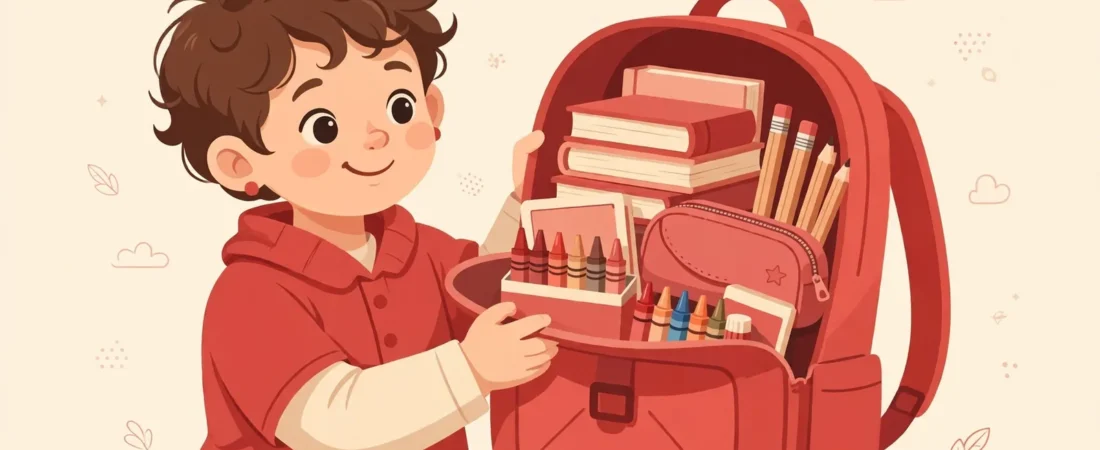
It’s the same every morning: before anyone leaves the house, there is a “roll call” — where is the school bag, where are the pencils, is everything in the pencil case? If your home has this roll call every morning too, this is a golden opportunity for your child to learn Korean without having to sit down at a desk. Just name the school supplies in Korean every day, and your child will remember them before they even realise.
This article brings together 20 Korean words for school supplies that your child meets every day at school and at home, with romanisation, English meanings and short example sentences so parents can say them along with their child. There is no need to learn them all at once. Pick 3 words a day and stick labels on the real objects at home, and within a week your child will know the whole table.
1. The “take them every day” group: school bag, pencil case, books and notebooks
Start with the things your child touches first every morning. This is also the group that is easiest to remember, because your child sees them every day.
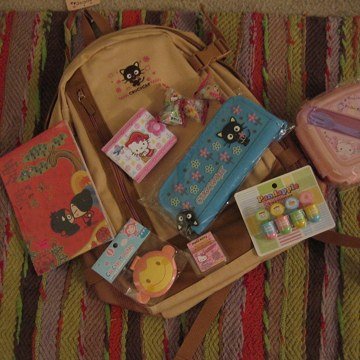
- 책가방 (chaekgabang) — school bag. Example: 내 책가방은 파란색이에요. (Nae chaekgabang-eun paransaegieyo.) — My school bag is blue.
- 필통 (piltong) — pencil case. Example: 엄마, 제 필통에 연필이 없어요. (Eomma, je piltong-e yeonpiri eopseoyo.) — Mum, there is no pencil in my pencil case.
- 책 (chaek) — book. Example: 이 책은 제 거예요. (I chaeg-eun je geoyeyo.) — This book is mine.
- 공책 (gongchaek) — notebook. Example: 공책에 이름을 쓰세요. (Gongchaeg-e ireum-eul sseuseyo.) — Write your name in the notebook.
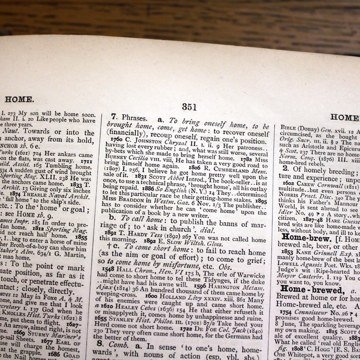
- 사전 (sajeon) — dictionary. Example: 모르는 단어는 사전에서 찾아보세요. (Moreuneun daneo-neun sajeon-eseo chajaboseyo.) — If there is a word you don’t know, look it up in the dictionary.
The way to play with this group is very simple: the night before, while packing the bag together with your child, point at each item and ask in Korean: “Where is the 책가방? Where is the 필통?” Your child searches for the item and answers at the same time, so they are revising vocabulary without feeling like they are studying. The next day, swap roles: your child asks and you search. Every child loves this role-swap game, because they get to be the “teacher” for once.

2. The “writing and drawing” group: pencil, pen, eraser, ruler, scissors
These are words your child uses constantly during lessons, so they are all the more worth learning properly. One small note: Korean draws a very clear line between a pencil and a ballpoint pen, so don’t lump them together into a single word “pen” the way Vietnamese often shortens it.
- 연필 (yeonpil) — pencil. Example: 연필로 쓰세요. (Yeonpillo sseuseyo.) — Write with a pencil.
- 볼펜 (bolpen) — ballpoint pen. Example: 이 볼펜은 제 거예요. (I bolpen-eun je geoyeyo.) — This ballpoint pen is mine.
- 지우개 (jiugae) — eraser. Example: 지우개가 어디 있어요? (Jiugaega eodi isseoyo?) — Where is the eraser?
- 자 (ja) — ruler. Example: 선생님, 자를 빌려 주세요. (Seonsaengnim, jareul billyeo juseyo.) — Teacher, please may I borrow your ruler?
- 가위 (gawi) — scissors. Example: 가위로 종이를 자르세요. (Gawiro jongireul jareuseyo.) — Cut the paper with scissors.
- 풀 (pul) — glue. Example: 종이에 풀을 바르세요. (Jongie pul-eul bareuseyo.) — Spread glue on the paper.
- 테이프 (teipeu) — sticky tape. Example: 테이프로 상자를 붙이세요. (Teipeuro sangjareul buchiseyo.) — Stick the box closed with sticky tape.
One small mistake parents should watch out for: when you say “write with a pencil”, Korean puts the particle 로 (ro) after the noun to show the means — 연필로 (yeonpillo) means “with a pencil”. Saying 연필 쓰세요 without the 로 is still understood, but adding 로 makes it sound much more correct and natural. If your child learns this sentence pattern as well, later on they will be able to apply it to “with scissors” and “with glue” too.
3. The “colours and creativity” group: coloured pencils, crayons, brush, sketchbook
This group is the “reward” part of the vocabulary session: nothing but creative toys, which every child likes. Learning words through toys is always faster than learning through flashcards, because the child has feelings attached to that object.
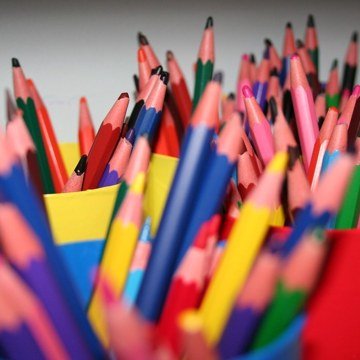
- 색연필 (saekyeonpil) — coloured pencils. Example: 색연필로 꽃을 그려요. (Saekyeonpillo kkocheul geuryeoyo.) — I am drawing a flower with coloured pencils.
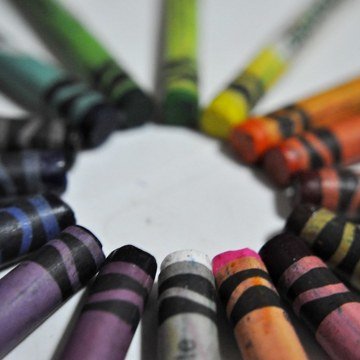
- 크레파스 (keurepaseu) — crayons. Example: 크레파스가 몇 개 있어요? (Keurepaseuga myeot gae isseoyo?) — How many crayons are there?
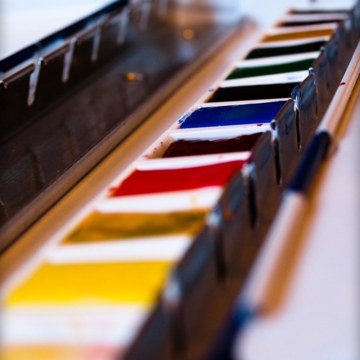
- 물감 (mulgam) — watercolours. Example: 물감으로 하늘을 칠해요. (Mulgam-euro haneureul chirhaeyo.) — I am painting the sky with watercolours.
- 붓 (but) — paintbrush. Example: 붓을 물에 씻으세요. (Buseul mur-e ssiseuseyo.) — Wash the brush in water.
- 스케치북 (seukechibuk) — sketchbook. Example: 스케치북에 강아지를 그렸어요. (Seukechibug-e gangajireul geuryeosseoyo.) — I drew a puppy in the sketchbook.
- 스티커 (seutikeo) — stickers. Example: 스티커를 공책에 붙였어요. (Seutikeoreul gongchaeg-e buchyeosseoyo.) — I stuck a sticker in my notebook.
A suggested game for this group: tip all the coloured pencils out onto the table, say one word in Korean, and your child picks up the matching item. A correct guess earns a reward sticker. It only takes 5 minutes each evening, but your child gets to revise vocabulary, practise listening and play, all at the same time. At the weekend, try a harder challenge: say a full sentence, for example “색연필로 꽃을 그려요”, and your child has to pick up the coloured pencils and draw a flower.

4. The “study corner” group: desk, chair and the remaining supplies
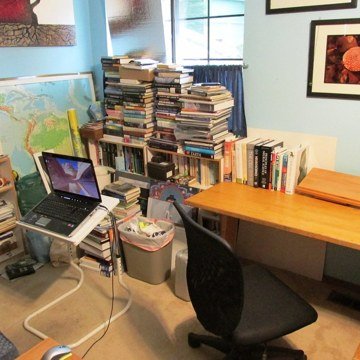
The last two words belong to your child’s study corner. Don’t underestimate them: the desk and chair are where your child sits and studies every day, and naming them in Korean helps your child link the language to their most familiar space.
- 책상 (chaeksang) — desk. Example: 책상 위에 책이 있어요. (Chaeksang wie chaegi isseoyo.) — There is a book on the desk.
- 의자 (uija) — chair. Example: 의자에 앉으세요. (Uijae anjeuseyo.) — Sit down on the chair.
Now you have all 20 words. You can print out the summary table below and stick it on the wall next to your child’s desk. Every morning, while your child packs their bag, point at the table and quickly ask 3 words. After a week, try covering up the meanings column and see how many of the Korean words your child can read.
One small pronunciation tip that helps children sound much more natural: in Korean, the final consonant of a word often “links” over to the vowel of the next word. For example, 책 (chaek, book) followed by the particle 이 is read as “chae-gi” rather than “chaek-i”, so the sentence 책상 위에 책이 있어요 sounds like “chaeksang wie chaegi isseoyo”. In the same way, 연필이 is read as “yeon-pi-ri” and 공책에 as “gong-chae-ge”. You don’t need to explain this rule to your child with theory. Just read it once, slowly, as a model, then read faster and faster — their ear will pick up the linking rhythm on its own. Listen a lot, copy a lot, and their pronunciation will soften naturally.
Quick Quiz
Test yourself on Korean words for school supplies. Click an answer to see if you are right — your score is at the top.
Score: 0/5
1. What does 책가방 mean?
2. What does 지우개 mean?
3. What does 가위 mean?
4. What does 색연필 mean?
5. What does 책상 mean?
5. Summary table: 20 Korean words for school supplies
| Number | Korean | Romanisation | Meaning |
|---|---|---|---|
| 1 |
책가방
 |
chaekgabang | school bag |
| 2 |
필통
 |
piltong | pencil case |
| 3 |
책
 |
chaek | book |
| 4 |
공책
 |
gongchaek | notebook |
| 5 |
사전
 |
sajeon | dictionary |
| 6 |
연필
 |
yeonpil | pencil |
| 7 |
볼펜
 |
bolpen | ballpoint pen |
| 8 |
지우개
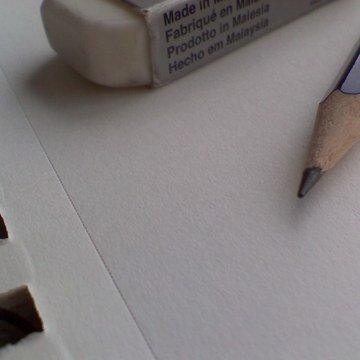 |
jiugae | eraser |
| 9 |
자
 |
ja | ruler |
| 10 |
가위
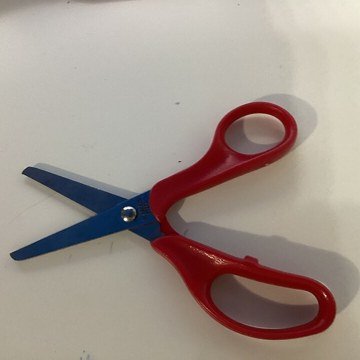 |
gawi | scissors |
| 11 |
풀
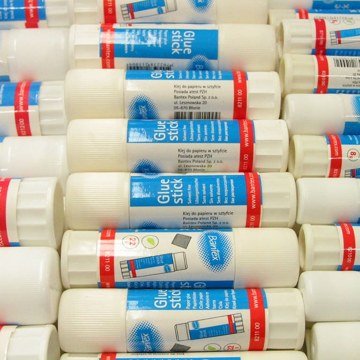 |
pul | glue |
| 12 |
테이프
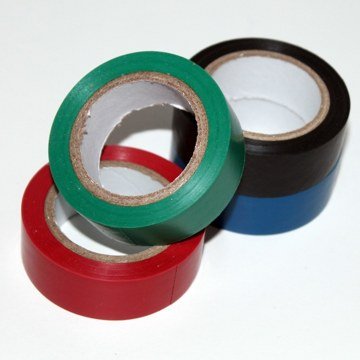 |
teipeu | sticky tape |
| 13 |
색연필
 |
saekyeonpil | coloured pencils |
| 14 |
크레파스
 |
keurepaseu | crayons |
| 15 |
물감
 |
mulgam | watercolours |
| 16 |
붓
 |
but | paintbrush |
| 17 |
스케치북
 |
seukechibuk | sketchbook |
| 18 |
스티커
 |
seutikeo | stickers |
| 19 |
책상
 |
chaeksang | desk |
| 20 |
의자
 |
uija | chair |
Twenty words in a week sounds like a lot, but split up it is very light: day 1, learn the school-bag group; day 2, learn the writing group; day 3, learn the drawing-colours group; day 4, the desk and chair, and revise everything. The most important thing is that your child gets to touch the real objects, say real words, in real situations. Learning that way, words stay with them far longer than copying them out 10 times into a notebook.
If your child loves Korean because they love K-pop or Korean dramas, parents can also read 20 Korean words about school for kids: how do you say school bag and pencil? to widen their school vocabulary, and 10 colours in Korean for kids to learn through toys, no need to sit down at a desk to combine learning colours with learning supplies. Tonight, while packing the bag with your child, try asking them one question in Korean and see how it goes — and share this article with other parents who are learning together with their children!
📷 Photo sources: real photos from the open photo libraries Openverse / Wikimedia Commons / Flickr (CC0, CC BY and CC BY-SA licences) — one real-life photo for each word, no AI drawings used.