
Have you ever said a Chinese word and the listener just looked blank, even though you were sure you pronounced every letter correctly? Most likely the problem isn’t the letters — it’s the tones. In Chinese, the same sound “ma” read with different tones becomes 5 completely different words. Understanding and pronouncing the **4 Chinese tones** correctly is the first step — and also the most important one — to making other people understand what you’re saying.
This post is for beginners: it explains each tone with easy-to-picture images of the voice, includes a table of example characters and pinyin, audio for you to listen and imitate, and 5 short exercises to check yourself. By the end, you’ll know where you’re going wrong and how to fix it, instead of just reading by feel.
One note about level before we start: the 4 tones are the compulsory pronunciation foundation before learning HSK 1, and this tone system applies to both the HSK 2.0 and HSK 3.0 textbook versions — so whichever book set you follow, this pronunciation part stays the same. Don’t rush to learn lots of vocabulary while your tones are still shaky; a small vocabulary pronounced accurately is worth more than a large one listeners have to guess at.
## What are the 4 Chinese tones?
Standard Chinese (Mandarin) has 4 main tones, plus a neutral tone. A tone is the height and direction of your voice when you pronounce a syllable. You can picture your voice as a path: going flat, going up, going down then up, or dropping straight down. Each path is a tone, and each tone is attached to a tone mark in pinyin.
It may sound abstract, but Vietnamese ears are actually already used to distinguishing pitch — Vietnamese has 6 tones, after all. The biggest difference is: in Vietnamese, changing the tone usually keeps the original meaning or creates a closely related reduplicative word, while in Chinese, changing the tone switches to a completely different word. That’s why learners of Chinese must practise tones from the very first week, not leave it until “later is fine too”.
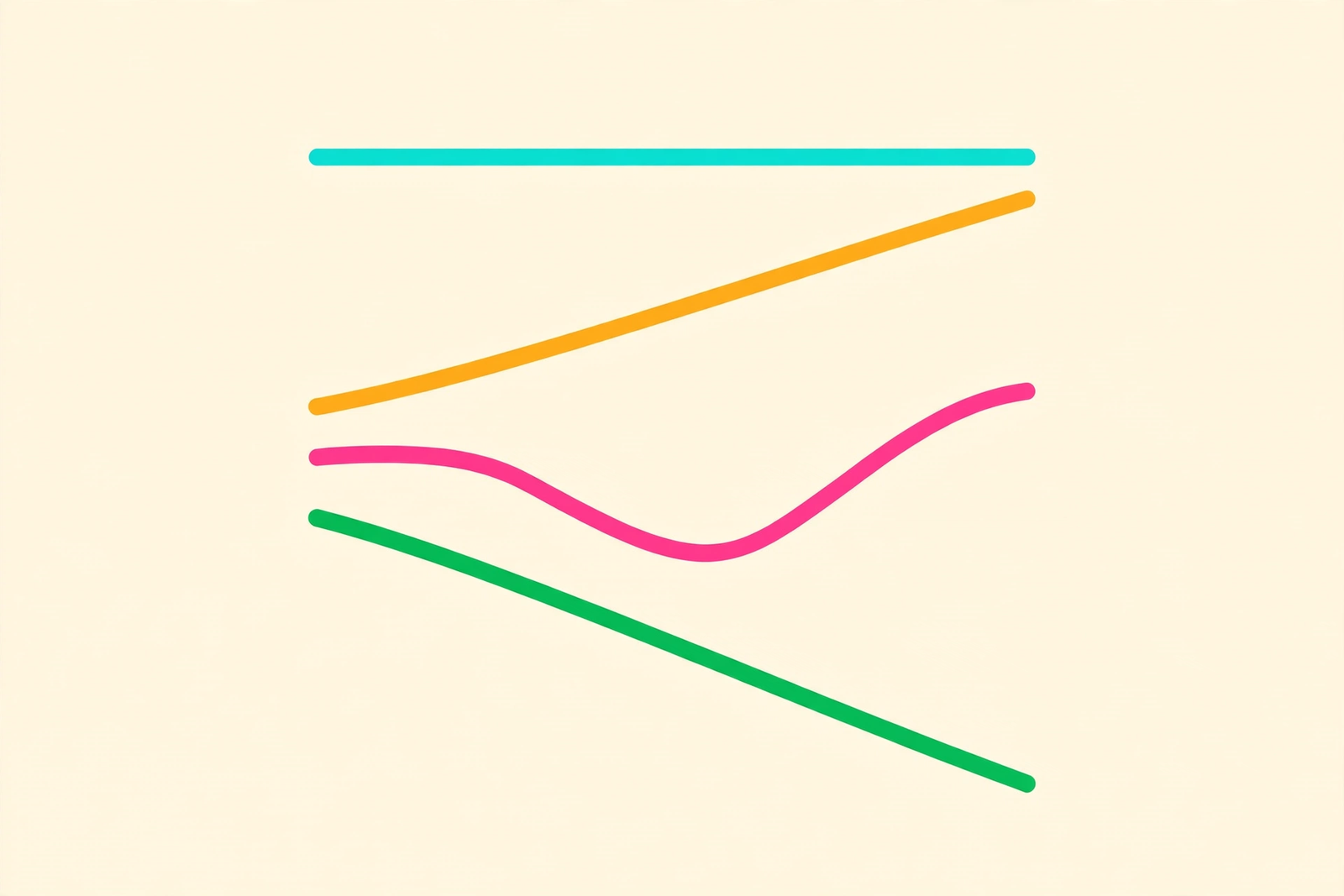
## The table of the 4 Chinese tones with example characters and pinyin
The quickest way to remember the 4 tones is to stick to a single model sound: “ma”. The same sound read in 4 tones gives 4 characters with 4 different meanings, plus the neutral tone making a fifth word. Listen to the audio below first, then read along character by character.
| Tone | Pinyin mark | Voice direction | Example | Meaning |
|—|—|—|—|—|
| Tone 1 | mā (macron ¯) | High, level | 妈 mā | mother |
| Tone 2 | má (acute accent ˊ) | Rising, like asking a question | 麻 má | hemp, numb |
| Tone 3 | mǎ (caron ˇ) | Dipping then rising | 马 mǎ | horse |
| Tone 4 | mà (grave accent ˋ) | Dropping sharply | 骂 mà | to scold |
| Neutral tone | ma (no mark) | Light, short, unstressed | 吗 ma | question particle |
A small tip for Vietnamese speakers: tone 2 sounds close to the Vietnamese acute accent (dấu sắc), but it must rise steadily from low to high — don’t rise sharply as if asking “huh?”. Tone 4 sounds like the grave accent (dấu huyền) but is much more decisive and stronger — as if you’re giving a short command. And tone 3 is the tone mispronounced most often; we’ll talk about it in detail right below.
### Tone 1: high and level — 妈 mā (mother)
Tone 1 keeps the voice at a high level throughout the syllable, neither rising nor falling. Many learners read tone 1 too low, so it sounds as if it has no tone. Try singing a high note and holding that note while saying “mā”. Familiar words: 妈 mā (mother), 妈妈 māma (mum, with the second character read in the neutral tone), 天 tiān (sky, day), 生 shēng (to be born, to live). Example sentence: 妈妈爱我。Māma ài wǒ. (Mum loves me.)
### Tone 2: rising — 麻 má, 学 xué, 人 rén
Tone 2 starts at a mid level and rises high, like your voice lifting at the end of a question. Familiar words: 人 rén (person), 学 xué (to study), 来 lái (to come), 明 míng (bright, clear). Example sentence: 我是学生。Wǒ shì xuésheng. (I am a student.) Note that the character 生 here is read in the neutral tone in the word 学生 xuésheng when speaking quickly, but when reading characters one by one, you still read shēng in tone 1.
### Tone 3: dipping then rising — 马 mǎ, 好 hǎo, 我 wǒ
Tone 3 is the full “down-and-up” tone: the voice drops low then lifts back up. But there’s a secret textbooks often hide until a later lesson: when speaking quickly in a sentence, tone 3 is usually read as only its first half — that is, the voice just drops low and doesn’t curve back up. So don’t try to bend your voice too hard when reading 马 in a sentence; reading it low and short is natural enough. Familiar words: 好 hǎo (good), 我 wǒ (I, me), 你 nǐ (you), 请 qǐng (please, to invite).
### Tone 4: dropping sharply — 骂 mà, 去 qù, 大 dà
Tone 4 starts high and drops straight down, short and decisive. This is the tone that causes the most misunderstandings if read too gently: 去 qù (to go) read limply will sound like a different word. Familiar words: 大 dà (big), 爱 ài (to love), 对 duì (correct), 谢 xiè (to thank). Example sentence: 谢谢你。Xièxie nǐ. (Thank you.) — the second 谢 is read in the neutral tone when speaking quickly.
### The neutral tone: short, faint, unstressed — 吗 ma, 呢 ne, 的 de
The neutral tone has no mark. It always comes after a syllable that has a tone and is read really lightly, really briefly, as if you “let go” of that character. Familiar particles and suffixes are all read in the neutral tone: 吗 ma (question particle), 呢 ne (and what about…?), 的 de (of), 了 le (already), 吧 ba (let’s, OK?). Reading the neutral tone too strongly is a very common mistake among Vietnamese speakers, because in Vietnamese we’re used to stressing every syllable clearly.
## Tone changes: when two tones meet, the reading changes
This is the part that confuses many beginners: there are times when a character is written with one tone but read with another. Don’t panic — there are only a few rules, and they all have a reason: to make the voice’s rises and falls smoother for the mouth.
**Rule 1: two tone 3s stand next to each other, the first character changes to tone 2.** The most famous example: 你好 nǐ hǎo is written as two tone 3s, but read as ní hǎo. Similarly: 很好 hěn hǎo is read as hén hǎo, 我想 wǒ xiǎng is read as wó xiǎng. This rule only changes the pronunciation, not the way pinyin is written in books.
**Rule 2: 不 bù changes to bú before tone 4.** Examples: 不是 bú shì (is not), 不对 bú duì (not correct), 不去 bú qù (not going). Before the other tones, 不 keeps tone 4: 不好 bù hǎo, 不来 bù lái, 不高 bù gāo.
**Rule 3: 一 yī changes its voice depending on the character after it.** Before tone 4, 一 is read as yí: 一个 yí gè (one [item]), 一定 yí dìng (definitely). Before tones 1, 2 and 3, 一 is read as yì: 一天 yì tiān (one day), 一年 yì nián (one year), 一起 yì qǐ (together). When counting numbers separately, 一 is still yī in tone 1.
Listen to the audio below to feel tone changes in real sentences, then try reading along — don’t just read silently with your eyes.
## Common mistakes Vietnamese speakers make when reading tones
**Reading tone 2 like the Vietnamese acute accent, too sharply.** Chinese tone 2 rises gently and evenly. If your voice shoots up suddenly at the end of the syllable, listeners will feel as if you’re surprised rather than saying an ordinary word.
**Bending tone 3 too much in sentences.** As mentioned, in natural speech tone 3 usually keeps only its falling part. Doing the full curve in every sentence sounds very “textbook” and tiring.
**Skipping the neutral tone and stressing every character.** If the sentence 妈妈爱我 is read with all three characters clear and strong, it sounds disjointed. Let the second character of 妈妈 and particles like 吗, 呢, 的 soften.
**Reading tone 4 not decisively enough.** Tone 4 must fall fast and strongly. Hovering between tone 1 and tone 4 is the hardest kind of mistake to fix, because the reader themselves doesn’t notice it.
The most effective way to fix it is still listen — imitate — record — compare. Listen to a model sentence, imitate it straight away, record your own voice, then listen back. Your ears will catch mistakes much faster than your eyes reading theory.
## 5 short exercises to check your tones
Do them quickly in about 10 minutes; nobody needs to mark them. You only need a phone to record with and the table below.
**Exercise 1 — Listen and guess the tone.** Ask a friend or use the audio above: listen to each character in the group 妈 麻 马 骂 and write down the tone you hear. Getting 4/4 right means you distinguish them well.
**Exercise 2 — Read contrasting pairs.** Read these pairs aloud, each pair 3 times: 妈—马 (mā—mǎ), 人—认 (rén—rèn), 好—号 (hǎo—hào), 去—区 (qù—qū). Whichever pair sounds the same to you, practise that pair separately for 2 more minutes.
**Exercise 3 — Tone changes in sentences.** Read aloud and record: 你好,我很好。Nǐ hǎo, wǒ hěn hǎo. (Hello, I’m very well.) Listen back to see whether your 你 and 很 rise naturally into tone 2.
**Exercise 4 — The neutral tone.** Read the sentence: 这是我的书。Zhè shì wǒ de shū. (This is my book.) The character 的 must be light and short. If you read “de” as clearly as “duh”, practise again.
**Exercise 5 — Read a short passage smoothly.** Read this whole passage at normal conversation speed, without pausing at each character: 我爱中国,我学习中文。Wǒ ài Zhōngguó, wǒ xuéxí Zhōngwén. (I love China, I study Chinese.) Record it and listen back: does your voice rise and fall naturally, or is it still flat like reading a list?
If you stumble on any exercise, go back to the example table, listen to the audio one more time and redo it. Pronunciation improves by the day, not by the hour — don’t get discouraged because one practice session wasn’t accurate yet.
## Summary table to pin on your study desk
| What to remember | Content |
|—|—|
| The 4 tones | 1 high and level, 2 rising, 3 dipping then rising, 4 dropping sharply |
| The neutral tone | Short, faint, unstressed; found in 吗, 呢, 的, 了, 吧 |
| Two tone 3s side by side | The first character is read as tone 2: 你好 → ní hǎo |
| 不 before tone 4 | Read as bú: 不是 bú shì |
| 一 changes | Before tone 4 read yí, before other tones read yì |
| How to practise every day | Listen — imitate — record — compare, 10 minutes/day |
To look up each syllable with its pinyin and hear a model reading, open LingoBubbo’s [Chinese Pinyin Chart](https://lingobubbo.com/bang-pinyin/) right away — this chart is the “companion” of this post; whenever you’re unsure about a sound, look that sound up again. Continue learning about pronunciation in general at [Chinese for Beginners](https://lingobubbo.com/tieng-trung/), and read two more related posts: [Pinyin for beginners: the 4 tones wrapped up in 10 minutes](https://lingobubbo.com/pinyin-4-thanh-dieu-tieng-trung/) and [Pinyin is not just tones: initials, finals and how to read each sound accurately](https://lingobubbo.com/pinyin-thanh-mau-van-mau-cach-doc-chuan/).
## Quick Quiz
Try the 5 questions below — click an answer and see the feedback straight away.
Your score: 0/5 — click an answer to check it right away.
Question 1: Which tone does the character 马 mǎ carry?
Question 2: How is 你好 nǐ hǎo usually read in a real sentence?
Question 3: How is 不 in 不是 read?
Question 4: How is the particle 吗 read in a question?
Question 5: What is the correct reading of 一个 in a sentence?
## Frequently asked questions about the 4 Chinese tones
**Q: Do beginners need to learn all 4 tones by heart before learning vocabulary?**
A: You need to grasp how to read the 4 tones first, but you don’t need to wait until they’re perfect before learning words. Learn in parallel: with each new word you learn, learn its tone too.
**Q: Should tone 3 be read with the full curve or only half a curve?**
A: Read separately character by character, use the full curve; in fast speech within a sentence, usually only the falling part remains. Both are correct, depending on the context.
**Q: Do the tones differ between HSK 2.0 and HSK 3.0?**
A: No. The system of 4 tones and the tone-change rules stay the same in both versions; the main difference is the amount of vocabulary at each level.
**Q: How long should I practise pronunciation each day?**
A: About 10 minutes of listening — imitating — recording is enough for beginners; what matters is doing it regularly every day rather than cramming one long session.
To conclude: tones are not a talent, but a skill of listening and imitating. If you listen correctly, your reading will gradually become correct. Today, open the audio above, read along for 10 minutes, then come back and do the 5 short exercises. If this post helps you tell 妈 and 马 apart, send it to a friend who is also learning Chinese and leave a comment telling us which tone trips you up most — LingoBubbo will write a practice post just for that tone. Keep learning at [Chinese for Beginners](https://lingobubbo.com/tieng-trung/)!