
You have a job interview in the US next week, and what worries you is not your skills — it is your English? Don’t worry: interviews in the US revolve around one set of questions that comes up again and again. People ask almost the same things, just phrased differently. This post brings together 100 common English job-interview sentences used in the US, divided into 10 groups following the exact order of a real interview, with their meanings in English and sample dialogues so you can start practising out loud tonight.
One important thing first: these 100 sentences are language capital, not a script to memorise and recite by heart. American employers value answers that are honest, brief and backed by a concrete example far more than long, hollow ones. Learn 10 sentences a day, say them out loud, then swap in your own details — that is the best way to use this list.
Group 1: Opening and greetings — 10 sentences that score points in the first 30 seconds
A first impression forms before you answer a single question about your skills. A firm handshake, a smile and one clear greeting sentence are enough.
- “Good morning, thank you for coming in today.” — Good morning, thank you for coming in today. (The interviewer says this.)
- “Good morning, thank you for having me. I am excited to be here.” — Good morning, thank you for having me. I am excited to be here today.
- “It’s nice to meet you.” — It’s nice to meet you.
- “Thank you for giving me this opportunity.” — Thank you for giving me this opportunity.
- “I appreciate you taking the time to meet with me.” — I appreciate you taking the time to meet with me.
- “How are you doing today?” — How are you doing today? (A social greeting — just answer briefly.)
- “I’m doing very well, thank you. How about you?” — I’m doing very well, thank you. How about you?
- “Did you have any trouble finding us?” — Did you have any trouble finding us?
- “No, your directions were very clear. Thank you.” — No, your directions were very clear. Thank you.
- “Please, have a seat.” — Please, have a seat.
Group 2: Introducing yourself — 10 answers to “Tell me about yourself”
The question “Tell me about yourself” is almost guaranteed to appear. Answer in about 1 minute: who you are, your main experience, and why you are sitting here.
- “Tell me about yourself.” — Tell me about yourself. (The classic question.)
- “My name is Anna, and I have five years of experience in customer service.” — My name is Anna, and I have five years of experience in customer service.
- “I recently graduated from college with a degree in business.” — I recently graduated from university with a business degree.
- “I have worked in restaurants, retail, and offices.” — I have worked in restaurants, retail and offices.
- “My background is in health care, and I enjoy helping people.” — My background is in healthcare, and I enjoy helping people.
- “I am looking for a position where I can grow and learn.” — I am looking for a position where I can grow and learn.
- “I moved to the United States three years ago.” — I moved to the US three years ago.
- “I speak Vietnamese and English, and I am improving my English every day.” — I speak Vietnamese and English, and I am improving my English every day.
- “In my last job, I was responsible for training new employees.” — In my previous job, I was responsible for training new staff.
- “I am excited about this position because it matches my skills.” — I am very excited about this position because it matches my skills.
Group 3: Work experience — 10 sentences that tell your career story
When you talk about experience, use a short formula: what you did, where, and what the result was. Don’t recite your whole work history at length.
- “What experience do you have for this job?” — What experience do you have for this job?
- “I worked as a cashier for two years.” — I worked as a cashier for two years.
- “I handled customer complaints and solved problems quickly.” — I handled customer complaints and solved problems quickly.
- “I managed a team of ten people.” — I managed a team of 10 people.
- “I increased sales by helping customers find what they needed.” — I increased sales by helping customers find what they needed.
- “I have experience with computers, cash registers, and scheduling.” — I have experience with computers, cash registers and scheduling shifts.
- “I worked weekends, holidays, and night shifts.” — I have worked weekends, holidays and night shifts.
- “My previous manager can give you a good reference.” — My former manager can give me a good reference.
- “I left my last job to look for better opportunities.” — I left my previous job to look for a better opportunity.
- “I am ready to start right away.” — I am ready to start right away.
Group 4: Strengths — 10 sentences that talk about you without bragging
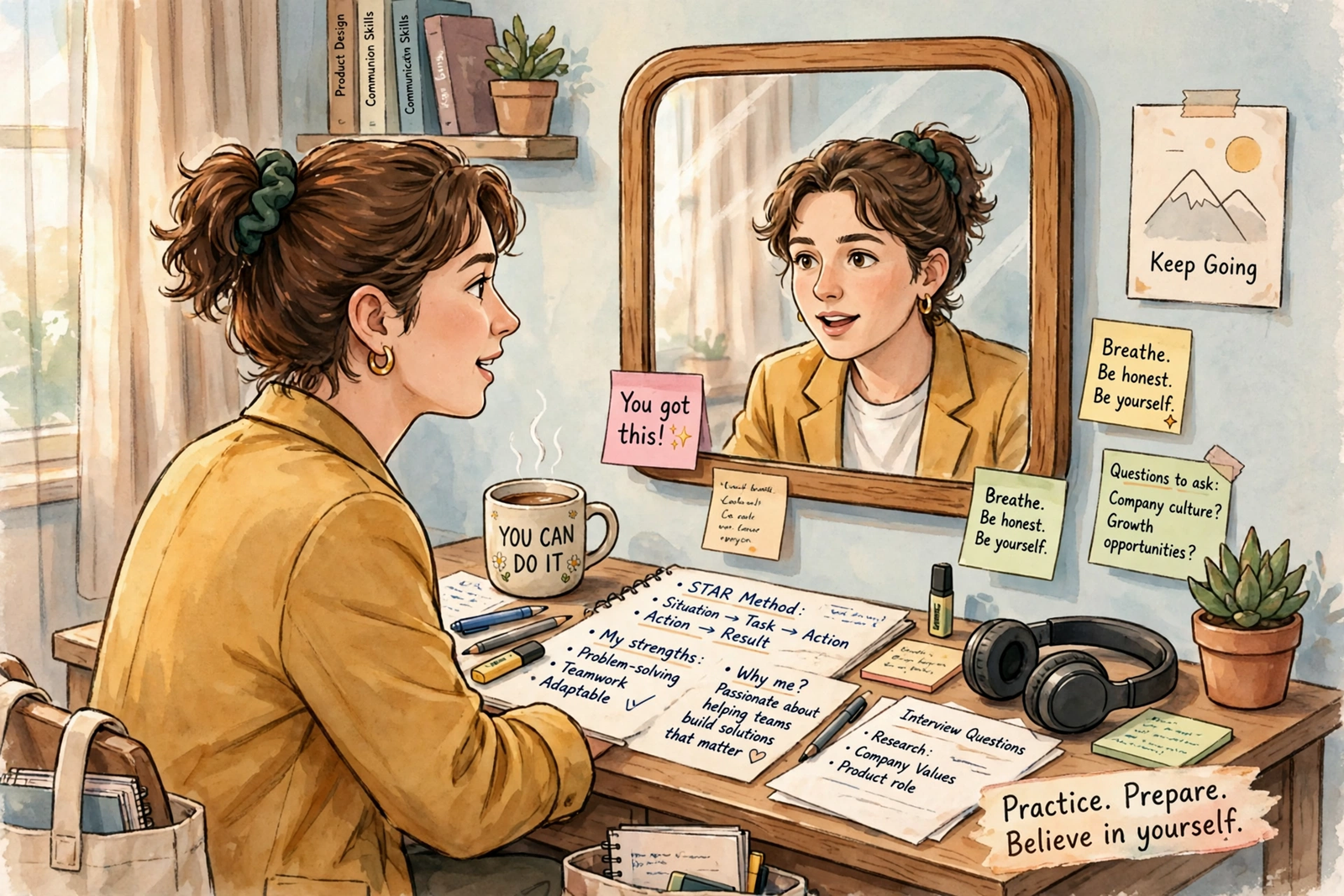
A strength should be tied to the job: if you say you are “careful”, back it up with an example of how careful you have been.
- “What is your greatest strength?” — What is your greatest strength?
- “I am very organized, and I always finish my work on time.” — I am very organized, and I always finish my work on time.
- “I work well in a team.” — I work very well in a team.
- “I am a quick learner.” — I learn very quickly.
- “I am patient with customers, even when they are upset.” — I am patient with customers, even when they are upset.
- “I pay attention to details.” — I pay attention to every detail.
- “I am reliable. I rarely miss a shift.” — I am reliable. I rarely miss a shift.
- “I stay calm under pressure.” — I stay calm under pressure.
- “I am good with numbers and computers.” — I am good with numbers and computers.
- “My coworkers describe me as friendly and hardworking.” — My coworkers describe me as friendly and hardworking.
Group 5: Weaknesses and how you are fixing them — 10 sentences that are honest yet safe
Don’t say “I have no weaknesses” — the interviewer won’t believe you. Pick a real but minor weakness, and immediately say how you are working on it.
- “What is your greatest weakness?” — What is your greatest weakness?
- “Sometimes I am shy when speaking English, but I practice every day.” — Sometimes I am still shy about speaking English, but I practise every day.
- “I used to be nervous about public speaking, so I joined a small speaking group.” — I used to get nervous speaking in front of a group, so I joined a small speaking practice group.
- “I sometimes focus too much on details, so I set deadlines for myself.” — Sometimes I focus too much on details, so I set myself deadlines.
- “I am still learning American workplace culture, and I ask questions when I am unsure.” — I am still learning American workplace culture, and I ask when I am not sure.
- “I am working on my typing speed.” — I am improving my typing speed.
- “I find it hard to say no, so I am learning to manage my time better.” — I find it hard to say no, so I am learning to manage my time better.
- “My English writing is better than my speaking, and I practice speaking with friends.” — My written English is better than my speaking, and I practise speaking with friends.
- “I am a perfectionist, but I am learning to finish on time.” — I am a perfectionist, but I am learning to finish on time.
- “I take feedback seriously and use it to improve.” — I take feedback seriously and use it to improve.
Group 6: Why you want to work here — 10 sentences that show you researched the company
Before the interview, spend 10 minutes reading about the company: what they sell, who they serve, where their branches are. One sentence mentioning something specific lands very differently from a generic one.
- “Why do you want to work here?” — Why do you want to work here?
- “I admire your company’s reputation for good customer service.” — I admire your company’s reputation for great customer service.
- “Your company is close to my home, and I know the neighborhood well.” — Your company is close to my home, and I know this area well.
- “I have been a customer here, and I like the atmosphere.” — I have been a customer here, and I like the atmosphere.
- “I want to build a long-term career, not just find a temporary job.” — I want to build a long-term career, not just find a temporary job.
- “This position fits my experience and my goals.” — This position matches my experience and my goals.
- “I heard good things about this company from friends.” — I have heard many good things about this company from friends.
- “I want to learn from experienced people in this field.” — I want to learn from experienced people in this field.
- “I am looking for a stable job with regular hours.” — I am looking for a stable job with regular hours.
- “I believe I can contribute to your team from day one.” — I believe I can contribute to your team from day one.
Group 7: Teamwork and handling pressure — 10 sentences that tell a situation story
This group often uses situational questions (“Tell me about a time…”). Answer with a short, true story: the situation, what you did, and how it turned out.
- “Tell me about a time you worked in a team.” — Tell me about a time you worked in a team.
- “In my last job, our team finished a big project two days early.” — In my previous job, my team finished a big project two days early.
- “I helped a new coworker learn the job in her first week.” — I helped a new coworker learn the job during her first week.
- “When we were short-staffed, I stayed late to help.” — When we were short-staffed, I stayed late to help.
- “I work well under pressure.” — I work well under pressure.
- “Once, a customer was very angry, and I listened calmly until we found a solution.” — Once, a customer was very angry, and I listened calmly until I found a solution.
- “I can handle many tasks at the same time.” — I can handle several tasks at the same time.
- “If I don’t know something, I ask a supervisor instead of guessing.” — If I don’t know something, I ask my supervisor instead of guessing.
- “I always follow safety rules and company policies.” — I always follow safety rules and company policies.
- “I am flexible. I can work different shifts when needed.” — I am flexible. I can work different shifts when needed.
Group 8: Questions you should ask back — 10 sentences that show real interest
When the interviewer asks “Do you have any questions for us?”, don’t answer “No”. Asking 1–2 questions both scores you points and gets you information you need.
- “Do you have any questions for us?” — Do you have any questions for us?
- “Yes, what does a typical day in this job look like?” — Yes, what does a typical day in this job look like?
- “What are the working hours for this position?” — What are the working hours for this position?
- “Will I receive training before I start?” — Will I receive training before I start?
- “How many people are on the team?” — How many people are on the team?
- “What do you like most about working here?” — What do you enjoy most about working here?
- “When can I expect to hear back from you?” — When can I expect to hear back from you?
- “Is there room to grow in this company?” — Are there opportunities for promotion at the company?
- “What is the next step in the hiring process?” — What is the next step in the hiring process?
- “Thank you for answering my questions.” — Thank you for answering my questions.
Group 9: Salary, schedule and benefits — 10 questions asked politely
Salary is a sensitive topic, but asked the right way it is completely normal in the US. The principles: ask about the salary range, ask for a specific schedule, and don’t be the first to name a number unless you are asked.
- “Could you tell me the salary range for this position?” — Could you tell me the salary range for this position?
- “What is the pay rate per hour?” — What is the hourly pay?
- “Are weekends required for this job?” — Does this job require working weekends?
- “How are shifts scheduled?” — How are shifts scheduled?
- “Do you offer full-time or part-time positions?” — Do you have full-time or part-time positions?
- “Are there benefits, such as health insurance or paid time off?” — Are there benefits such as health insurance or paid time off?
- “How often do employees get paid?” — How often are employees paid?
- “Is overtime available?” — Is there overtime?
- “When would the job start?” — When would the job start?
- “I am open to discussing salary after learning more about the job.” — I am open to discussing salary after learning more about the job.
Group 10: Closing and thanking — 10 sentences that end on a high note
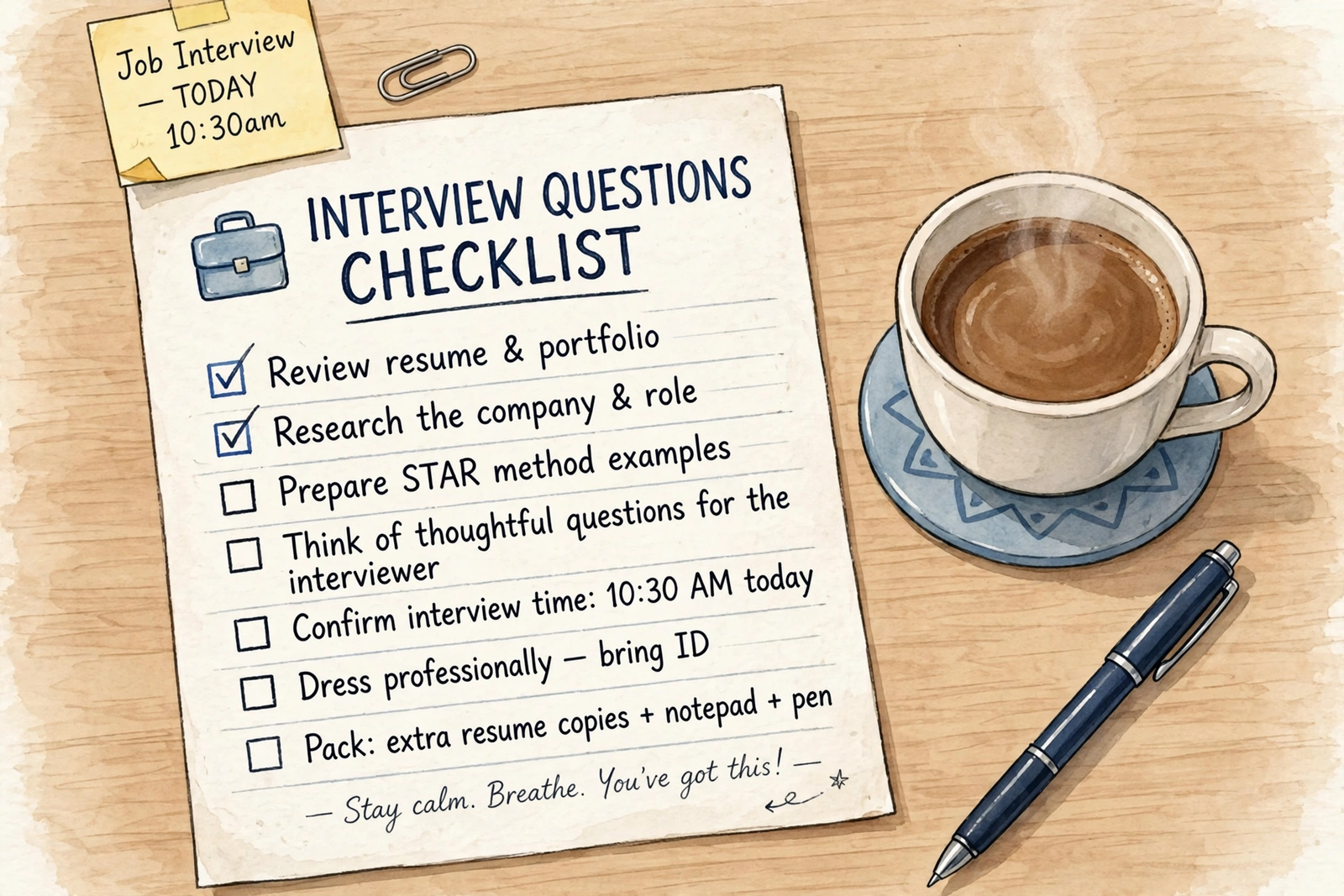
Don’t leave the room without saying thank you. A polite closing sentence, plus a thank-you email sent within 24 hours, is what many candidates skip — and exactly what helps you stand out.
- “Thank you for your time and consideration.” — Thank you for your time and for considering my application.
- “I really appreciate this opportunity.” — I really appreciate this opportunity.
- “I am very interested in this position.” — I am very interested in this position.
- “I look forward to hearing from you.” — I look forward to hearing from you.
- “Please let me know if you need anything else from me.” — Please let me know if you need anything else from me.
- “It was a pleasure meeting you.” — It’s nice to meet you.
- “I hope to join your team soon.” — I hope to join your team soon.
- “Thank you again, and have a great day!” — Thank you again, and have a great day!
- “I will send a thank-you email this afternoon.” — I will send a thank-you email this afternoon.
- “Goodbye, and thank you for your time.” — Goodbye, and thank you for your time.
How to practise these 100 sentences in 10 days (10 sentences a day)
Days 1–2: groups 1 and 2 — greetings and introductions, practised out loud in front of a mirror. Days 3–4: groups 3 and 4 — experience and strengths, swapping in your own name, years and job. Days 5–6: groups 5 and 6 — weaknesses and your reasons for choosing the company, told briefly, without rambling. Days 7–8: groups 7 and 8 — situations and questions to ask back, practised with a friend, one person asking and one answering. Day 9: group 9 — salary and schedule, spoken slowly and clearly. Day 10: group 10 and a full review — rehearse a complete interview from sentence 1 to sentence 100, record yourself and listen for where you still stumble.
A small trick experienced interview-goers in the US use: prepare 3 short stories about yourself in advance — one success, one difficulty you overcame, one about teamwork. Most situational questions can be answered with one of those 3 stories; you just change the angle. You don’t need 100 stories — you need 100 sentences to tell those 3 stories fluently.
5 common mistakes that lose you points
First, answering at too great a length. If “Tell me about yourself” turns into a 5-minute story, the interviewer has lost focus by minute two. Keep each answer to about 1 minute, then stop — if they want more, they will ask.
Second, badmouthing your old company. Even if your reason for leaving is real, frame it toward the future: “I want to find better opportunities to grow” instead of speaking badly of your old boss. The way an interviewer hears you talk about your old boss is exactly how they imagine you will talk about them.
Third, answering “No” when asked whether you have any questions. As covered in group 8, that is your chance to show interest — skipping it wastes a free bonus point.
Fourth, raising salary too early or too rigidly. Ask about the salary range first, listen, and only then discuss. The sentence “I am open to discussing salary after learning more about the job” is a polite shield for this situation.
Fifth, not sending a thank-you email after the interview. A short email within 24 hours — thanking them, naming the position again, saying you look forward to hearing from them — takes 5 minutes, and many candidates never do it. Do it, and you are already ahead of more than half the other applicants.
Quick quiz: have you learned all 100 sentences yet?
Tap the answer you choose — right or wrong, you will know on the spot.
Your score: 0/5 — click an answer to check it right away.
Question 1. You hear “Tell me about yourself” — which answer fits best?
Question 2. “What is your greatest strength?” — which answer matches this post?
Question 3. To ask about the salary range politely, which sentence do you say?
Question 4. Which is the most polite way to close an interview?
Question 5. When asked “Do you have any questions for us?”, which question back is a good one?
Wrapping up: the 100 sentences are your capital — your story is the bonus point
Don't try to learn all 100 sentences in one night before the interview. Learn 10 sentences a day, say them out loud, swap in your own details, and rehearse with a friend. By interview day, you won't remember "which sentences you learned" any more — you will simply find yourself answering naturally, because those sentences have become reflexes.
To practise more job-specific English communication, keep learning in the English section of LingoBubbo, and read English for Job Interviews: 20 Questions and High-Scoring Sample Answers and 100 English Communication Sentences for Restaurant Serving Staff. What position is your next interview for, and which question worries you most? Tell us in the comments — and send this post to a friend who is preparing for an interview; these 100 sentences might be exactly what helps them walk into the interview room tomorrow with confidence.