
Four little characters. One funny story. A lesson your child will still remember at dinner next week. That is the magic of chengyu, the four-character idioms that make Chinese feel less like a school subject and more like a collection of tiny fables. If you are looking for chinese idioms chengyu for beginners, this is the perfect place to start, because these eight are famous, easy to picture, and genuinely useful in everyday conversation.
Every chengyu below comes with its characters, its pinyin, a one-line story, and a moment when you could actually use it. Learn one a week with your child, act it out at the kitchen table, and watch how fast they stick.
What is a chengyu, exactly?
A chengyu (成语, chéngyǔ) is a fixed four-character phrase, usually born from an old story, a historical event, or a piece of folk wisdom. You cannot swap the characters around or translate them word by word and expect them to make sense. Think of them like English sayings such as “the early bird catches the worm”: the meaning lives in the whole phrase, and the story behind it is half the fun.
That story part is why children love them. A child who forgets a vocabulary list will still remember the man who waited by a tree stump for a rabbit. Start with the story, let the characters follow, and the idiom teaches itself.
8 chinese idioms chengyu for beginners to learn first
| Chengyu | Pinyin | Means | The story in one line |
|---|---|---|---|
画蛇添足  | huà shé tiān zú | Ruining good work with an unnecessary extra | Men race to draw a snake; the winner adds feet and loses. |
守株待兔  | shǒu zhū dài tù | Waiting for luck instead of working | A farmer sees a rabbit crash into a stump, then waits there every day. |
亡羊补牢 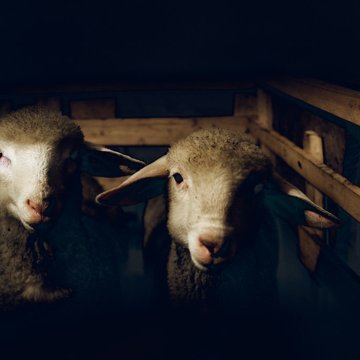 | wáng yáng bǔ láo | It is not too late to fix a mistake | After sheep escape through a broken pen, the farmer finally repairs it. |
井底之蛙  | jǐng dǐ zhī wā | Someone with a narrow view of the world | A frog at the bottom of a well thinks the sky is only as big as the well opening. |
对牛弹琴  | duì niú tán qín | Talking to someone who cannot appreciate it | A musician plays beautiful music to a cow, which just keeps chewing grass. |
半途而废  | bàn tú ér fèi | Giving up halfway | A traveller turns back midway down the road and never arrives. |
刻舟求剑  | kè zhōu qiú jiàn | Sticking rigidly to an old method when things have changed | A man marks his boat where his sword fell in, then looks for it there after the boat has moved on. |
掩耳盗铃  | yǎn ěr dào líng | Fooling yourself while everyone else can see | A thief covers his own ears while stealing a bell, thinking nobody else can hear it. |
The stories kids retell on their own
Start with 画蛇添足 (huà shé tiān zú) and 守株待兔 (shǒu zhū dài tù). They are the two my students retell without being asked. Give your child paper and ask them to draw the snake race, then ask who wins and why. The moment they say “he added feet and lost”, the idiom is theirs. It works because the picture does the teaching, not a definition.

Then try 亡羊补牢 (wáng yáng bǔ láo), the kindest idiom on this list. Every child knows what it feels like to make a mistake and wish it were too late. This one says it is not. When homework goes wrong or a toy breaks, saying “亡羊补牢” turns a scolding into a plan: what do we fix first? Parents tell me this is the one their children start using on them, which is exactly how it should be.
How to use chengyu without sounding like a textbook
Here is the honest truth: nobody drops a chengyu into every sentence. Native speakers use them sparingly, like a pinch of spice. One well-placed idiom in a story or a joke lands beautifully; five in a row sounds like a recital. Teach your child the same instinct. A good rule is one chengyu per story, and only when it fits the moment.
Three habits make them stick. First, say the chengyu out loud together, slowly, with the tones: jǐng dǐ zhī wā, duì niú tán qín, bàn tú ér fèi. Second, connect each one to something real: “Remember when you almost gave up on the puzzle? That would have been 半途而废.” Third, keep a little notebook or a wall of cards, one idiom per card, with the child’s own drawing on the back. Reviewing five cards before bed beats cramming twenty on a Sunday.

When should beginners start learning chengyu?
Earlier than most textbooks suggest. You do not need HSK 4 vocabulary to enjoy a good story, and the eight here use characters many beginners already meet, like 蛇 (shé, snake), 兔 (tù, rabbit), and 羊 (yáng, sheep). The trick is learning them as whole phrases through stories, not as four separate words to memorise. If your child can retell the story, the phrase will follow.
One caution, though. Some chengyu carry a teasing edge. Calling someone 井底之蛙 (jǐng dǐ zhī wā) to their face is not kind, and 对牛弹琴 (duì niú tán qín) can sound rude if it lands on the wrong person. Teach the meaning and the manners together: these are for stories and jokes with family, not for labelling classmates.
Quick Quiz
Test yourself on chengyu idioms for beginners. Click an answer to see if you are right — your score is at the top.
Score: 0/5
1. How many characters does a chengyu usually have?
2. What does 画蛇添足 warn against?
3. Which chengyu means ‘it is not too late to fix a mistake’?
4. How many of these chengyu should a beginner start with, and at what pace?
5. What is a good rule for using chengyu in conversation?
Quick answers about learning chengyu
How many chengyu should a beginner learn?
Start with these eight, one per week. Eight idioms a child can actually use beat fifty they can only recite for a test. Add a new one only when an old one has shown up in real conversation.
Do I need to write all four characters from memory?
Not at first. Recognising the phrase and saying it with correct tones matters far more. Writing comes naturally once a child has seen the characters on cards and in storybooks a dozen times.
Can adults learn chengyu the same way?
Absolutely, and honestly, adults enjoy the stories just as much. The same eight work in an adult beginner class, and they make excellent small talk with native speakers, who are usually delighted when a learner uses one correctly.
Ready to hear these stories told properly, with audio and characters side by side? Our Chinese programme builds vocabulary through stories just like these, and you can try the free HSK 1 trial lessons to see if the style fits your family. Start with the snake, and do not add feet.
📷 Illustration photo sources: real photos from the open image libraries Openverse / Wikimedia Commons / Flickr (licenses CC0, CC BY, CC BY-SA) — one real-life photo for each word, no AI-generated artwork. Stroke-order animation: Make Me a Hanzi (HanziWriter) data.