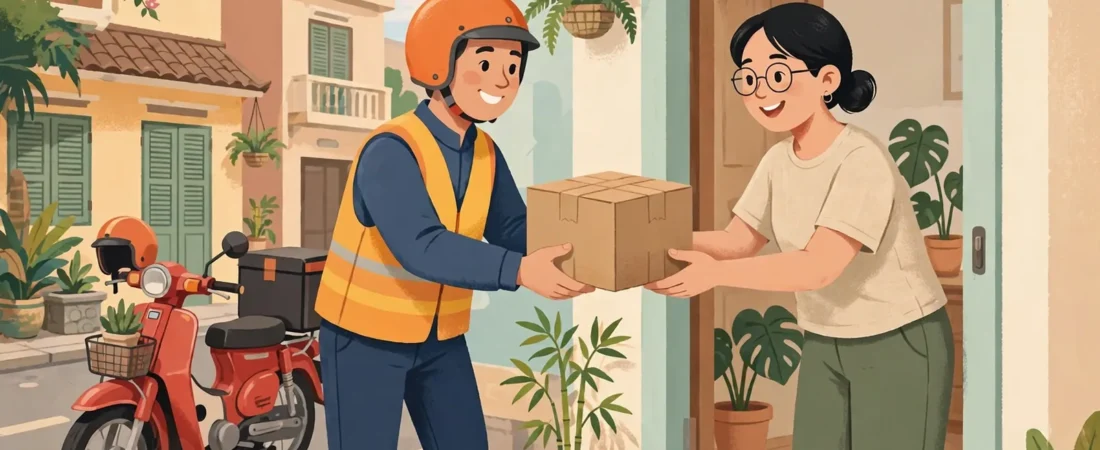
You drive in an area with lots of Chinese customers, or you deliver for a shop selling into the Chinese market, and every time a customer asks you something in Chinese you just smile awkwardly and open a translation app? The good news is this job does not require you to be good at Chinese. With about 60 “go-to” sentences you can handle almost every situation in the car and at the door.
Below are 60 sentences grouped by the 6 real situations of the job: picking up passengers, on the road, delivering, phoning and texting, handling problems, and polite endings. Each sentence comes with simplified Chinese characters, pinyin with tone marks, and the English meaning. Read each sentence aloud twice, then save this article so you can open it right there on the road.
How to use these 60 sentences effectively
Do not learn all 60 by heart from sentence 1 to sentence 60 like cramming for a test. Learn by situation: this week if you are driving, learn groups 1 and 2; next week if you are delivering, learn groups 3 and 4. Save group 5 for an “unlucky” day — traffic jams, getting lost, customers not picking up the phone. Group 6 is for every day, because every one of those sentences is a polite one that closes a ride beautifully.
A note on forms of address: at work, Chinese speakers usually use 您 (nín) instead of 你 (nǐ) with customers — it is more polite, and customers see you as more professional too. Every sentence below uses 您 with customers, so just say them exactly as written.
About pronunciation: the pinyin comes with tone marks (for example nǐ, hǎo). Do not skip the tone marks — say the tone wrong and the customer may understand a completely different word. Listen to the audio in each group to copy the intonation.
Group 1: Picking up passengers and confirming the destination (sentences 1–10)
The 10 sentences that open every ride: greet, confirm the right passenger, confirm the right place.
- 您好,我是司机。 (Nín hǎo, wǒ shì sījī.) — Hello, I am the driver.
- 您要去哪儿? (Nín yào qù nǎr?) — Where would you like to go?
- 请上车。 (Qǐng shàng chē.) — Please get in.
- 请系好安全带。 (Qǐng jì hǎo ānquán dài.) — Please fasten your seat belt.
- 您的目的地是哪里? (Nín de mùdìdì shì nǎli?) — Where is your destination?
- 请把地址发给我。 (Qǐng bǎ dìzhǐ fā gěi wǒ.) — Please send me the address.
- 我马上就到。 (Wǒ mǎshang jiù dào.) — I will be there right away.
- 我在门口等您。 (Wǒ zài ménkǒu děng nín.) — I am waiting for you at the entrance.
- 请问,您是李先生吗? (Qǐngwèn, nín shì Lǐ xiānsheng ma?) — Excuse me, are you Mr Li?
- 行李放后备箱吧。 (Xíngli fàng hòubèixiāng ba.) — Let us put the luggage in the boot.
Listen to the greeting and pick-up sentences:
Sentence 9 is well worth learning by heart: confirming the customer’s name before they get in saves you from picking up the wrong person — something that happens all the time at airports and crowded places. Just swap “李先生” for your customer’s surname and it is ready to use.

Group 2: On the road (sentences 11–20)
Once the wheels are rolling, that is when customers ask the most: how long, which route, how much.
- 大概需要二十分钟。 (Dàgài xūyào èrshí fēnzhōng.) — It takes about 20 minutes.
- 前面有点儿堵车。 (Qiánmiàn yǒudiǎnr dǔchē.) — There is a bit of a traffic jam ahead.
- 我们走高速,好吗? (Wǒmen zǒu gāosù, hǎo ma?) — Shall we take the motorway?
- 您赶时间吗? (Nín gǎn shíjiān ma?) — Are you in a hurry?
- 请问,走这条路可以吗? (Qǐngwèn, zǒu zhè tiáo lù kěyǐ ma?) — Excuse me, is it OK to take this road?
- 左转,然后直走。 (Zuǒ zhuǎn, ránhòu zhí zǒu.) — Turn left, then go straight.
- 到了,前面就是。 (Dào le, qiánmiàn jiù shì.) — We have arrived — it is just ahead.
- 请在路边停一下。 (Qǐng zài lùbiān tíng yíxià.) — Please stop at the roadside for a moment.
- 一共五十块。 (Yígòng wǔshí kuài.) — 50 yuan in total.
- 请扫码付款。 (Qǐng sǎo mǎ fùkuǎn.) — Please scan the code to pay.
Practical tip: sentence 14, “您赶时间吗?” (“Are you in a hurry?”), asked before you choose the route, will save you a lot of trouble. If the customer is in a hurry, take the motorway even with the toll; if they are relaxed, the ordinary road is cheaper — one question, and you are both comfortable.
Group 3: Delivering and confirming receipt (sentences 21–30)
The delivery rider’s group: knock on the door, deliver to the right person, get a signature, leave instructions.
- 您好,您的包裹到了。 (Nín hǎo, nín de bāoguǒ dào le.) — Hello, your parcel has arrived.
- 请签收一下。 (Qǐng qiānshōu yíxià.) — Please sign for it.
- 请出示一下身份证。 (Qǐng chūshì yíxià shēnfènzhèng.) — Please show your ID card.
- 包裹放在门口可以吗? (Bāoguǒ fàng zài ménkǒu kěyǐ ma?) — Can I leave the parcel at the door?
- 请检查一下包裹。 (Qǐng jiǎnchá yíxià bāoguǒ.) — Please check the parcel.
- 东西有点儿重,小心。 (Dōngxi yǒudiǎnr zhòng, xiǎoxīn.) — The things are a bit heavy — careful.
- 这是易碎品,请轻放。 (Zhè shì yìsuìpǐn, qǐng qīng fàng.) — This is fragile — please set it down gently.
- 您的外卖到了。 (Nín de wàimài dào le.) — Your food delivery has arrived.
- 请趁热吃。 (Qǐng chèn rè chī.) — Please eat it while it is hot.
- 麻烦给个好评,谢谢! (Máfan gěi gè hǎopíng, xièxie!) — Please leave me a good review, thank you!
Listen to the delivery and sign-for sentences:
Sentence 30 may sound like “asking a favour”, but in Chinese delivery culture, politely asking for a good review is completely normal. Say it with a smile together with sentence 29 (please eat it while it is hot) and customers are usually happy to give you 5 stars.
Group 4: Phoning and texting (sentences 31–40)
Many failed trips and deliveries are not about getting lost — they are about not being able to reach the customer. These 10 sentences cover that part.
- 您好,我是送货员。 (Nín hǎo, wǒ shì sònghuòyuán.) — Hello, I am the delivery driver.
- 请问,您的地址是哪里? (Qǐngwèn, nín de dìzhǐ shì nǎli?) — Excuse me, what is your address?
- 您在家吗? (Nín zài jiā ma?) — Are you at home?
- 我在楼下等您。 (Wǒ zài lóuxià děng nín.) — I am waiting for you downstairs.
- 请问,几栋几号? (Qǐngwèn, jǐ dòng jǐ hào?) — Excuse me, which building and which number?
- 电话打不通。 (Diànhuà dǎ bu tōng.) — I cannot get through on the phone.
- 我给您发短信了。 (Wǒ gěi nín fā duǎnxìn le.) — I have sent you a text message.
- 请回复一下,谢谢。 (Qǐng huífù yíxià, xièxie.) — Please reply, thank you.
- 明天上午送可以吗? (Míngtiān shàngwǔ sòng kěyǐ ma?) — Can I deliver it tomorrow morning?
- 不好意思,我来晚了。 (Bù hǎoyìsi, wǒ lái wǎn le.) — Sorry, I am late.
Listen to confirming an address over the phone:
Sentence 35 is worth its weight in gold in Chinese apartment blocks: every complex is divided by 栋 (dòng — building) and 号 (hào — number). Ask for both pieces of information and you save yourself from wandering around the whole complex.

Group 5: Problems and handling them (sentences 41–50)
The “rescue” group: traffic jams, a broken-down vehicle, the wrong address, not understanding what was said. Learn this group by heart and you will never again be stuck standing still with nothing to say.
- 对不起,路有点儿堵。 (Duìbuqǐ, lù yǒudiǎnr dǔ.) — Sorry, the road is a bit jammed.
- 请稍等一下。 (Qǐng shāo děng yíxià.) — Please wait a moment.
- 车坏了,我在修。 (Chē huài le, wǒ zài xiū.) — The vehicle has broken down; I am fixing it.
- 地址不对,我找不到。 (Dìzhǐ bú duì, wǒ zhǎo bu dào.) — The address is not right; I cannot find it.
- 请再说一遍。 (Qǐng zài shuō yí biàn.) — Please say that again.
- 我听不懂,请慢点儿说。 (Wǒ tīng bu dǒng, qǐng màn diǎnr shuō.) — I do not understand; please speak more slowly.
- 别着急,马上就好。 (Bié zháojí, mǎshang jiù hǎo.) — Do not worry, it will be sorted right away.
- 今天送不了,明天行吗? (Jīntiān sòng bu liǎo, míngtiān xíng ma?) — I cannot deliver today — is tomorrow OK?
- 东西少了一件。 (Dōngxi shǎo le yí jiàn.) — One item is missing.
- 我帮您联系客服。 (Wǒ bāng nín liánxì kèfú.) — I will help you contact customer service.
Sentence 46 is a genuine “lifesaver”: admitting you do not understand and asking the customer to slow down is always better than nodding along and then doing it wrong. Chinese customers are usually very happy to slow down when you open with this sentence.
Group 6: Politeness and endings (sentences 51–60)
The 10 closing sentences: thank, wish well, say goodbye. Whether a ride ends beautifully comes down to these last 30 seconds.
- 谢谢! (Xièxie!) — Thank you!
- 不客气。 (Bú kèqi.) — You are welcome.
- 请慢走。 (Qǐng màn zǒu.) — Take care as you go.
- 祝您一路平安。 (Zhù nín yílù píng’ān.) — Have a safe journey.
- 祝您用餐愉快。 (Zhù nín yòngcān yúkuài.) — Enjoy your meal.
- 欢迎下次再来。 (Huānyíng xià cì zài lái.) — You are welcome back any time.
- 再见! (Zàijiàn!) — Goodbye!
- 辛苦了! (Xīnkǔ le!) — Thank you for your hard work!
- 您先请。 (Nín xiān qǐng.) — After you, please.
- 有问题请联系我。 (Yǒu wèntí qǐng liánxì wǒ.) — If anything comes up, please contact me.
Listen to the polite closing sentences:
2 model dialogues: putting the sentences together into real exchanges
Dialogue 1 — A driver picking up a passenger:
A: 您好,我是司机。您要去哪儿?(Nín hǎo, wǒ shì sījī. Nín yào qù nǎr?) — Hello, I am the driver. Where would you like to go?
B: 我要去火车站。(Wǒ yào qù huǒchē zhàn.) — I want to go to the train station.
A: 大概需要二十分钟,前面有点儿堵车。(Dàgài xūyào èrshí fēnzhōng, qiánmiàn yǒudiǎnr dǔchē.) — It takes about 20 minutes; there is a bit of a traffic jam ahead.
B: 没关系,我不赶时间。(Méi guānxi, wǒ bù gǎn shíjiān.) — That is fine, I am not in a hurry.
A: 到了,一共五十块。(Dào le, yígòng wǔshí kuài.) — We have arrived — 50 yuan in total.
B: 请扫码付款。谢谢!(Qǐng sǎo mǎ fùkuǎn. Xièxie!) — Here, let me scan the code to pay. Thank you!
Dialogue 2 — Delivering food:
A: 您好,您的外卖到了。我在楼下等您。(Nín hǎo, nín de wàimài dào le. Wǒ zài lóuxià děng nín.) — Hello, your food delivery has arrived. I am waiting for you downstairs.
B: 好的,我马上下来。(Hǎo de, wǒ mǎshang xiàlái.) — OK, I will come down right away.
A: 请签收一下。(Qǐng qiānshōu yíxià.) — Please sign for it.
B: 谢谢,辛苦了!(Xièxie, xīnkǔ le!) — Thank you — you have worked hard!
A: 不客气,请慢走。(Bú kèqi, qǐng màn zǒu.) — You are welcome, take care as you go.
Summary table: the 60 sentences by situation
| Situation | Sentence numbers | The most “go-to” sentence |
|---|---|---|
| Picking up, confirming the destination | 1–10 | 您要去哪儿?— Where would you like to go? |
| On the road | 11–20 | 前面有点儿堵车。— There is a bit of a traffic jam ahead. |
| Delivering, confirming receipt | 21–30 | 请签收一下。— Please sign for it. |
| Phoning, texting | 31–40 | 请问,几栋几号?— Which building and which number? |
| Problems, handling them | 41–50 | 我听不懂,请慢点儿说。— I do not understand; please speak more slowly. |
| Politeness, endings | 51–60 | 祝您一路平安。— Have a safe journey. |
Quick quiz: how many sentences can you use now?
Tap the answer you choose — you will know right away whether it is right or wrong.
Your score: 0/5 — click an answer to check it right away.
Question 1. What does 您要去哪儿? mean?
Question 2. The driver says 前面有点儿堵车 — what does it mean?
Question 3. When delivering, what is 请签收一下 asking the customer to do?
Question 4. When do you use 请扫码付款?
Question 5. The customer says 我听不懂,请慢点儿说 — what does it mean?
Frequently asked questions
Are 60 sentences enough to drive Chinese customers? Enough for most everyday situations: picking up, driving, paying, delivering, phoning, handling small problems. Complicated matters like fare disputes or accidents still need a translation app to support you — do not try to talk your way through something that has gone beyond your stock of sentences.
Does it matter if I get the tones wrong? Yes, but it is not a disaster in a work context. Customers can usually guess what you mean from the situation. Even so, a few word pairs change meaning when the tone is wrong (buy 买 mǎi and sell 卖 mài), so listen carefully to the audio in the sentences that contain these pairs.
How long does it take to learn 60 sentences? Learn one group of 10 sentences a day, read them aloud and try them out right away in your shift, and within a week you will know all 60. More important than knowing them is daring to say the first sentence — the second one will follow naturally.
Which sentence will you try saying first today? Tell me in the comments, and send this article to a colleague who drives the same route — if the whole team can speak Chinese with customers, every trip gets easier. Want to learn properly from the start? Begin with LingoBubbo's Chinese page with lesson 1 你好, then go one lesson at a time — every lesson already comes with illustrated vocabulary, audio and a quiz.