Featured this week
Pick a post below and start learning.
Find a Language Exchange Partner
Where to look and what to say first.
WORKAnswer Work Phone Calls in Professional English
Sound calm and clear on every call.
ESPAÑOLSpanish Small Talk: 20 Friendly Phrases
Sound friendly, not robotic.
Tips, trends, and real talk about learning English, Chinese, Korean, Spanish, and Vietnamese — new posts every day.
-

How to Use 了 (le) to Talk About Things That Already Happened: HSK 2 Guide
“I ate.” Three characters in Chinese: 我吃了饭。 One of them, 了 (le), does a job English needs a whole verb ending for. It tells your listener that the action is finished, done, in the past. And it does a second job too — it can announce that something has changed. Two jobs, one small word,…
-

HSK 2 Weather and Seasons Vocabulary: Talk About the Weather in Chinese
You step outside in the morning, feel the cold air on your face, and turn to your friend. What do you say? If you are learning Chinese, this is one of the first real conversations you will ever have — and it is also one of the easiest. Weather talk needs only a handful of…
-

How to Use 得 (de) to Describe How Well You Do Something: HSK 2 Guide
“He runs.” That is a fact. “He runs very fast.” That is a compliment, a warning, or a reason to pick him for your team. In Chinese, the tiny word that turns a plain action into a description of how well someone does it is 得 (de). One small character, and suddenly you can praise…
-

Polite English Phrases to Ask a Passenger to Fasten Their Seatbelt
Your passenger just got in, closed the door, and settled into the back seat. You glance in the mirror. No seatbelt. You have about three seconds to say something polite in English before you pull away, and the wrong sentence can make the whole ride awkward. The right sentence takes two seconds, sounds friendly, and…
-
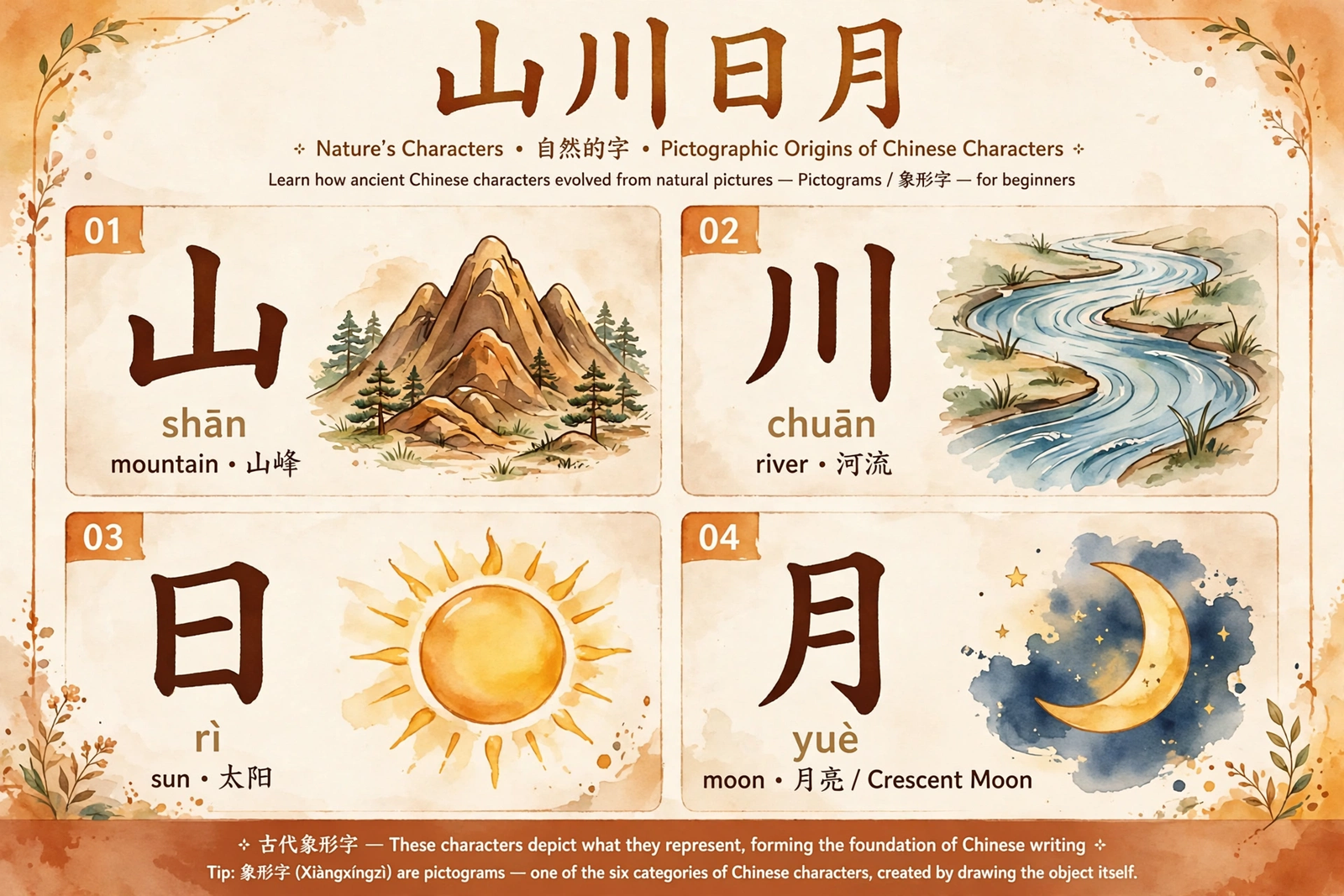
“Chinese Character Stories: 12 Characters That Tell You Their Own Meaning”
“Twelve Chinese characters that explain themselves — mountain, river, sun, moon, tree, forest and home. Learn the stories in the shapes and never forget them.”
-

“HSK 6 Vocabulary: The Advanced Words That Separate Fluent From Near-Fluent”
“The hsk 6 vocabulary list has 2,500 new words, but fluency comes from how you learn them. Word families, collocations and near-synonyms, with examples.”
-

How to Use 比 (bǐ) to Compare Things in Chinese: HSK 2 Guide
Who is taller, you or your friend? Which shop is cheaper? Is today colder than yesterday? In English, you add “-er” or use “more.” In Chinese, you use one small word: 比 (bǐ). It sits between the two things you are comparing, and once you learn its pattern, you can compare almost anything — height,…
-

“Chinese Hospital and Doctor Words: The Phrases You Hope You Never Need”
“Fever at 2 a.m. in Beijing? Learn the Chinese hospital doctor words that get you seen, understood and treated, from 我发烧了 to 请给我一点药, before you ever need them.”
-

“How to Say Sorry in Chinese: The Levels of Apology From Casual to Formal”
“Sorry is not one word in Chinese. Learn the five levels of apology, from a light 不好意思 to a formal 请原谅, and know exactly which one fits every mistake you make.”
-

《天龙八部之宿敌》 Tiān Lóng Bā Bù zhī Sù Dí (Fated Enemy) — Xu Song (许嵩)
Song #13: 《天龙八部之宿敌》 by Xu Song (许嵩) — the 2011 wuxia classic back at #1 on China’s charts in November 2026. Learn its viral chorus with Hanzi, pinyin and English translation, line by line.