한번 드셔 보세요
🎯 Objectives
- Use 25 new common verbs, adjectives and honorific words
- Use honorific -시- and special verbs, 주세요, 아/어 보다 and (으)ㄴ 적이 있다
- Understand a polite restaurant dialogue and a cumulative review passage
📚 Picture vocabulary (25 words)
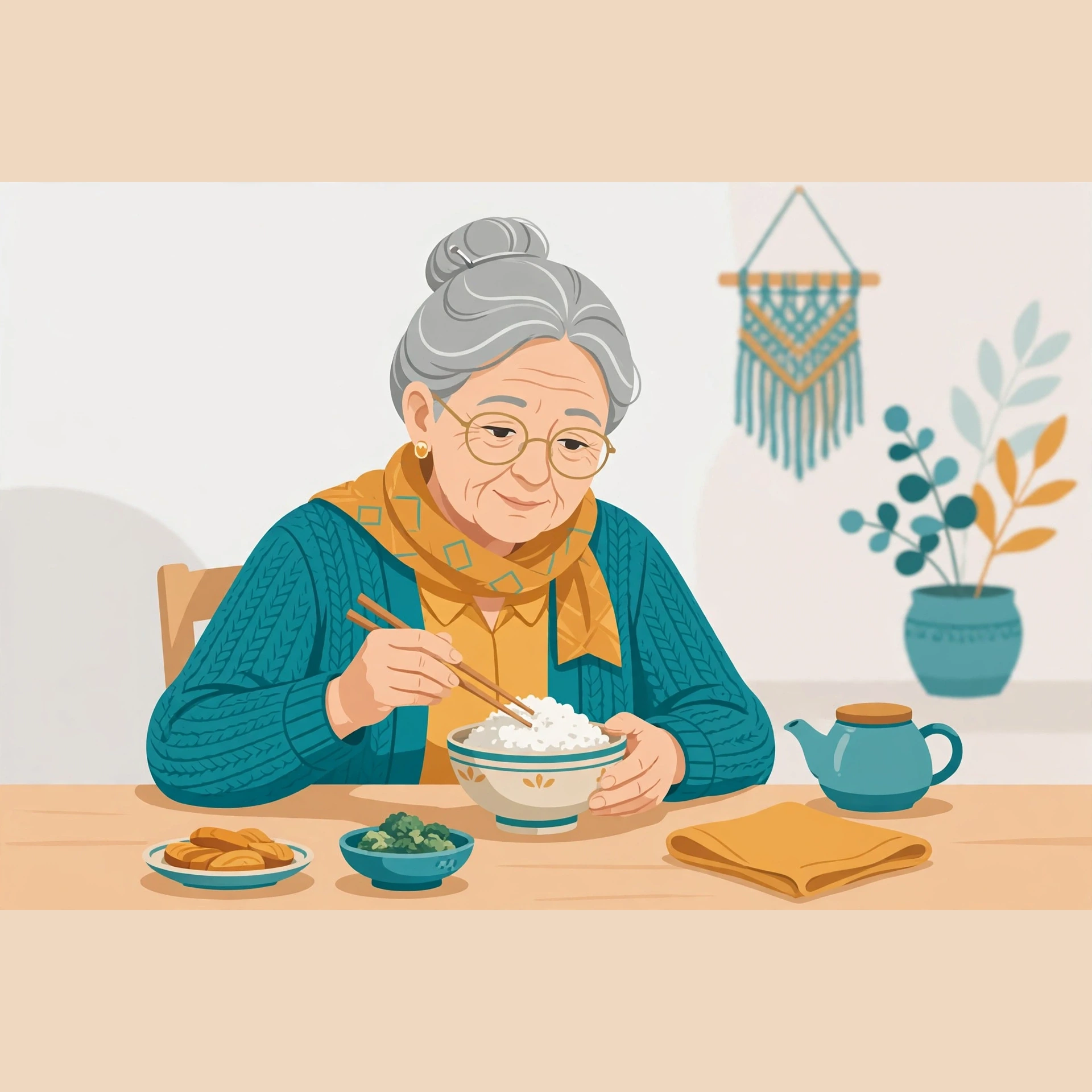

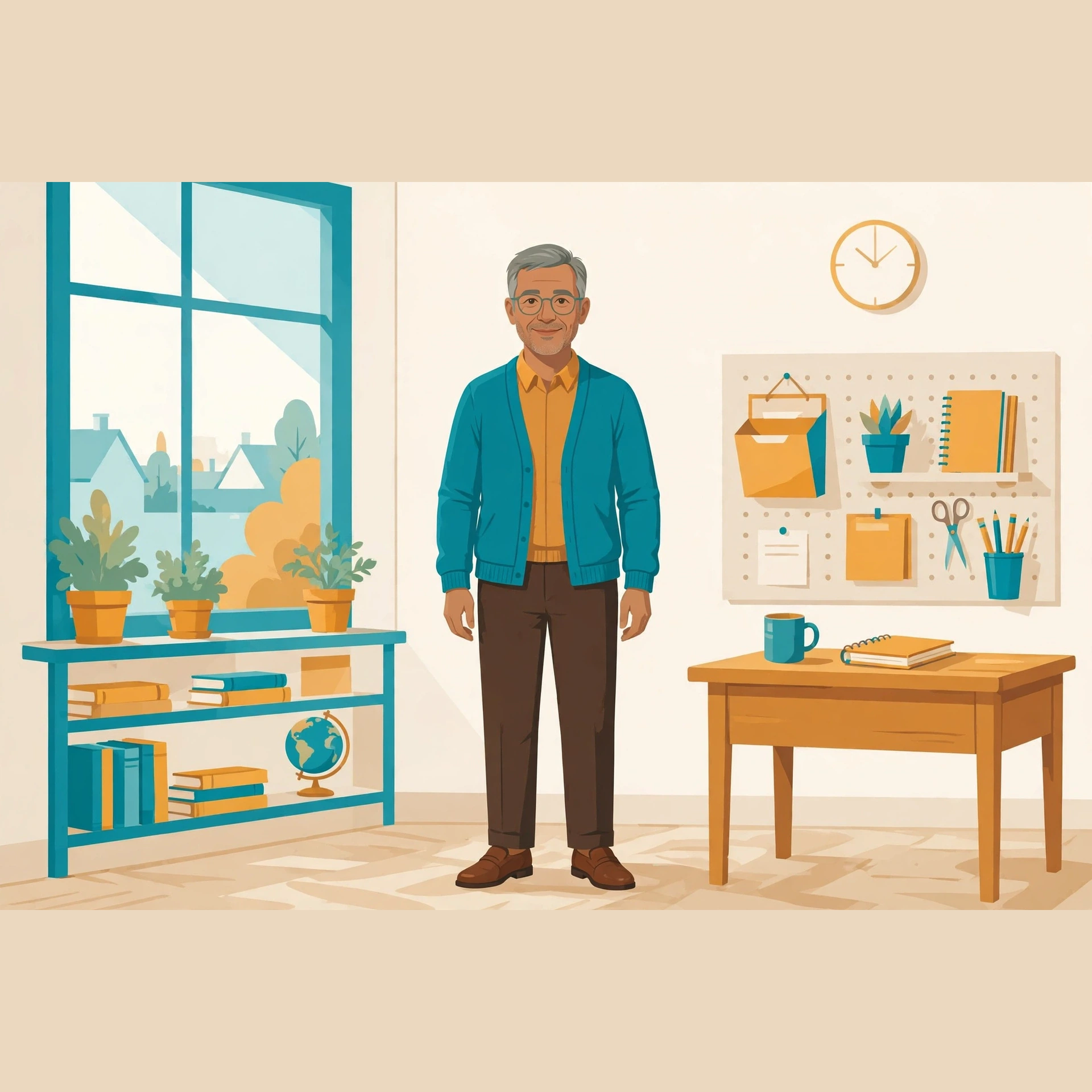

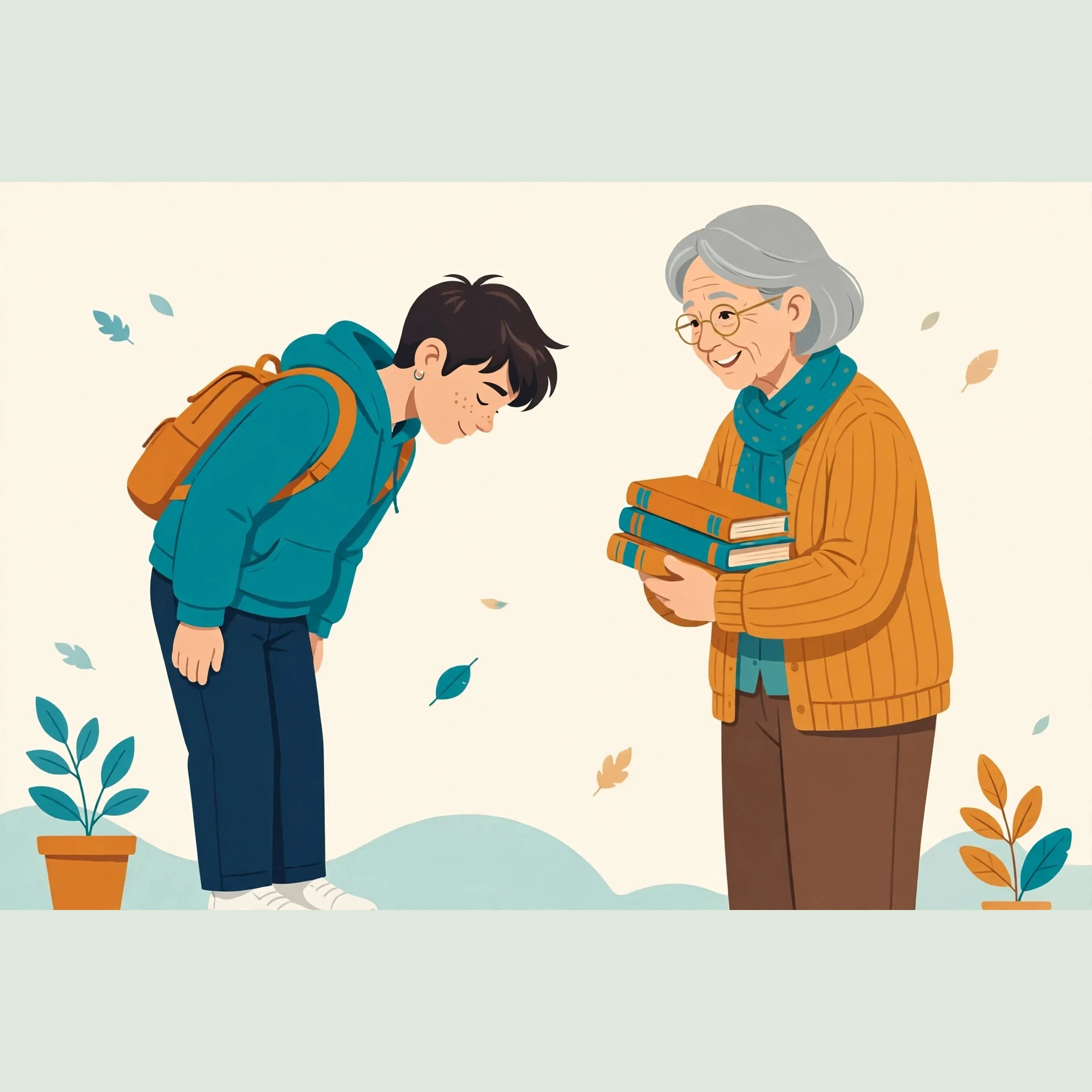














Every card has a picture and audio.
🖼️ Image credits
- 드시다 (deusida) — AI-generated in workspace: Original AI-generated illustration created in this workspace; no third-party assets used.
- 주무시다 (jumusida) — AI-generated in workspace: Original AI-generated illustration created in this workspace; no third-party assets used.
- 계시다 (gyesida) — AI-generated in workspace: Original AI-generated illustration created in this workspace; no third-party assets used.
- 말씀하다 (malsseumhada) — AI-generated in workspace: Original AI-generated illustration created in this workspace; no third-party assets used.
- 뵙다 (boepda) — AI-generated in workspace: Original AI-generated illustration created in this workspace; no third-party assets used.
- 드리다 (deurida) — AI-generated in workspace: Original AI-generated illustration created in this workspace; no third-party assets used.
- 도와주다 (dowajuda) — AI-generated in workspace: Original AI-generated illustration created in this workspace; no third-party assets used.
- 빌리다 (billida) — AI-generated in workspace: Original AI-generated illustration created in this workspace; no third-party assets used.
- 빌려주다 (billyeojuda) — AI-generated in workspace: Original AI-generated illustration created in this workspace; no third-party assets used.
- 찾다 (chatda) — AI-generated in workspace: Original AI-generated illustration created in this workspace; no third-party assets used.
- 잃다 (ilta) — AI-generated in workspace: Original AI-generated illustration created in this workspace; no third-party assets used.
- 기억하다 (gieokada) — AI-generated in workspace: Original AI-generated illustration created in this workspace; no third-party assets used.
- 잊다 (itda) — AI-generated in workspace: Original AI-generated illustration created in this workspace; no third-party assets used.
- 준비하다 (junbihada) — AI-generated in workspace: Original AI-generated illustration created in this workspace; no third-party assets used.
- 시작하다 (sijakada) — AI-generated in workspace: Original AI-generated illustration created in this workspace; no third-party assets used.
- 끝나다 (kkeunnada) — AI-generated in workspace: Original AI-generated illustration created in this workspace; no third-party assets used.
- 쉬다 (swida) — AI-generated in workspace: Original AI-generated illustration created in this workspace; no third-party assets used.
- 놀다 (nolda) — AI-generated in workspace: Original AI-generated illustration created in this workspace; no third-party assets used.
- 웃다 (utda) — AI-generated in workspace: Original AI-generated illustration created in this workspace; no third-party assets used.
- 울다 (ulda) — AI-generated in workspace: Original AI-generated illustration created in this workspace; no third-party assets used.
- 아프다 (apeuda) — AI-generated in workspace: Original AI-generated illustration created in this workspace; no third-party assets used.
- 건강하다 (geonganghada) — AI-generated in workspace: Original AI-generated illustration created in this workspace; no third-party assets used.
- 행복하다 (haengbokada) — AI-generated in workspace: Original AI-generated illustration created in this workspace; no third-party assets used.
- 슬프다 (seulpeuda) — AI-generated in workspace: Original AI-generated illustration created in this workspace; no third-party assets used.
- 피곤하다 (pigonhada) — AI-generated in workspace: Original AI-generated illustration created in this workspace; no third-party assets used.
📖 Grammar
📖 Basic honorifics — -시- and honorific verbs ·
Stem + (으)시- · 드시다/주무시다/계시다/말씀하시다 · humble 뵙다/드리다
Add -시- to the verb stem when the subject deserves respect: 가다 → 가세요, 읽다 → 읽으세요. Special honorific verbs to memorize: 먹다/마시다 → 드시다; 자다 → 주무시다; 있다 → 계시다; 말하다 → 말씀하시다. Humble forms (lowering yourself): 보다 → 뵙다; 주다 → 드리다. Restaurant note: 주문하시겠어요? = “would you like to order?” — a polite set phrase; recognizing it is enough for now.
📖 주세요
Noun + 주세요 · verb + 아/어 주세요
Noun + 주세요 asks for a thing: 물 주세요 (water, please), 메뉴 주세요 (the menu, please). Verb + 아/어 주세요 asks for an action: 도와주세요 (please help me — 돕다 is ㅂ-irregular, 도와-).
📖 아 / 어 보다
Stem + 아/어 보다 · past: 아/어 봤어요 (have tried)
아/어 보다 means trying something: 먹어 보세요 (try eating), 읽어 보세요 (try reading). Its past form 봤어요 means “have tried”: 한국 음식을 먹어 봤어요.
📖 (으)ㄴ 적이 있다
Consonant stem + 은 적이 있다 · vowel stem + ㄴ 적이 있다
Expresses past experience: consonant stems + 은 적이 있다, vowel stems + ㄴ 적이 있다 (가다 → 간 적이 있다). The negative 적이 없어요 means “have never”.
Cumulative review (Lessons 5–9)
Checklist Lessons 5 → 9 + the Lesson 10 review quiz
Checklist: 이에요/예요, 은/는/이/가/을/를 (L5) → 아요/어요, ㅂ니다/습니다, 안, 에/에서 (L6) → 았/었, ㄹ 거예요, 와/과/하고, (으)로, numbers + counters (L7) → -지 않다/-지 못하다, 고 싶다, 아야/어야 하다, 아서/어서, 고/지만 (L8) → (으)면, 아도/어도, 기 때문에, 보다, 처럼, 것 같다, (으)려고 하다 (L9). Take the cumulative quiz, check answers, and log weak points for re-drilling.
💬 Dialogue
🗣️ clerk) ·
🎧 Listening
📖 Answer key
Listening: 1. 물을 달라고 해요. 2. 비빔밥을 한번 드셔 보라고 해요. 3. 팔천 원이에요.
Reading: 1. 작년에 시작했어요. 2. 한국어를 배우고 싶어서. 3. 네, 김치를 먹어 봤어요. 4. 한국에 가려고 해요.
📖 Reading
📖 Answer key
Listening: 1. 물을 달라고 해요. 2. 비빔밥을 한번 드셔 보라고 해요. 3. 팔천 원이에요.
Reading: 1. 작년에 시작했어요. 2. 한국어를 배우고 싶어서. 3. 네, 김치를 먹어 봤어요. 4. 한국에 가려고 해요.
🎬 Movie line
🎞️ 나의 아저씨 (My Mister, 2018) — tvN — Park Dong-hoon (박동훈, Lee Sun-kyun) asks Lee Ji-an (이지안) in the final episode
After everything that happens, Dong-hoon meets Ji-an again and asks just one breath-light question — “Have you found your peace yet?” — the most caring check-in in Korean television, spoken with the soft honorific ending -나, respectful yet close.
A gentle, respectful check-in with someone you have not seen for a while — wishing they have found peace.
📝 Words in the line
- 편안하다 pyeonanhada — to be peaceful, comfortable
- 이르다 ireuda — to reach, to arrive at
⚡ Quick cards
⚠️ Verified via famous-lines (명대사) compilations and tvN/YouTube clips (web search, Oct 8, 2026): “지안, 편안함에 이르렀나?” is Park Dong-hoon’s (박동훈) line in the final episode. The short line is used for language study. The quick-review cards are everyday sentences built on Lesson 10, not lines from the drama.
📝 Lesson-end quiz (8 questions)
📖 Answer key
- B — special honorific verb.
- D — 있다 → 계시다 for a respected subject.
- A — noun + 주세요 = please give me …
- C — have tried.
- C — vowel stem + ㄴ 적이 있다.
- A — humble: lower yourself.
- D — Correct answer: tired.
- B — bill.
🏠 Homework
Match the words
★ Easy
| 1. 드시다 | |
| 2. 주무시다 | |
| 3. 계시다 | |
| 4. 빌리다 | |
| 5. 찾다 | |
| 6. 준비하다 | |
| 7. 아프다 | |
| 8. 피곤하다 |
- A.
- B.
- C. to look for
- D.
- E.
- F.
- G.
- H.
📖 Answer key
- 1. 드시다 → G
- 2. 주무시다 → H
- 3. 계시다 → A
- 4. 빌리다 → B
- 5. 찾다 → C (to look for)
- 6. 준비하다 → D
- 7. 아프다 → E
- 8. 피곤하다 → F
Fill in the blanks
★ Easy–Medium
Word bank: 드세요 · 계세요 · 주세요 · 봤어요 · 간 적이 있어요 · 도와주세요
📖 Answer key
- 1. 드세요
- 2. 계세요
- 3. 주세요
- 4. 봤어요
- 5. 간 적이 있어요
- 6. 도와주세요
Multiple choice
★★ Medium
📖 Answer key
- B — Noun + 주세요 is the polite request.
- D — 먹다 → 드시다, conjugated 드세요.
- A — ( (으)ㄴ 적이 있다 = have done before.
- C — 계산서 + 주세요.
Role-play
★★ Medium
Role-play at a restaurant: order politely with 주세요, ask the price, and ask the clerk for a recommendation.
🗣️ Model
Free writing
★★★ Challenge
- Uses honorifics for older people: 드시다, 주무시다, 계시다 or -시-
- Includes at least 1 sentence with (으)ㄴ 적이 있다 and 1 with 적이 없어요
Extra practice
Extra
📚 Cumulative Review
📖 Answer key
- A — Correct answer: 주무시다. 자다 → 주무시다 (to sleep, honorific).
- B — try reading.
- C — Correct answer: 한국에 간 적이 있어요. (으)ㄴ 적이 있다 = to have done before.
- D — Correct answer: the taxi. 보다 = than; 빨라요 = fast.
- A — 빌려주다 is to lend.
- B — can't do.
- C — Correct answer: 했어요. 하다 → 했어요.
- D — ㅂ-irregular.
- D — Correct answer: healthy.
- C — Correct answer: 도 → 와도 = even if.
- B — honorific for a respected subject.
- A — have never.
⚡ Quick Check
📖 Answer key
- 1. 먹다 → 드세요
- 2. 주세요
- 3. 어 보세요
- 4. ㄴ 적이 있어요 → 간 적이 있어요
- 5. met, then watched
🧪 Chapter checks
Chapter 2 — Tenses, daily life, shopping and weather (Lessons 6–10)
Mid-chapter quiz (after Lesson 8, 10 questions): Vocabulary 4 (Lesson 6: two questions, Lesson 7: one question, Lesson 8: one question) · Romanization (RR) 2 · Grammar 3 (아요/어요 and ㅂ니다/습니다, 았/었 and ㄹ 거예요, 안 and -지 않다/-지 못하다) · Dialogue reading 1. Balanced answers 3/3/2/2.
Chapter test
📖 Answer key
- C — Correct answer: water.
- A — Correct answer: market.
- D — Correct answer: appointment; promise.
- B — Correct answer: passport.
- D — Correct answer: to borrow. It is 빌려주다 that means to lend.
- B — Correct answer: hakgyo.
- A — Correct answer: baekhwajeom.
- C — Correct answer: nalssi.
- B — Correct answer: jihacheol.
- D — Correct answer: gyesida.
- C — Correct answer: 에서. Eating is an action done at home.
- A — Correct answer: 샀어요.
- A — Correct answer: can't (ability).
- C — Correct answer: 보다.
- B — Correct answer: 드시다.
- D — Correct answer: at 7.
- D — Correct answer: 5,000 won.
- A — Correct answer: it rains.
- C — Correct answer: 40 minutes.
- B — Correct answer: Korea (Gyeongbokgung).
🧩 Practice Bank · 연습 문제
Extra practice bank for this lesson: multiple choice, listening, matching, fill-in, sentence building, dialogue, speaking and writing. Tap 🔊 to listen with this lesson's own audio.
Audio in this lesson: one listening passage and seven conversation clips.
1. Multiple choice · 객관식
★ Easy → ★★★ Challenge
📖 Answer key
- Question 1: B — to be sick; to hurt
- Question 2: D — 주무세요
- Question 3: A — 이 책을 읽어 봤어요.
- Question 4: C — junbihada
- Question 5: C — 메뉴 주세요.
- Question 6: A — 은
- Question 7: D — 저는 내일 선생님을 뵐 거예요.
- Question 8: B — 잘 주무셨어요?
2. Listen and choose · 듣기
★ Easy
📖 Answer key
- Question 1: C — It must be good — the worker recommends trying it.
- Question 2: A — whether they have ever tried kimchi
- Question 3: B — No — the speaker has never tried it.
3. Match the Korean words to the romanization
★ Easy
| Korean | Romanization (choose a letter) |
|---|---|
| 1. 드시다 | |
| 2. 주무시다 | |
| 3. 계시다 | |
| 4. 빌리다 | |
| 5. 찾다 | |
| 6. 잊다 |
- A. itda
- B. deusida
- C. gyesida
- D. chatda
- E. jumusida
- F. billida
📖 Answer key
- 1. 드시다 → B (deusida)
- 2. 주무시다 → E (jumusida)
- 3. 계시다 → C (gyesida)
- 4. 빌리다 → F (billida)
- 5. 찾다 → D (chatda)
- 6. 잊다 → A (itda)
4. Fill in the blanks · 빈칸 채우기
★★ Medium
Word bank: 계세요 · 으세요 · 주세요 · 적이 있어요 · 적이 없어요
📖 Answer key
- 1. 선생님이 도서관에 계세요.
- 2. 할아버지가 신문을 읽으세요.
- 3. 물 한 잔 주세요.
- 4. 저는 제주도에 간 적이 있어요.
- 5. 저는 김치를 먹어 본 적이 없어요.
5. Build a sentence · 문장 만들기
★★ Medium
Type the words in the correct order to make the sentence.
📖 Answer key
- 1. 선생님이 책을 읽으세요
- 2. 저는 부산에 간 적이 없어요
6. Complete the dialogue · 대화 완성
★★ Medium
🎬 Offering water to your teacher (humble verb 드리다)
(answer politely — yes, please (give it to me))
🎬 Greeting your grandfather in the morning
(reply to the elder — yes, I slept well (you speak about yourself, no honorific))
📖 Answer key
- 1. 선생님, 물을 드릴까요? / 【네, 주세요.】
- 2. 할아버지, 잘 주무셨어요? / 【네, 잘 잤어요.】
7. Say it out loud · 말하기
★★ Medium
🗣️ Model
🗣️ Model
8. Free writing · 쓰기
★★★ Challenge
📄 Sample
Check yourself before you finish:
- Use at least two honorific verbs for the older person (드시다, 주무시다, 계시다, or -시-)
- Use (으)ㄴ 적이 있다 for one experience and 적이 없어요 for one non-experience
- Only use words and grammar from Lessons 1–10
- End every sentence with a period (.)
Done with Lesson 10? Take this lesson's own test as well to lock it in: