Lesson 3: 你叫什么名字 (Nǐ jiào shénme míngzi) — What is your name?
| Level | HSK 1 — Beginner |
| Duration | 60 min |
| Textbook | HSK Standard Course 1 (Jiang Liping) — Lesson 3 |
| Materials | Word cards, number cards 1–4 (tones), a speaker to play the lesson audio |
1. Objectives
- Ask and answer about name, nationality, job
- Ask yes/no questions with 吗 · Ask yes-no questions with 吗
- Use the 是 pattern to introduce yourself
- Ask for information with 什么 and follow up with 呢 · Ask with 什么 / follow up with 呢
2. Vocabulary (12 words)
| Characters | Pinyin | Meaning | Book |
|---|---|---|---|
|
叫

|
jiào | to be called | Lesson 3 |
|
名字
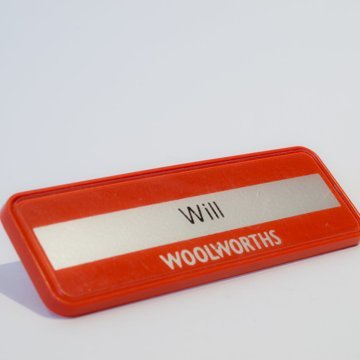
|
míngzi | name | Lesson 3 |
|
吗

|
ma | (yes/no question particle) | Lesson 3 |
|
什么

|
shénme | what | Lesson 3 |
|
是

|
shì | to be | Lesson 3 |
|
我

|
wǒ | I, me | Lesson 3 |
|
学生

|
xuésheng | student / college student | Lesson 3 |
|
老师

|
lǎoshī | teacher | Lesson 3 |
|
人

|
rén | person | Lesson 3 |
|
中国

|
Zhōngguó | China | Lesson 3 |
|
美国

|
Měiguó | USA | Lesson 3 |
|
李月

|
Lǐyuè | (personal name) | Lesson 3 |
Note on teaching vocabulary: let learners listen → guess the meaning from context → repeat in rhythm → only then check the meaning. Don’t translate word by word right from the start.
3. Grammar focus
1. 吗 questions — yes/no questions
Add 吗 at the end of a statement to turn it into a yes/no question: 你是老师。→ 你是老师吗? To answer: 是 (yes/right) / 不是 (no). Do not use “có/không” the way Vietnamese does.
2. The 是 sentence: S + 是 + N
是 links the subject to a noun: 我是学生 (I am a student), 她是老师. Negative: 不是 — 他不是老师 (he is not a teacher).
3. 什么 asks for information + 呢 follows up
什么 asks “what”: 你叫什么名字? 呢 is used to ask back about the person or thing just mentioned: 我叫李月,你呢? (and you?).
4. Practice plan
0–10 min — Warm-up
First words: the teacher opens the lesson with today’s topic — 你叫什么名字 — on the board and one quick exchange from the lesson; students repeat it chorally, then say any words they already know from today’s list (叫, 名字, 吗). The teacher ticks them off — they come back in the vocabulary step.
10–25 min — Presentation
Meet the words: present all 12 words of section 2 with the word cards and the lesson audio, in the order given there: listen → guess the meaning from the picture or context → repeat in rhythm → only then check the meaning. Start with 叫 (to be called), 名字 (name), 吗 ((yes/no question particle)), 什么 (what). Finish with a quick card flash: the teacher shows a card, the class says the word and its meaning together.
25–40 min — Practice
Patterns in action: work through the grammar points of section 3 one by one — 吗 questions (yes/no questions); the 是 sentence: S + 是 + N; 什么 (what) + 呢 (follow-up). For each point: the teacher models two examples on the board, the whole class repeats, then each student makes one sentence with a partner. Correct the classic mistakes on the spot, before they stick.
40–52 min — Communication
Getting-to-know-you interviews: each student interviews 3 classmates they don’t know yet, using all 4 questions: 你叫什么名字?你是学生吗?你是哪国人?你呢? Record the answers on the slip.
Guess who: one student describes “他是老师 / 她是学生…” and the class guesses who it is, asking back with 吗 questions.
Who are you?: draw a role card (老师/学生/中国人/美国人) and introduce yourself: 我叫…,我是…
Dialogue relay: in pairs, students perform the model dialogues of section 5 (First meeting / Asking about jobs), swapping roles halfway. A pair scores a point for each dialogue finished without a meaning-changing mistake; the teacher circulates, listens in and corrects pronunciation. The pair with the most points wins.
52–60 min — Wrap-up & check
First characters: first contact with writing: students copy the lesson’s key words (叫, 名字, 吗) one line each, following the stroke-order animation on the word cards in section 2. The teacher walks around checking pencil grip and stroke order.
Exit check: at the door, every student must use today’s main pattern in one sentence and one of the new words before leaving; the teacher notes who struggled — they get the first questions next lesson. Finish by previewing the homework in section 6.
Principle: speaking first, writing later. Every student must say at least 10 sentences aloud during the session.
5. Model dialogues
Use the audio on the lesson page Lesson 3 to listen.
First meeting
A: 你好!你叫什么名字? (Nǐ hǎo! Nǐ jiào shénme míngzi?)
B: 我叫李月。你呢? (Wǒ jiào Lǐyuè. Nǐ ne?)
A: 我叫大卫。我是学生。 (Wǒ jiào Dàwèi. Wǒ shì xuésheng.)
B: 你是美国人吗? (Nǐ shì Měiguó rén ma?)
A: 是,我是美国人。你是中国人吗? (Shì, wǒ shì Měiguó rén. Nǐ shì Zhōngguó rén ma?)
B: 是,我是中国人。 (Shì, wǒ shì Zhōngguó rén.)
Asking about jobs
A: 你是老师吗? (Nǐ shì lǎoshī ma?)
B: 不是,我是学生。你呢? (Bú shì, wǒ shì xuésheng. Nǐ ne?)
A: 我是老师。 (Wǒ shì lǎoshī.)
6. Homework
- Write each new character one line.
- Record a 30–60s speaking video using 3 patterns.
- Listen & shadow both dialogues 3×.
📷 Image credits: real photos from the open photo libraries Openverse / Wikimedia Commons / Flickr (CC0, CC BY, CC BY-SA licences) — one real-life photo for each word, no AI drawings. Stroke-order animation: Make Me a Hanzi data (HanziWriter).