
Your tongue just tied itself in a knot, and you only said four words. That is the whole point of a Korean tongue twister — and exactly why it works. Korean tongue twisters pack the sounds learners mix up most into one short, silly sentence, then make you say it again and again until your mouth finally learns the difference. This post gives you 10 classic Korean tongue twisters, each with Hangul, romanization, and a plain English translation, plus a simple practice method you can use tonight. If you can say these clearly at normal speed, everyday Korean starts to feel a lot easier.
Why tongue twisters, and not just more vocabulary lists? Because pronunciation is a muscle skill. You can memorize the word 기린 (girin, giraffe) perfectly on paper and still stumble when it sits next to 그린 (geurin, drew) in a real sentence. Tongue twisters force those two lookalike sounds to share one breath. They are also the rare pronunciation drill that is actually fun to share — send one to a study buddy and you will both be laughing within a minute. If you are still learning to read Hangul, start with Hangul in one afternoon first, then come back here. The romanization under each twister will carry you until the letters feel natural.
Why Korean tongue twisters work so well
Korean has pairs of sounds that feel almost identical to a new learner: ㄱ and ㄲ, ㅐ and ㅔ, ㅈ and ㅉ, the batchim consonants that change at the end of a syllable. Textbooks explain the difference with diagrams. Tongue twisters make your mouth feel it. When you say 간장 (ganjang, soy sauce) and 공장 (gongjang, factory) back to back, the tiny shift in the vowel is no longer theory — it is right there on your tongue.
There is a second benefit nobody talks about. Tongue twisters slow you down in a good way. Most learners rush through Korean sentences and blur the sounds together, which is how 작은 (jageun, small) turns into something nobody recognizes. A twister punishes rushing instantly: go too fast and the sentence falls apart, so you learn to shape each syllable. Speed comes later, on its own. And because each twister is a real sentence with real words, you pick up vocabulary at the same time — factory, giraffe, porridge, clouds — words that actually show up in conversation.
One honest warning before we start: you will sound silly for the first few tries. That is not a bug. Korean kids grow up laughing at these exact sentences, and Korean adults still trip over them on variety shows. If a native speaker stumbles on number 4, you are allowed to stumble too.
How to practice: the slow, chunk, speed-up method
Do not try to say a twister fast on your first attempt. That is how bad habits form. Use this three-step method for each one, and spend about two minutes per twister.
Step 1 — Slow. Read the Hangul out loud one word at a time, slowly, like you are reading a shopping list. Check the romanization only when you are unsure of a sound. Say it three times at this speed.
Step 2 — Chunk. Split the sentence into two halves and say each half five times. For the giraffe twister, that means mastering 내가 그린 기린 그림은 on its own before you touch the second half. Your mouth needs to learn the pattern in pieces.
Step 3 — Speed up. Say the whole sentence three times, a little faster each time. The moment it falls apart, drop back to step 1 speed. Never practice the mistake — practice the correct version slowly until it sticks.
A practical tip: record yourself on your phone on day one, then again after a week. The difference will surprise you, and it is the cheapest motivation there is. Try it with a friend if you can — taking turns on the same twister turns a drill into a game, and games are what you actually come back to tomorrow.
The 10 tongue twisters
Each twister below comes with the Hangul, a romanization, the English meaning, and one note on what makes it tricky. Start with number 1 even if you already know it. It is the warm-up.
1. The soy sauce factory manager
간장 공장 공장장은 강 공장장이고, 된장 공장 공장장은 장 공장장이다.
Romanization: Ganjang gongjang gongjangjang-eun Gang gongjangjang-igo, doenjang gongjang gongjangjang-eun Jang gongjangjang-ida.
Meaning: “The soy sauce factory manager is Manager Gang, and the soybean paste factory manager is Manager Jang.”
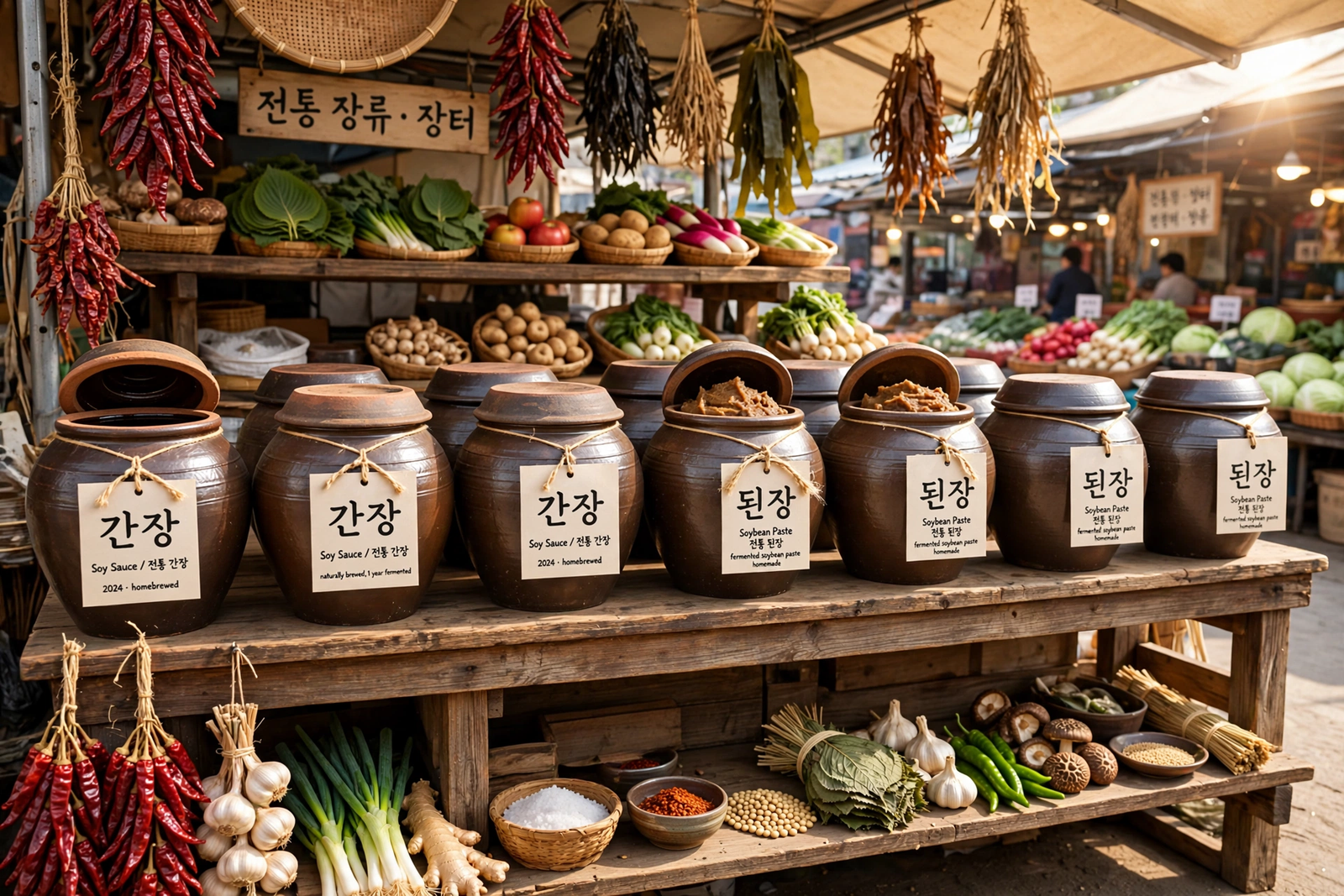
This is the most famous Korean tongue twister, the one every Korean kid knows. The joke is built in: the soy sauce manager’s family name is Gang, which sounds like the first syllable of 간장, and the soybean paste manager is Jang, echoing 된장. The hard part is keeping 간장 and 공장 apart while your mouth wants to merge them. Say the two product words slowly first — 간장, 된장, 공장 — then add the managers.
2. The giraffe picture I drew
내가 그린 기린 그림은 목이 긴 기린 그림이고, 네가 그린 기린 그림은 목이 짧은 기린 그림이다.
Romanization: Naega geurin girin geurim-eun mogi gin girin geurim-igo, nega geurin girin geurim-eun mogi jjalbeun girin geurim-ida.
Meaning: “The giraffe picture I drew is a long-necked giraffe picture, and the giraffe picture you drew is a short-necked giraffe picture.”
This one is a workout for three lookalike words: 그린 (geurin, drew), 기린 (girin, giraffe), and 그림 (geurim, picture). Add the pair 내가 (naega, I) and 네가 (nega, you), and your mouth has to switch between two almost-identical pronouns mid-sentence. It is the twister to use when you keep mixing up ㅡ and ㅣ, because the sentence will not let you hide from either vowel.

3. The two law doctors
저분은 백 법학박사, 이분은 박 법학박사.
Romanization: Jeo bun-eun Baek beophakbaksa, i bun-eun Bak beophakbaksa.
Meaning: “That person is Dr. Baek, PhD in law; this person is Dr. Park, PhD in law.”
Short, but it bites. 백 (Baek) and 박 (Bak) differ by one vowel — ㅐ versus ㅏ — and 법학박사 (beophakbaksa, PhD in law) repeats the 박 sound four times. If your ㅐ keeps sliding into ㅔ, this twister exposes it in about three seconds. Say the two names back to back ten times: 백, 박, 백, 박. Then add the titles.
4. The Seoul patent licensing chief
서울특별시 특허허가과 허가과장
Romanization: Seoul teukbyeolsi teukheo heogagwa heogagwajang.
Meaning: “The licensing section chief of the Patent Licensing Division of Seoul Special City.”
This is a real job title, which makes it even better — you are learning real words while you trip over them. The trap is 특허 (teukheo, patent) versus 허가 (heoga, license), two words that share the 허 sound and swap their first consonants. Go syllable by syllable: 서-울-특-별-시, then 특-허-허-가-과, then 허-가-과-장. Link the chunks only when each one is clean.
5. The porridge at the front house and the back house
앞집 팥죽은 붉은 팥죽이고, 뒷집 콩죽은 검은 콩죽이다.
Romanization: Apjip patjugeun bulgeun patjug-igo, dwitjip kongjugeun geomeun kongjug-ida.
Meaning: “The red bean porridge at the front house is red bean porridge, and the black bean porridge at the back house is black bean porridge.”
팥죽 (patjuk, red bean porridge) and 콩죽 (kongjuk, bean porridge) look similar on paper and feel similar in the mouth, and the colors 붉은 (bulgeun, red) and 검은 (geomeun, black) keep swapping places. This twister teaches you the rhythm of Korean adjective endings too — the 은 after each noun is doing real grammar work, not just filling space.
6. The iron bars
경찰청 철창살은 쇠철창살이고, 검찰청 철창살은 쇠철창살이다.
Romanization: Gyeongchalcheong cheolchangsal-eun soe cheolchangsal-igo, geomchalcheong cheolchangsal-eun soe cheolchangsal-ida.
Meaning: “The iron bars of the police station are iron bars, and the iron bars of the prosecutor’s office are iron bars.”
경찰청 (gyeongchalcheong, police agency) versus 검찰청 (geomchalcheong, prosecutor’s office) is the kind of pair that embarrasses even intermediate learners in real life. The twister repeats 철창살 (cheolchangsal, iron bars) so many times that the ㅊ sound becomes automatic. Notice how the sentence is almost the same twice — the only thing that changes is the first syllable. That is the whole lesson.
7. The cloud picture I drew
내가 그린 구름 그림은 새털구름 그린 그림이고, 네가 그린 구름 그림은 뭉게구름 그린 그림이다.
Romanization: Naega geurin gureum geurim-eun saeteolgureum geurin geurim-igo, nega geurin gureum geurim-eun munggegureum geurin geurim-ida.
Meaning: “The cloud picture I drew is a cirrus cloud picture, and the cloud picture you drew is a cumulus cloud picture.”
Same skeleton as the giraffe twister, but with clouds. 새털구름 (saeteolgureum, cirrus cloud, literally “feather cloud”) and 뭉게구름 (munggegureum, cumulus cloud) are beautiful words that most learners never meet in a textbook. If you can say this one cleanly, the giraffe twister will feel easy by comparison, because the hard part — 내가 versus 네가 — is already trained.
8. Where you plant beans, beans grow
콩 심은 데 콩 나고, 팥 심은 데 팥 난다.
Romanization: Kong simeun de kong nago, pat simeun de pat nanda.
Meaning: “Where you plant beans, beans grow; where you plant red beans, red beans grow.”
This one is almost a proverb, and Koreans quote it as life advice as much as a tongue twister. The pronunciation lesson is the batchim: 콩 ends in ㅇ and 팥 ends in ㅅ, and your mouth has to close each syllable properly before the next word starts. It is short enough to use as a five-second warm-up before any speaking practice.
9. The rice cakes
내가 먹는 떡은 찰떡이고, 네가 먹는 떡은 쑥떡이다.
Romanization: Naega meongneun tteog-eun chaltteog-igo, nega meongneun tteog-eun ssuk-tteog-ida.
Meaning: “The rice cake I eat is sticky rice cake, and the rice cake you eat is mugwort rice cake.”
찰떡 (chaltteok, sticky rice cake) and 쑥떡 (ssuk-tteok, mugwort rice cake) are both real foods you will see at a Korean market, and 떡 (tteok) is a word worth owning anyway. The double consonant ㄲ in 떡 and the ㅆ in 쑥 are the real teachers here — say them soft and the whole sentence turns to mush. Press the tense consonants a little harder than feels natural; that is usually the correct amount.
10. The Swiss ski athlete
스위스 스키 선수는 스위스 스키장에서 스키를 탄다.
Romanization: Seuwiseu seuki seonsu-neun Seuwiseu seukijang-eseo seukireul tanda.
Meaning: “The Swiss ski athlete skis at the Swiss ski resort.”
스위스 (Seuwiseu, Switzerland) and 스키 (seuki, skiing) are loanwords, and that is exactly why this twister is useful — loanwords are where learners get lazy, because the sounds feel familiar. Saying 스위스 스키 five times in a row forces you to respect the Korean pronunciation instead of the English one in your head. Save this one for last. It is the victory lap.
5 mistakes that make tongue twisters harder than they are
Going fast on day one. Speed is the reward, not the method. A twister said slowly and correctly five times teaches your mouth more than the same sentence mumbled fast twenty times. If you catch yourself rushing, stop, breathe, and go back to one word at a time.
Skipping the tense consonants. Korean has plain, tense, and aspirated consonants, and tongue twisters are full of the tense ones: ㄲ in 떡, ㅆ in 쑥, ㅉ in 짧은. Learners often say the plain version and wonder why they sound off. Exaggerate the tense sound on purpose for the first week. It will settle into the right place on its own.
Ignoring the batchim. The consonant at the end of a syllable — the ㅇ in 콩, the ㄱ in 국, the ㄹ in 철 — changes the whole shape of the word. Dropping it turns 팥 into 파, which is a different word entirely. Tongue twisters punish dropped batchim immediately, which is a gift: you hear the mistake the moment you make it.
Reading only the romanization. Romanization is training wheels. It helps you start, but if you never look at the Hangul, you will keep pronouncing Korean like English. After the first two or three readings, cover the romanization and read the Hangul. Slow is fine. Guessing is fine. Staying on the romanization forever is not.
Practicing alone, silently. Tongue twisters only work out loud. Reading them in your head does nothing for your mouth. Say them in the shower, in the car, while you cook. Ten minutes of actual speaking beats an hour of silent reading every single time.
Your 7-day tongue twister challenge
One week, ten twisters, ten minutes a day. Here is the plan. Print it or save it to your phone.
| Day | Practice | Goal |
|---|---|---|
| Day 1 | Twisters 1 and 2, slow only | Say each one cleanly three times in a row |
| Day 2 | Twisters 3 and 4, slow only | 백 vs 박 and 특허 vs 허가 feel different |
| Day 3 | Twisters 5 and 6 | Finish each sentence without stopping |
| Day 4 | Twisters 7 and 8 | Say both at normal speaking speed |
| Day 5 | Twisters 9 and 10 | Tense consonants sound clear, not forced |
| Day 6 | All 10, one round each | Record yourself and compare with day 1 |
| Day 7 | Your 3 favorites, fast | Pick a favorite to keep as your warm-up |
By day 7 you will have a favorite. Keep it as your warm-up before every Korean study session, the same way singers warm up their voice before a song. A twister you can say cleanly at speed is a small, honest proof that your pronunciation is improving — and proof you can hear is the kind that keeps you going.
All 10 tongue twisters in one table
Save this table or send it to a friend who is learning Korean. One table, ten drills, zero excuses.
| # | Korean | Romanization | Meaning |
|---|---|---|---|
| 1 | 간장 공장 공장장은 강 공장장이고, 된장 공장 공장장은 장 공장장이다. | Ganjang gongjang gongjangjang-eun Gang gongjangjang-igo, doenjang gongjang gongjangjang-eun Jang gongjangjang-ida. | The soy sauce factory manager is Manager Gang; the soybean paste factory manager is Manager Jang. |
| 2 | 내가 그린 기린 그림은 목이 긴 기린 그림이고, 네가 그린 기린 그림은 목이 짧은 기린 그림이다. | Naega geurin girin geurim-eun mogi gin girin geurim-igo, nega geurin girin geurim-eun mogi jjalbeun girin geurim-ida. | My giraffe picture is long-necked; your giraffe picture is short-necked. |
| 3 | 저분은 백 법학박사, 이분은 박 법학박사. | Jeo bun-eun Baek beophakbaksa, i bun-eun Bak beophakbaksa. | That person is Dr. Baek; this person is Dr. Park. |
| 4 | 서울특별시 특허허가과 허가과장 | Seoul teukbyeolsi teukheo heogagwa heogagwajang. | The licensing section chief of the Seoul Patent Licensing Division. |
| 5 | 앞집 팥죽은 붉은 팥죽이고, 뒷집 콩죽은 검은 콩죽이다. | Apjip patjugeun bulgeun patjug-igo, dwitjip kongjugeun geomeun kongjug-ida. | Front house red bean porridge; back house black bean porridge. |
| 6 | 경찰청 철창살은 쇠철창살이고, 검찰청 철창살은 쇠철창살이다. | Gyeongchalcheong cheolchangsal-eun soe cheolchangsal-igo, geomchalcheong cheolchangsal-eun soe cheolchangsal-ida. | Police station iron bars; prosecutor’s office iron bars. |
| 7 | 내가 그린 구름 그림은 새털구름 그린 그림이고, 네가 그린 구름 그림은 뭉게구름 그린 그림이다. | Naega geurin gureum geurim-eun saeteolgureum geurin geurim-igo, nega geurin gureum geurim-eun munggegureum geurin geurim-ida. | My cloud picture is cirrus; your cloud picture is cumulus. |
| 8 | 콩 심은 데 콩 나고, 팥 심은 데 팥 난다. | Kong simeun de kong nago, pat simeun de pat nanda. | Where you plant beans, beans grow. |
| 9 | 내가 먹는 떡은 찰떡이고, 네가 먹는 떡은 쑥떡이다. | Naega meongneun tteog-eun chaltteog-igo, nega meongneun tteog-eun ssuk-tteog-ida. | My rice cake is sticky; your rice cake is mugwort. |
| 10 | 스위스 스키 선수는 스위스 스키장에서 스키를 탄다. | Seuwiseu seuki seonsu-neun Seuwiseu seukijang-eseo seukireul tanda. | The Swiss ski athlete skis at the Swiss ski resort. |
Quick Quiz
Test yourself on the tongue twister method. Click an answer to see if you are right — your score is at the top.
Score: 0/5
1. What are the three steps of the practice method in this post?
2. Twister 1, the soy sauce factory manager, trains you to keep which pair apart?
3. 백 and 박 in twister 3 differ by…
4. Why should you exaggerate the tense consonants during your first week?
5. What happens if you drop the batchim in 팥?
Frequently asked questions about Korean tongue twisters
Do Korean people really use tongue twisters? Yes. Korean kids learn the soy sauce factory manager and the giraffe picture in elementary school, and adults still use them as party games and pronunciation warm-ups. They are a normal part of the culture, not a classroom invention.
I cannot read Hangul yet. Can I still practice? You can start with the romanization, but learn Hangul as soon as you can — the romanization hides sounds that Hangul shows clearly. The guide Hangul in one afternoon gets you reading in a single session, and these twisters are a perfect first thing to read once you can.
How long before my pronunciation actually improves? Most learners hear a difference within a week of daily practice, because the twisters target the exact sounds they keep getting wrong. Real, lasting change takes longer — a month of short daily practice beats one long weekend every time.
Which twister should I learn first? Number 1, the soy sauce factory manager. It is the most famous, it teaches the 간장/공장 contrast, and everyone you show it to will recognize it. Number 2 is the best second step because it trains the 내가/네가 pair you will use every day.
Pick one twister tonight — just one — and say it out loud five times before bed. Tomorrow, try it again and notice how much easier the second day feels. That small, visible improvement is the whole secret of learning Korean: tiny daily wins, stacked up. Tell us in the comments which twister tripped you up the most, and send this post to a friend who is learning Korean — a little friendly competition makes the practice twice as fun. Ready for real sentences next? Continue with 10 K-drama lines everyone knows on the LingoBubbo Korean page, and turn your new pronunciation into phrases you can actually use.