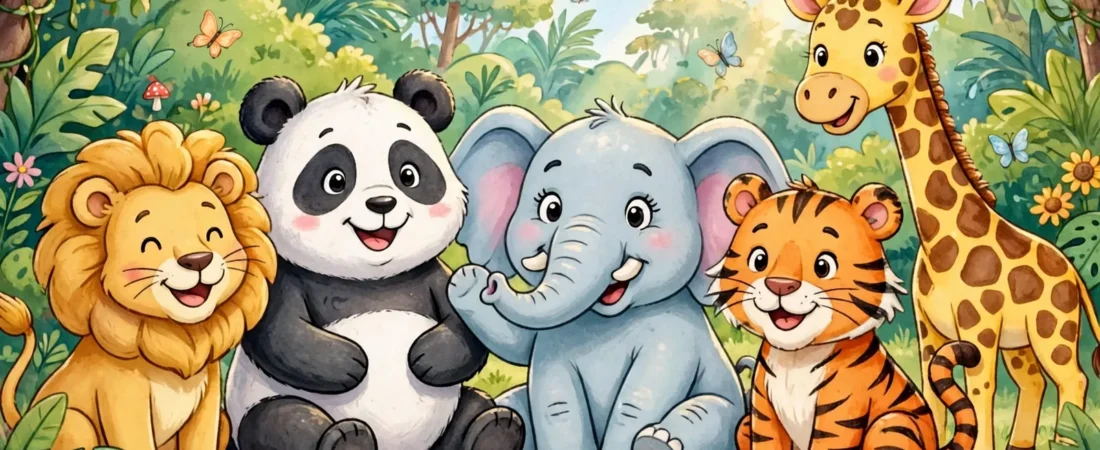
“Mom, what is a lion in Chinese?” Your child points at the lion at the zoo, or at a picture in a book, and suddenly you are the teacher. The good news is that animal words are the easiest Chinese words for kids to love — they are short, they sound fun to say, and every single one comes with a picture already living in your child’s head. This post teaches 15 wild animals in Chinese with pictures, slow audio to copy, and a five-minute game you can play tonight at the kitchen table. No homework, no test — just animals, sounds, and a little roaring.
Everything here is built for ages 4 to 12 and for parents learning alongside their kids. Each animal comes with its Chinese characters, pinyin, and one fun fact your child will repeat at dinner. Listen to the audio clips together, point at the pictures, and let your child be the noisy one. If your little one already knows their numbers in Chinese, the numbers 1 to 10 for preschoolers post makes a great warm-up before animals.
How to Use This Post in 10 Minutes
Keep it short and keep it playful. Kids remember words they say out loud while moving, pointing, or laughing — not words they stare at on a list. Here is the little routine that works best:
Minute 1–2: Listen first. Play one audio clip and let your child just listen. No repeating yet, no reading. Ears first.
Minute 3–6: Say it together. Play the clip again. This time, both of you say each animal right after the recording, nice and slow. Exaggerate the sounds — a big roar for the lion, a long trunk-wiggle for the elephant. Silly is good. Silly is memorable.
Minute 7–10: Play the pointing game. Say an animal in Chinese — 狮子! — and your child points at the right picture or acts it out. Then swap roles and let your child be the teacher. Kids who get to quiz the grown-up remember twice as much.
One group of animals per day is plenty. Four animals today, four tomorrow, and by the weekend your child can name all fifteen. And if you want more word games after this one, the Chinese word games page has matching and memory games built for exactly this age.
The Big Four: Lion, Tiger, Elephant, Panda
Start here. These are the animals every child already knows, which means the Chinese words have somewhere to land. Listen to the clip, then say each one together.
Listen and repeat — lion, tiger, elephant, panda: 狮子,老虎,大象,熊猫
| Animal | Chinese | Pinyin | Say it like |
|---|---|---|---|
| Lion | 狮子 | shīzi | “shrr-dzuh” — roar first, then say it |
| Tiger | 老虎 | lǎohǔ | “lao-hoo” — the ǎ dips down, then up |
| Elephant | 大象 | dàxiàng | “dah-shyahng” — big and slow, like the animal |
| Panda | 熊猫 | xióngmāo | “shyong-mao” — the x is a soft “sh” |
Lion — 狮子 (shīzi). A lion’s roar is so loud it can be heard from far, far away — across a whole valley. Ask your child: can you roar like a lion, then whisper 狮子? Loud, then soft. Both are fun.
Tiger — 老虎 (lǎohǔ). Every tiger’s stripes are different, just like every person’s fingerprints. No two tigers in the whole world have the same stripes. If your child draws a tiger, no one can say the stripes are wrong.
Elephant — 大象 (dàxiàng). The elephant is the biggest animal on land, and its trunk is strong enough to pick up a single leaf. 大 (dà) means “big” — your child already knows half the word if they know 大.
Panda — 熊猫 (xióngmāo). Pandas spend almost the whole day eating bamboo — munch, munch, munch, for hours and hours. Ask your child what they would eat all day if they could. Then say 熊猫 together, three times, while pretending to munch.
The Tall, the Striped, and the Bouncy: Giraffe, Monkey, Zebra, Kangaroo
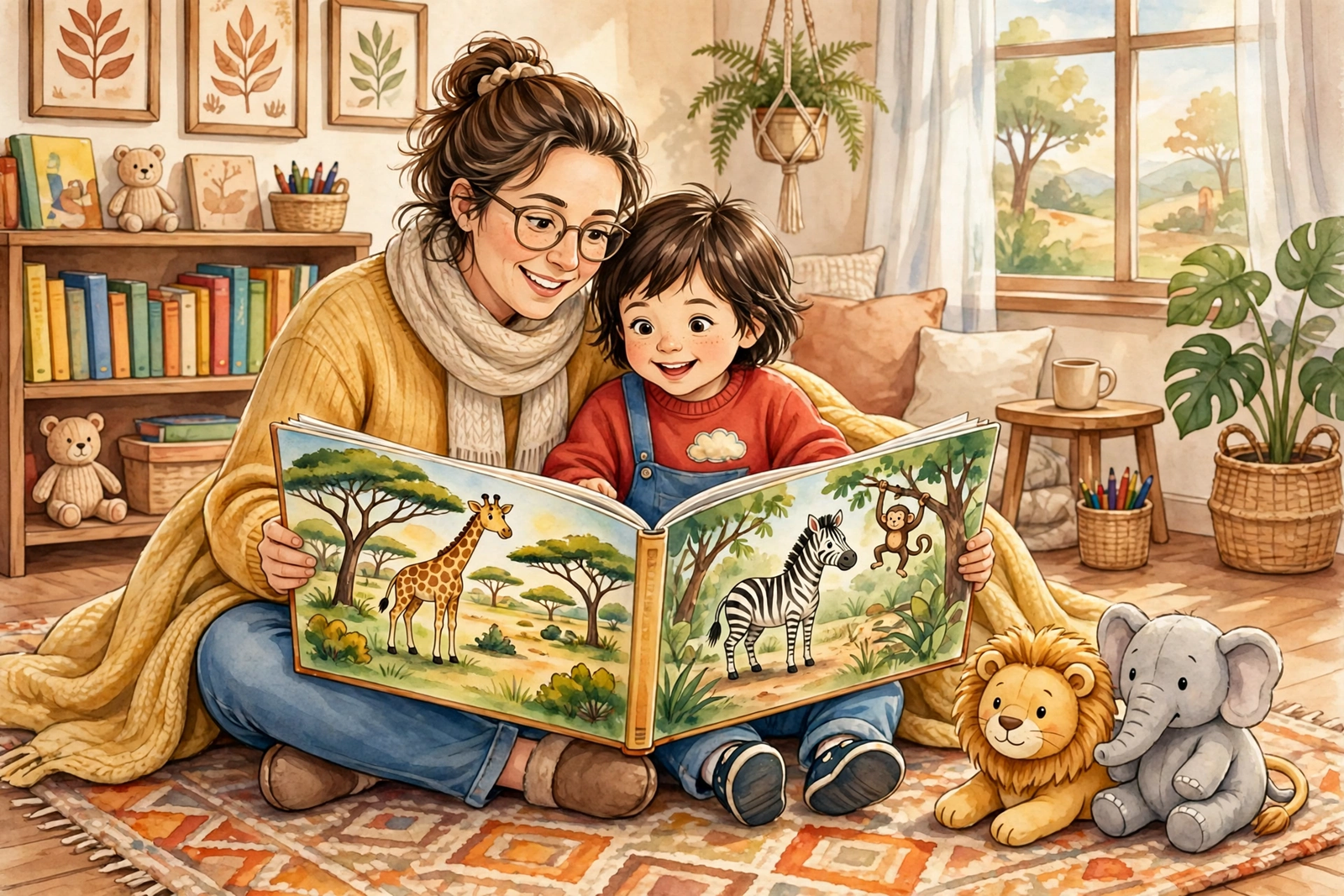
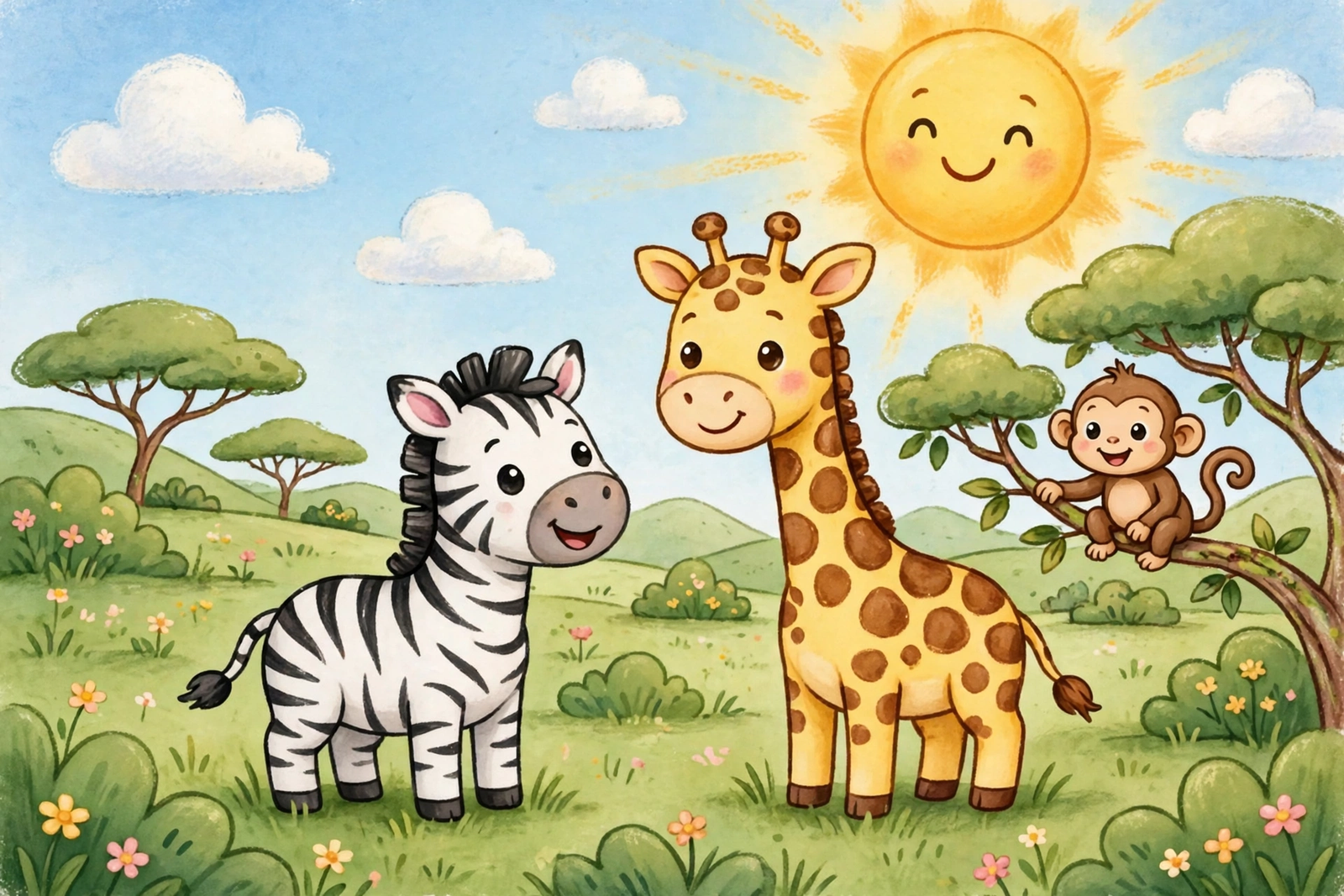
These four are the movers — the tallest, the swingiest, the stripiest, and the bounciest animals in the set. Perfect for acting out while you say the words.
Listen and repeat — giraffe, monkey, zebra, kangaroo: 长颈鹿,猴子,斑马,袋鼠
| Animal | Chinese | Pinyin | Say it like |
|---|---|---|---|
| Giraffe | 长颈鹿 | chángjǐnglù | “chahng-jing-loo” — stretch up tall as you say it |
| Monkey | 猴子 | hóuzi | “ho-dzuh” — scratch your head like a monkey |
| Zebra | 斑马 | bānmǎ | “bahn-mah” — short and bouncy |
| Kangaroo | 袋鼠 | dàishǔ | “dye-shoo” — hop once as you say it |
Giraffe — 长颈鹿 (chángjǐnglù). The giraffe is the tallest animal on land, and its neck has the same number of bones as your neck — seven. Seven little bones, stretched out very, very long. Stand on tiptoes when you say it.
Monkey — 猴子 (hóuzi). Many monkeys use their tails like an extra hand to hold onto branches. Your child can swing an arm like a tail while saying 猴子. The word is short, the acting is long.
Zebra — 斑马 (bānmǎ). Just like tigers, no two zebras have the same stripes. And here is the question every kid asks: is a zebra a white animal with black stripes, or a black animal with white stripes? Scientists say the skin underneath is dark — so a zebra is a black animal with white stripes. Your child will love telling that to someone.
Kangaroo — 袋鼠 (dàishǔ). Kangaroos hop instead of walking, and they cannot easily hop backwards. 袋 (dài) means “bag” — the baby kangaroo rides in its mother’s pouch, like a pocket. Hop across the room saying 袋鼠, and try hopping backwards. It is harder than it looks.
The Sneaky Four: Wolf, Fox, Snake, Crocodile
These are the animals that hunt, hide, and surprise — which makes them the most exciting group for kids who like a little drama. Keep the voices low and mysterious for this one.
Listen and repeat — wolf, fox, snake, crocodile: 狼,狐狸,蛇,鳄鱼
| Animal | Chinese | Pinyin | Say it like |
|---|---|---|---|
| Wolf | 狼 | láng | “lahng” — howl a little first: aooo! |
| Fox | 狐狸 | húlí | “hoo-lee” — quick and clever-sounding |
| Snake | 蛇 | shé | “shuh” — hiss it like a snake |
| Crocodile | 鳄鱼 | èyú | “uh-yoo” — snap your arms like big jaws |
Wolf — 狼 (láng). Wolves howl to talk to their pack — it is how they say “I am over here!” across the forest. One howl together, then say 狼 in your quietest voice. Big sound, small word.
Fox — 狐狸 (húlí). A fox can hear a tiny mouse moving under deep snow. Its ears are that good. Cup your hands behind your ears like a fox and listen — what is the quietest sound you can hear?
Snake — 蛇 (shé). Snakes smell with their tongues. They flick their tongues out to taste the air. Stick your tongue out, wiggle it, and say 蛇. It is the only word in this post that comes with its own face.
Crocodile — 鳄鱼 (èyú). A crocodile can stay underwater for a very long time — up to about an hour — just with its eyes and nose poking out. Float your hands on the table like a crocodile’s eyes, then say 鳄鱼. The word starts with a short, low è, like a little grunt.
The Last Three: Parrot, Penguin, Shark
One talks, one waddles, one swims. Three very different animals, three very fun words to finish with.
Listen and repeat — parrot, penguin, shark: 鹦鹉,企鹅,鲨鱼
| Animal | Chinese | Pinyin | Say it like |
|---|---|---|---|
| Parrot | 鹦鹉 | yīngwǔ | “ying-woo” — say it, then copy it back like a parrot |
| Penguin | 企鹅 | qì’é | “chee-uh” — waddle as you say it |
| Shark | 鲨鱼 | shāyú | “shah-yoo” — swim your hand through the air |
Parrot — 鹦鹉 (yīngwǔ). Parrots can copy the words people say. Say 鹦鹉, then say it again in a silly parrot voice, then let your child copy you copying the parrot. Copying is the whole point of this animal.
Penguin — 企鹅 (qì’é). Penguins cannot fly, but they are wonderful swimmers — they fly underwater instead. Waddle across the room saying 企鹅, then “swim” with your arms. Two animals in one: a waddler on land, a flyer in the sea.
Shark — 鲨鱼 (shāyú). Sharks grow new teeth all their lives — when one tooth falls out, another is already waiting behind it. Show your teeth, say 鲨鱼, and count how many teeth you can see in the mirror. (Grown-ups: this is the moment your child will ask if sharks brush their teeth. The answer is no, and that is very funny to a seven-year-old.)
Five Easy Sentences Kids Can Say Today
Words are good. Sentences are better — they are what your child will actually say at the zoo. All five use only words from this post plus two tiny helpers: 这是 (zhè shì — this is) and 我喜欢 (wǒ xǐhuān — I like).
| Chinese | Pinyin | English |
|---|---|---|
| 这是狮子。 | Zhè shì shīzi. | This is a lion. |
| 这是大象。 | Zhè shì dàxiàng. | This is an elephant. |
| 我喜欢熊猫。 | Wǒ xǐhuān xióngmāo. | I like pandas. |
| 我喜欢猴子。 | Wǒ xǐhuān hóuzi. | I like monkeys. |
| 这是鲨鱼! | Zhè shì shāyú! | This is a shark! |
Point at any picture and ask: 这是什么?(Zhè shì shénme? — What is this?) Your child answers with 这是… and the animal. That one little question-and-answer is a real conversation in Chinese, and it takes about thirty seconds to learn. Try it with every animal in the post, one by one, like a game show. The last one — the shark — always gets the loudest answer.
The Roar-and-Point Game (5 Minutes)
This is the game that makes the fifteen words stick. You need nothing but this post and a little floor space.
Round 1 — Parent calls, child points. Say an animal in Chinese. Your child points at the right picture in the tables above, or acts it out. Three points for a right answer, one silly dance for a wrong one.
Round 2 — Child calls, parent points. Now your child says the animal in Chinese and you point. Get one wrong on purpose, just once — kids love catching the grown-up, and correcting you fixes the word in their memory better than any flashcard.
Round 3 — Sound only. Make the animal’s sound — roar, hiss, howl — and your child names it in Chinese. No pictures, no pointing, just ears. This is the round they will ask to play again tomorrow.
Keep score on the fridge if you like, but keep it light: the prize is getting to pick the next animal group tomorrow. And if your child wants more games like this, the Chinese word games page has matching games that use the same words.
All 15 Animals on One Card
Print this table or copy it onto a card for the fridge. Fifteen animals, one glance.
| # | Animal | Chinese | Pinyin |
|---|---|---|---|
| 1 | Lion | 狮子 | shīzi |
| 2 | Tiger | 老虎 | lǎohǔ |
| 3 | Elephant | 大象 | dàxiàng |
| 4 | Panda | 熊猫 | xióngmāo |
| 5 | Giraffe | 长颈鹿 | chángjǐnglù |
| 6 | Monkey | 猴子 | hóuzi |
| 7 | Zebra | 斑马 | bānmǎ |
| 8 | Kangaroo | 袋鼠 | dàishǔ |
| 9 | Wolf | 狼 | láng |
| 10 | Fox | 狐狸 | húlí |
| 11 | Snake | 蛇 | shé |
| 12 | Crocodile | 鳄鱼 | èyú |
| 13 | Parrot | 鹦鹉 | yīngwǔ |
| 14 | Penguin | 企鹅 | qì’é |
| 15 | Shark | 鲨鱼 | shāyú |
Share this card with another parent whose child is learning Chinese — animal words are the easiest win in the whole language, and a fridge card with fifteen of them is the kind of thing that gets used every single morning. Which animal is your child’s favorite? Tell us in the comments — and tell us which animal they want to learn next.
Quick Quiz: How Many Animals Can You Name?
Click the answer you choose — you will know right away whether it is right. Grown-ups can read the questions out loud for younger kids.
Your score: 0/5 — click an answer to check it right away.
Question 1. How do you say “lion” in Chinese?
Question 2. Which animal is 熊猫 (xióngmāo)?
Question 3. “This is an elephant” in Chinese is…
Question 4. Which animal is the tallest animal on land?
Question 5. How do you say “I like monkeys” in Chinese?
Frequently Asked Questions About Animals in Chinese for Kids
How many animals should my child learn at once? Four or five in one sitting is plenty. Learn one group from this post, play the game, and come back tomorrow for the next group. Fifteen words in one day is too many; fifteen words in four short days is easy.
My child cannot read Chinese characters yet. Is that okay? Completely okay. At this age, listening and speaking come first. Let your child learn the sounds and the pictures; the characters will make sense later, when the words already live in their ears.
What if my child mixes up the tones? That is normal and it does not matter much right now. A lion said with the wrong tone is still a lion when you are pointing at a lion. Praise the try, say the word once more with the right tone, and move on. Tones get sharper with listening, not with correcting.
Should we learn the characters too, or just the sounds? Sounds first, characters as a bonus. If your child likes drawing, let them copy one character a day — 大象 is a good first one, because 大 looks like a person with arms stretched wide. But never turn characters into a chore at this age.
What should we learn after animals? Numbers and colors go beautifully with animals — "three pandas", "a red fox". The numbers 1 to 10 for preschoolers post pairs perfectly with this one, and the Chinese word games page turns both sets of words into games.
Fifteen animals, four short listening clips, and one game — that is the whole lesson, and it fits between dinner and bath time. Tonight, point at any animal in this post and ask your child: 这是什么? Listen for the answer in Chinese, roar along with them, and enjoy it. Then come back tomorrow for the next group. Want the full learning path? Start at the Chinese page on LingoBubbo — every lesson there comes with vocabulary, audio, and a quiz, just like this one.