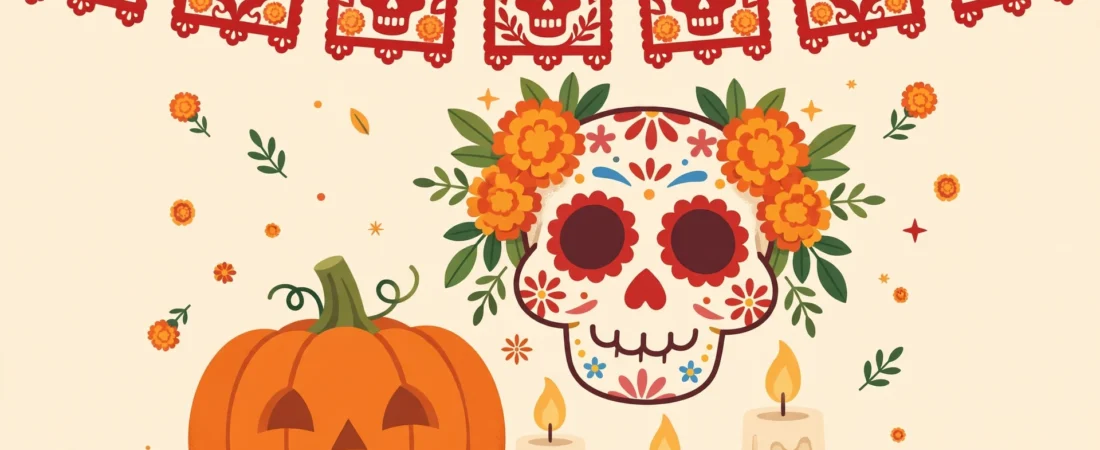
In Mexico, 31 October is not yet the most important day — 1 and 2 November are Día de Muertos (the Day of the Dead), when people remember their ancestors with flowers, candles and colourful altars. Over in Spain and many other Latin American countries, American-style Halloween is spreading too. Learn the 20 words below and you will understand both festivals without mixing them up.
One important cultural point: Día de Muertos is not “the Mexican Halloween”, and it is not gloomy like a horror film. It is a joyful, colourful festival for remembering loved ones who have died — with love, not fear.
How did Halloween reach the Spanish-speaking countries?
Halloween is originally an American festival, but thanks to films, international schools and social media it has spread to Spain and right across Latin America. Children in Madrid, Buenos Aires and Mexico City all know the cry of “¡Truco o trato!” now and dress up eagerly on the evening of 31 October. Even so, each place still keeps its own festival, so learning Spanish festival vocabulary without knowing this story is a recipe for confusion.
In Spain, 1 November is Día de Todos los Santos (All Saints’ Day) — many families go to the cemetery and lay flowers in memory of their loved ones. In Catalonia there is also La Castanyada on the night of 31 October: the whole family gathers to eat roasted chestnuts (castañas), panellets — little almond cakes coated in pine nuts — and roasted sweet potatoes, and to listen to the chestnut-seller, la castanyera, calling out her wares in the street. No costumes, no sweet-collecting — just the smell of hot chestnuts and a cosy dinner with family.
In Mexico, Día de Muertos (1–2 November) is so big that UNESCO recognised it as Intangible Cultural Heritage of Humanity back in 2008. And here is an interesting detail few people know: the giant Gran Desfile parade in the capital, Mexico City, only appeared in 2016, inspired by the opening scene of the James Bond film “Spectre” (2015). Before that, the festival had no parade at all — the film came out, people loved the idea so much that the city staged it for real, and now it is a highlight every year.
In other words, the 20 words in this article are not just vocabulary — each word opens the door to a custom. As you learn each word, picture the scene where people actually use it in real life; you will remember it far longer than by learning it by rote.
1. American-style Halloween (la Noche de Brujas)
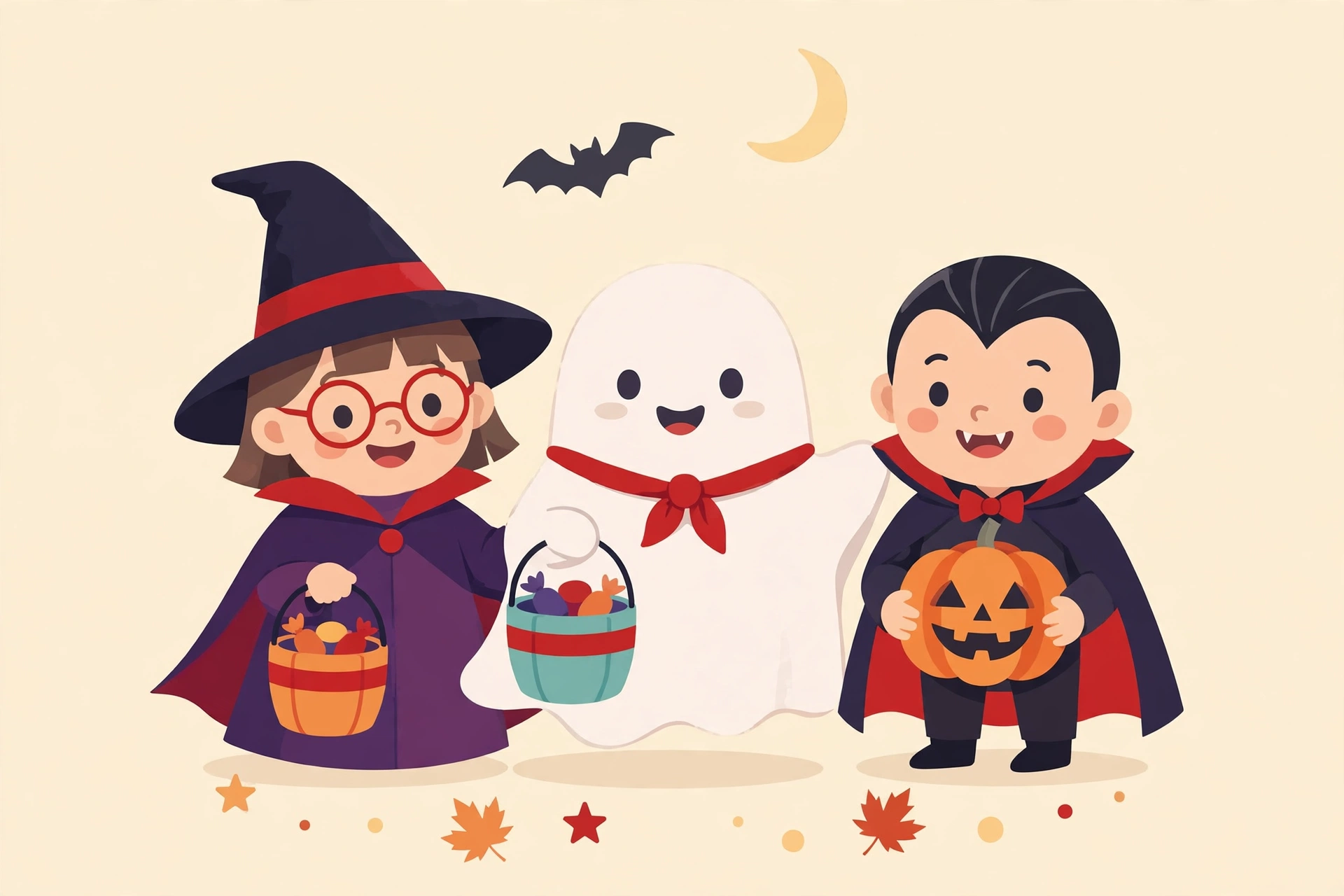
- la calabaza — pumpkin. Example: Compramos una calabaza grande. — “We bought a big pumpkin.”
- el fantasma — ghost. Example: El fantasma es blanco. — “The ghost is white.”
- la bruja — witch. Example: La bruja vuela en escoba. — “The witch flies on a broomstick.”
- el vampiro — vampire. Example: El vampiro duerme de día. — “The vampire sleeps during the day.”
- el esqueleto — skeleton. Example: El esqueleto baila. — “The skeleton is dancing.”
- el murciélago — bat. Example: El murciélago vuela de noche. — “The bat flies at night.”
- la araña — spider. Example: Hay una araña en la puerta. — “There is a spider on the door.”
- el disfraz — costume. Example: Mi disfraz es de gato. — “My costume is a cat.”
- el dulce — sweets. Example: Me gustan los dulces. — “I like sweets.”
- ¡Truco o trato! — “Trick or treat!” Example: Los niños gritan: “¡Truco o trato!” — “The children shout: ‘Trick or treat!’”
Listen to the pronunciation of the 10 Halloween words:
Two small things beginners often skip. First, “¡Truco o trato!” literally means “a trick or a treat” — children say it when they knock on a door, and the householder “answers” with sweets. Second, “disfraz” is the noun (costume), while the verb for “to dress up as…” is “disfrazarse”: “Me disfrazo de bruja” means “I dress up as a witch”. Remember that pair and you will never be stuck when talking about your Halloween outfit. As for “murciélago”, say it mur-ci-é-la-go, stressing the “é” — it is one of the very few Spanish words that contain all five vowels a, e, i, o, u, so native speakers love using it as a riddle.
2. Día de Muertos in Mexico
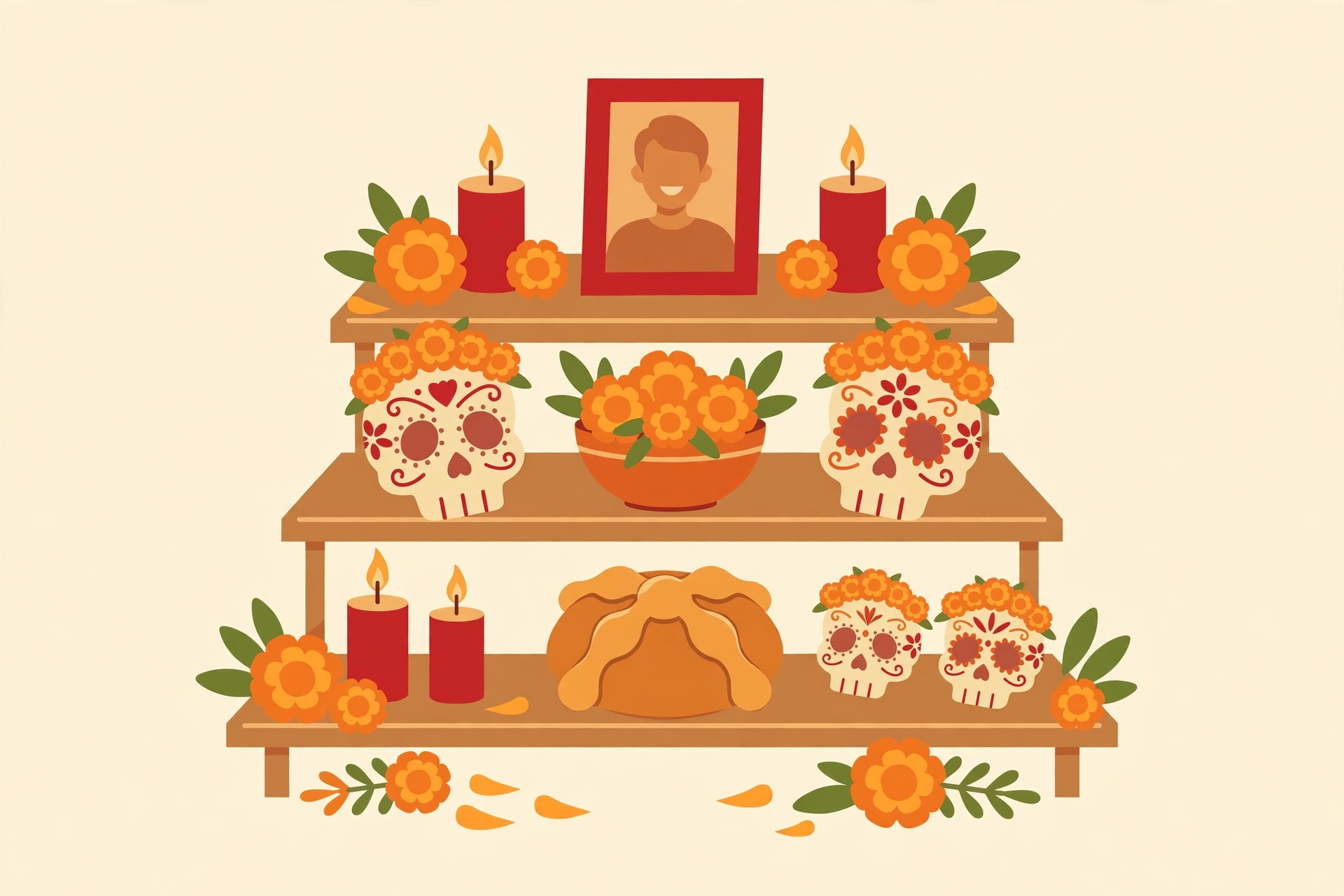
- el Día de Muertos — the Day of the Dead (1–2 November). Example: El Día de Muertos es una fiesta alegre. — “The Day of the Dead is a joyful festival.”
- la ofrenda — the offering altar. Example: Ponemos fotos en la ofrenda. — “We put photographs on the altar.”
- la calavera — skull (usually a decorated sugar skull). Example: La calavera es de azúcar. — “This skull is made of sugar.”
- el cempasúchil — yellow marigold, the flower that symbolises the festival. Example: El cempasúchil adorna la ofrenda. — “The marigold decorates the altar.”
- la vela — candle. Example: Encendemos una vela. — “We light a candle.”
- el pan de muerto — bread of the dead, a distinctive sweet bread. Example: Comemos pan de muerto. — “We eat pan de muerto.”
- la Catrina — the elegant lady skeleton figure, a symbol of the festival. Example: La Catrina lleva un sombrero elegante. — “La Catrina wears an elegant hat.”
- el altar — altar (used interchangeably with ofrenda). Example: El altar tiene flores y fotos. — “The altar has flowers and photos.”
- el desfile — parade. Example: El desfile es muy colorido. — “The parade is very colourful.”
- recordar — to remember. Example: Recordamos a nuestros abuelos. — “We remember our grandparents.”
Listen to the pronunciation of the 10 Día de Muertos words:
An ofrenda altar usually has two or three tiers: photos of the dead go on the top tier, the middle tier holds the food they loved in life, and the bottom tier is scattered with cempasúchil marigold petals — Mexicans believe the flower’s bright yellow colour and fragrance guide the spirits home. Pan de muerto is round, with strips of dough crossed over the top like “bones”, symbolising a skeleton. And La Catrina — long dress, wide-brimmed hat, skull face paint — began life as a satirical print by the artist José Guadalupe Posada in 1910, mocking rich people who aped European ways; more than a century later she has become the festival’s most famous face.
3. A quick comparison so you don’t mix them up
Halloween (31/10) is about costumes, sweets and playful spookiness; Día de Muertos (1–2 November) is about remembering loved ones, altars, marigolds and pan de muerto. In Mexico the two festivals sit side by side on the calendar but mean completely different things: one plays with fear, the other honours the dead with love.
| Halloween (31/10) | Día de Muertos (1–2 November) | |
|---|---|---|
| Focus | Costumes, collecting sweets, playing with fear | Remembering loved ones who have died |
| Colours | Orange, black, purple | Marigold yellow, red, white |
| What people eat | Sweets (el dulce) | Pan de muerto |
| The catchphrase | ¡Truco o trato! | ¡Feliz Día de Muertos! |
Send this table to friends who are learning Spanish — remember just the four rows above and you can tell apart two festivals that very many people lump together as one.
4. Common mistakes when learning these 20 words
First, noun gender. The feminine (la) group includes: la calabaza, la bruja, la araña, la calavera, la ofrenda, la vela, la Catrina. The masculine (el) group includes: el fantasma, el vampiro, el esqueleto, el murciélago, el disfraz, el dulce, el altar, el desfile. And “el Día de Muertos” often startles learners because “día” ends in -a yet is still masculine — just remember “el día” as a familiar exception, like “el mapa” or “el problema”.
Second, the spelling of “cempasúchil” — the word has an acute accent on the ú and ends in “chil”; many people write “cempasuchil”, or “cempasúchil” without the accent, and lose pronunciation marks. Read it slowly, syllable by syllable: cem-pa-sú-chil, stressing the “sú”.
Third, “recordar” is a verb, not a noun — don’t say “el recordar”. To say “remembrance”, use “el recuerdo” (memory). And don’t call Día de Muertos “the Mexican Halloween” in front of Mexican friends — they will feel you haven’t understood their festival.
5. Speaking practice: retell a festival in 5 words
Listen to 5 practice sentences about the festivals:
Here is your challenge: retell one of the two festivals using 5 words from the list — for example “calabaza, fantasma, disfraz, dulce, truco o trato” for Halloween, or “ofrenda, calavera, cempasúchil, vela, recordar” for Día de Muertos. Say them out loud three times, a little faster each time, then record yourself on your phone and listen back — your ear will spot the places you still stumble. If you are learning with your child, let them choose their own 5 words and tell a short story: the words a child remembers are the ones that truly become theirs.
Frequently asked questions
Is Día de Muertos the Mexican Halloween?
No. Halloween is the costume and sweet-collecting festival on 31 October; Día de Muertos is the festival of remembrance for loved ones who have died, on 1–2 November, with ofrenda altars, marigolds and pan de muerto. The two festivals stand side by side on the calendar but mean completely different things.
Do children in Spain go trick-or-treating at Halloween?
Yes, and it is getting more popular in the big cities, but La Castanyada and All Saints’ Day (1 November) are still much older traditions there.
How long does it take to learn these 20 words?
About 10 minutes a day for a week is enough: learn 3 words a day, listen to the audio, make one sentence with each word, and at the weekend retell a festival in 5 words, as in the speaking practice above.
Quiz nhanh
Score: 0/5
Question 1. What does “La calabaza” mean?
Question 2. On which days does Día de Muertos take place?
Question 3. Which flower is the symbol of Día de Muertos?
Question 4. When do children say “¡Truco o trato!”?
Question 5. What do people eat at La Castanyada in Catalonia?
Now that you have learnt these 20 festival words, you have the Spanish vocabulary to talk about Halloween and Día de Muertos. To keep learning, start with Your first 50 Spanish words for beginners to build a foundation for greetings, ordering food and finding your way, or learn alongside your child with the article 20 Spanish family words for kids. How many quiz questions did you get right? Comment your score below and send this article to friends who are learning Spanish — festivals are meant to be learnt together!