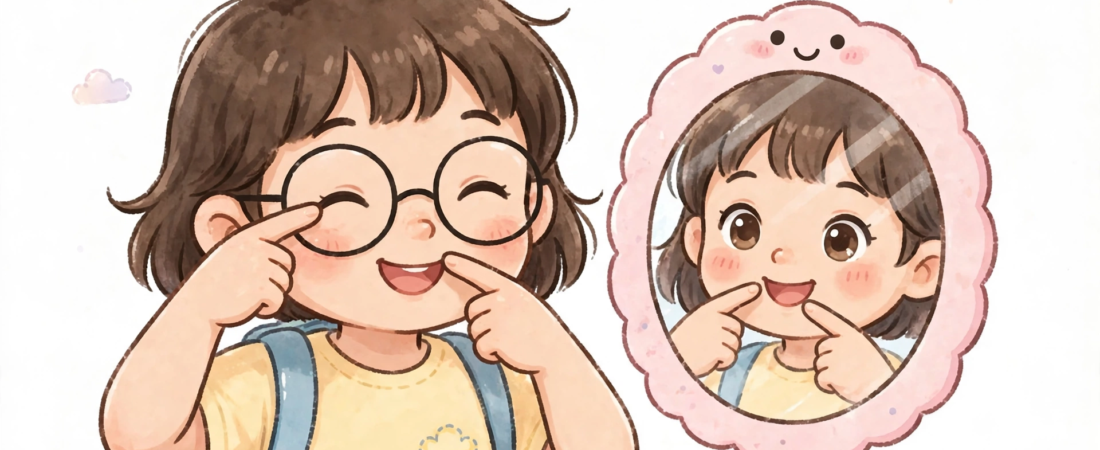
Your child already knows their face by heart. They point to their nose when they giggle, they close their eyes when they play peekaboo, and they open their mouth wide for the airplane spoon. So why not use that face to teach them Chinese? Eight little words — face, eyes, nose, mouth, ears, hair, eyebrows, teeth — and ten minutes of play, and your child will be saying their first real Chinese words today.
Face words are the perfect first Chinese lesson for kids. The words are short. The meaning is right there in the mirror. And every word turns into a game the second you say it out loud. No flashcards drilled at a desk, no long lists to memorize. Just a face, a mirror, and a parent who plays along.
The 8 face words to learn today
Here is the whole set. Eight words, and that is plenty for one day. Read the Chinese characters out loud with your child, and let them copy you. The pinyin tells you how each word sounds — the little marks above the vowels show the tone, the rise and fall of the voice.
| Chinese | Pinyin | English | A clue to remember it |
|---|---|---|---|
| 脸 | liǎn | face | The whole face — start here, it holds everything else |
| 眼睛 | yǎnjing | eyes | Two eyes that blink and wink |
| 鼻子 | bízi | nose | Right in the middle, easy to find |
| 嘴巴 | zuǐba | mouth | It opens wide to smile and talk |
| 耳朵 | ěrduo | ears | One on each side, they listen |
| 头发 | tóufa | hair | On top of the head, soft and tickly |
| 眉毛 | méimao | eyebrows | Two little lines above the eyes |
| 牙齿 | yáchǐ | teeth | White and shiny when you smile |
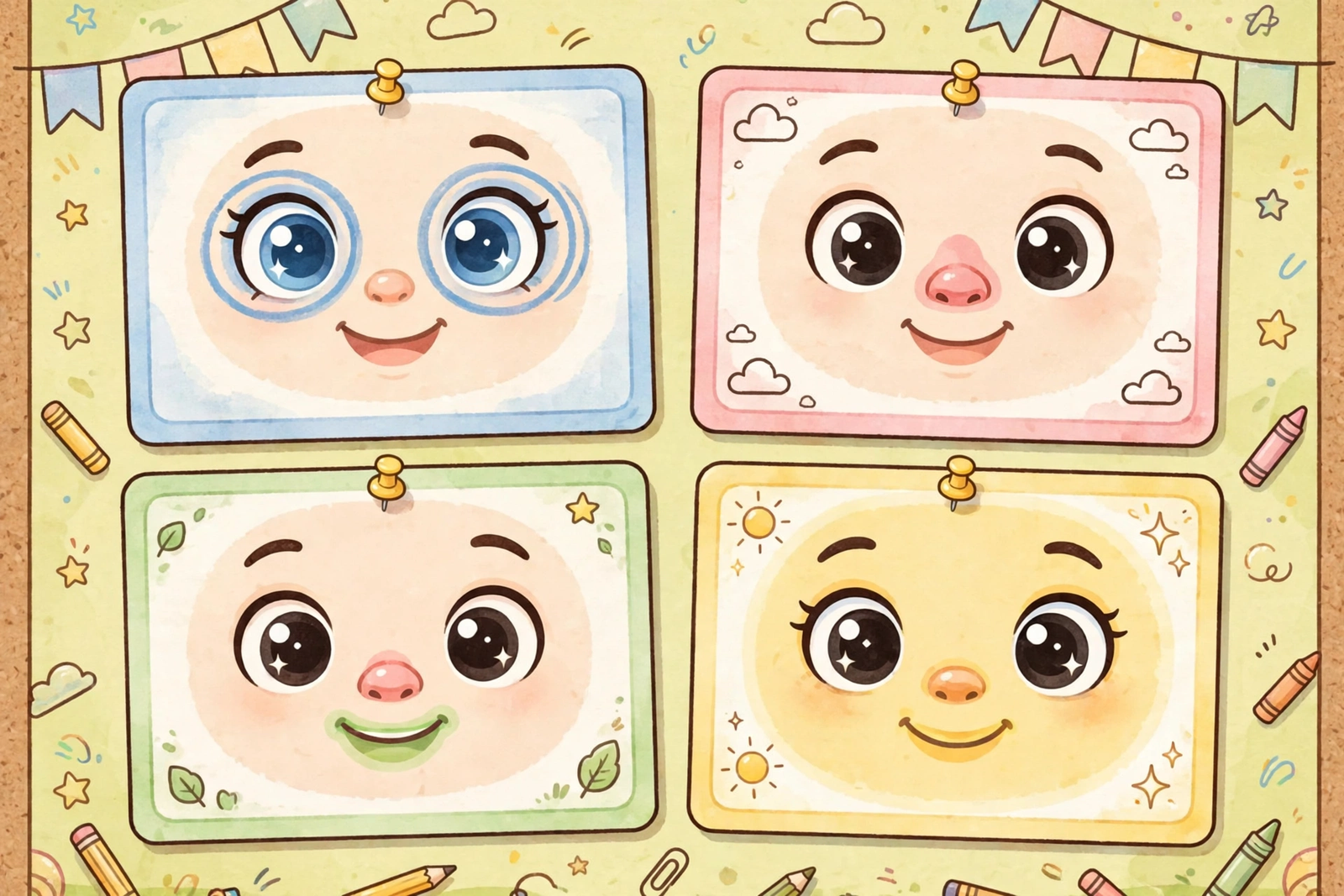
Do not try to teach all eight at once if your child is very young. Four words is a full win for a three-year-old. Six is great for a five-year-old. Eight words with short sentences is a fine goal for a seven-year-old. The table stays here for you to come back to — today is about the first few words sticking, not about finishing the list.
A quick note on tones, because parents always ask. Chinese is a tonal language, which means the pitch of your voice changes the meaning. The marks in the pinyin show you how: ǎ falls and then rises, like a little valley. You do not need a perfect tone today. Say the word slowly, copy the audio clips below, and let your child copy you. Kids pick up tones by ear much faster than adults do, so your job is to play the sound, not to lecture about it.
What your child can do at each age
Every child is different, and that is fine. Use these age bands as a rough guide, not a test. If your child can do the younger band easily, move up. If the older band feels hard, stay where the fun is.
Ages 3–4: four words, lots of pointing. The goal is simply to hear the sounds and point to the right part. Teach 脸 (liǎn, face), 眼睛 (yǎnjing, eyes), 鼻子 (bízi, nose), and 嘴巴 (zuǐba, mouth). Point to your own face as you say each word, then point to your child’s face. That is the whole lesson. Four words, said with a smile, counts as a big day.
Ages 5–6: all eight words, plus listening. Add 耳朵 (ěrduo, ears), 头发 (tóufa, hair), 眉毛 (méimao, eyebrows), and 牙齿 (yáchǐ, teeth). Now your child can play the listening game: you say a word, they touch the right part. Speed it up, slow it down, say it in a silly voice. The game is the lesson.
Ages 7–9: words plus short sentences. Once the eight words are solid, build tiny sentences around them. “这是我的脸。” (Zhè shì wǒ de liǎn. — This is my face.) “这是我的眼睛。” (Zhè shì wǒ de yǎnjing. — These are my eyes.) One pattern, eight words swapped in, and suddenly your child is making real Chinese sentences.
Ages 10–12: describe and compare. Older kids can go further: “我的眼睛大大的。” (Wǒ de yǎnjing dàdà de. — My eyes are big.) “我的嘴巴小小的。” (Wǒ de zuǐba xiǎoxiǎo de. — My mouth is small.) They can describe their own face, describe yours, and spot the differences. That is real communication, built on eight little words.
Listen first: hear the words, then say them
Before your child says a single word, let them hear it. Listening first is how kids learn any language — they hear it many times, then one day the word pops out on its own. Play each clip, point to the matching part of your face, and let your child just listen for the first round.
Now say the words together. You say it, your child copies. Go slowly. If a word comes out wrong, just say it again with a smile — never correct a small child by saying “no, wrong.” Copying you is the practice, and every try counts.
Here are the first sentences to try together. Each one follows the same pattern, so once your child knows the first, the rest come easily.
- 这是我的脸。(Zhè shì wǒ de liǎn.) — This is my face.
- 这是我的眼睛。(Zhè shì wǒ de yǎnjing.) — These are my eyes.
- 这是我的鼻子。(Zhè shì wǒ de bízi.) — This is my nose.
- 这是我的嘴巴。(Zhè shì wǒ de zuǐba.) — This is my mouth.
- 这是我的耳朵。(Zhè shì wǒ de ěrduo.) — These are my ears.
- 这是我的头发。(Zhè shì wǒ de tóufa.) — This is my hair.
Six sentences, one pattern. Say them in front of the mirror so your child can watch their own mouth move. Mirror time makes pronunciation practice feel like a game, not a lesson.
The 10-minute activity: Touch and Say
This is the heart of today’s lesson, and it takes about ten minutes from start to finish. You need nothing except a mirror and a willing face — yours or your child’s.
Minute 0–2: warm up with the song of the face. Point to each part of your own face and say the word slowly: 脸,眼睛,鼻子,嘴巴。Your child watches and listens. Then swap: your child points, you say the words. No pressure, no testing yet.
Minute 2–5: Touch and Say, slow round. Say a word in Chinese, and your child touches that part on their own face. “鼻子!” — they touch their nose. “眼睛!” — they touch their eyes. Go slowly and celebrate every correct touch. If they touch the wrong part, just laugh and show them: “This is 鼻子 — here!”
Minute 5–8: Touch and Say, fast round. Same game, quicker now. Mix up the order. Say the words in a silly voice, a whisper, a robot voice. Speed and silliness are what make the words stick. If your child starts saying the words before you do, you have already won.
Minute 8–10: the mirror game. Stand in front of a mirror together. You say a sentence — “这是我的鼻子。” — and your child repeats it while pointing in the mirror. End with a funny face contest: who can make the biggest 嘴巴 (mouth) or the widest 眼睛 (eyes)? The lesson ends in laughter, which is exactly how it should end.
Play that clip during the game. Hearing a clear voice give the instruction — “摸摸你的鼻子。” (Mōmō nǐ de bízi. — Touch your nose.) — lets your child practice listening for real, not just repeating after you.
A note for parents: how to help without pushing
You do not need to speak Chinese to teach your child these words. You are learning together, and that is actually an advantage: your child sees that learning is something grown-ups do too. A few habits make the ten minutes work much better.
Keep it short. Ten minutes of happy practice beats thirty minutes of tears. When the fun stops, the lesson stops. You can always play again tomorrow.
Praise the trying, not the perfection. “You said 鼻子! Great listening!” matters far more than a perfect tone. Kids who feel proud of trying will try again tomorrow. Kids who feel corrected will hide.
Use the words in real life. At breakfast, point to your 嘴巴 before eating. At bath time, wash the 脸 and name it. Two or three casual repeats during the day do more than one long study session.
Never ask your child for personal information in any game or app. This lesson needs no names, no photos, no recordings shared anywhere. Everything happens at home, between you and your child, with a mirror and your voices. If any learning app ever asks a child for their name, photo, or location, skip it — real learning never needs those details.
Repeat tomorrow, briefly. Five minutes tomorrow, five minutes the day after, and these eight words will be solid for weeks. Short and often is the whole secret of teaching a young child a language.
The check-up game: can you pass?
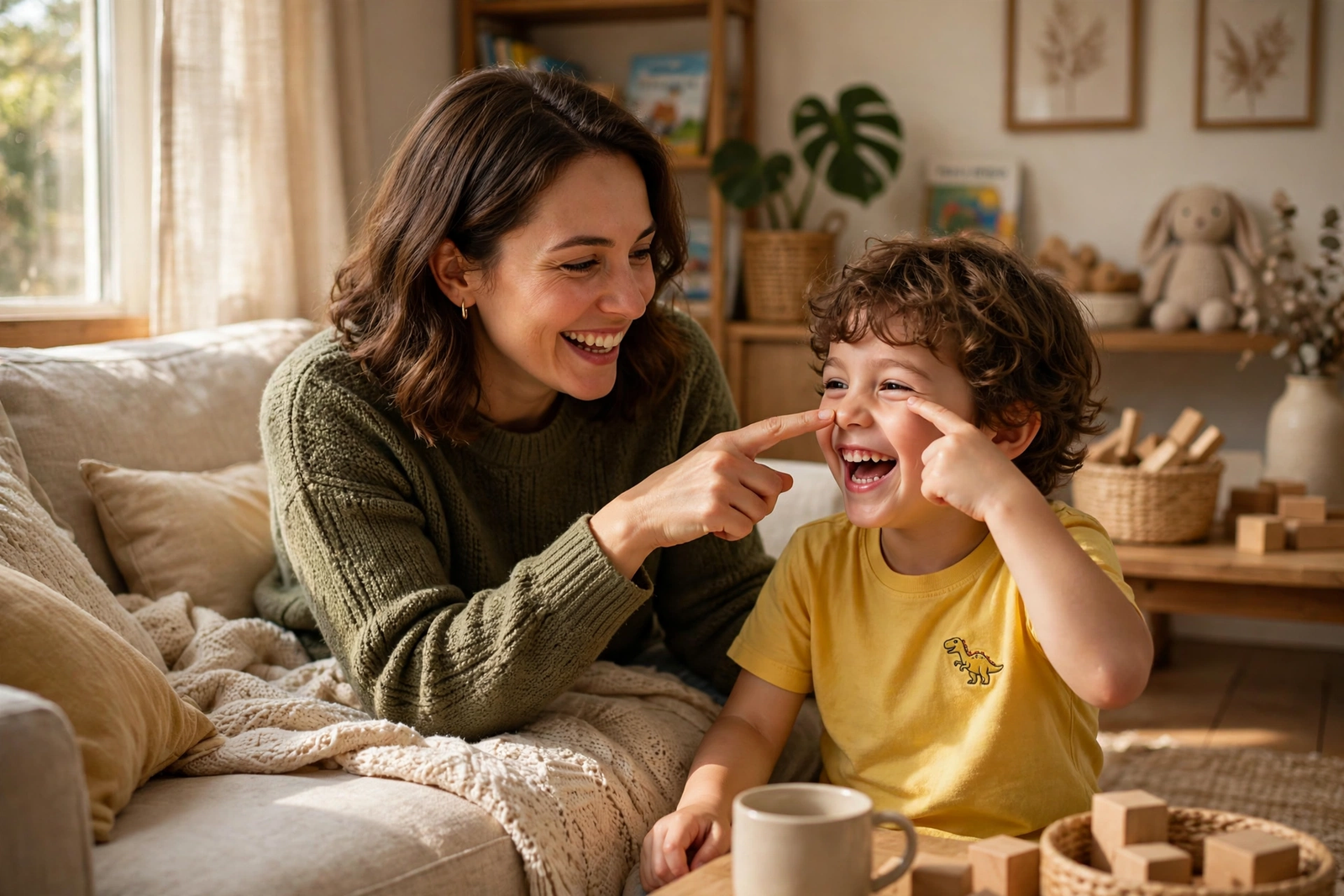
After the activity, try this quick check-up game. It takes two minutes, and it tells you which words are solid and which ones need one more day. No score, no pressure — just a game.
- 1. Say a word in Chinese. Your child touches the right part. Four in a row correct means that word is learned.
- 2. Point to a part on your own face. Your child says the Chinese word. Any try counts — even a wobbly tone is a win.
- 3. Say a sentence — “这是我的眼睛。” — and your child repeats it while pointing in the mirror.
- 4. Ask your child to teach YOU a word. Kids love being the teacher, and teaching is the best test there is.
- 5. End with a funny face: “做一个鬼脸!” (Zuò yí gè guǐliǎn! — Make a funny face!) Then name the parts of that funny face together.
If your child gets most of them, the words are sticking. If a word keeps slipping, just play Touch and Say again tomorrow. That is not failing — that is how learning works at this age.
Quick Quiz
Try these five questions with your child. Click an answer to see right away if it is correct. Keep an eye on the score at the top — and remember, the quiz is a game, not a test.
Score: 0/5
1. What does 眼睛 (yǎnjing) mean?
2. Which word means “nose”?
3. “这是我的嘴巴。” (Zhè shì wǒ de zuǐba.) means:
4. Which word means “ears”?
5. “我的眼睛大大的。” (Wǒ de yǎnjing dàdà de.) means:
Frequently asked questions
How many words should my child learn in one day? Four words is plenty for ages 3–4, and eight words is a good day for ages 5 and up. Short and happy beats long and tired every time. You can always add more tomorrow.
My child mixes up the tones. Is that a problem? Not at all. Tones take time, and kids learn them by hearing the sounds again and again. Just model the word clearly, play the audio clips, and let your child copy you. Accuracy grows with listening, not with correcting.
Do I need to speak Chinese to teach this lesson? No. You are learning together. Play the audio clips, point to the parts of the face, and play the game. Your child needs a play partner, not a perfect teacher.
What comes after face words? Body words are the natural next step — hands, feet, arms, legs — using the same Touch and Say game. The pattern stays the same, so your child already knows how to learn the next set.
Keep going
Eight words, ten minutes, one happy game — and your child just spoke their first Chinese. That is a real win, and it took less time than making breakfast. Play Touch and Say again tomorrow for five minutes, use the words at bath time and breakfast, and watch how fast they stick.
When you are ready for more playful practice, try our Chinese word games — they turn the words your child just learned into games you can play together. For more lessons like this one, visit the Chinese lessons on LingoBubbo.
Which word did your child learn first? Tell us in the comments — and share this lesson with a parent whose child is starting Chinese. Their first ten minutes could start tonight.