
“现在几点?” — “What time is it now?” It is one of the first questions every Chinese learner needs, and one of the first that goes wrong. Tell a friend you will meet at “三点半” when you meant “三点十五分” and you will be waiting at the café for fifteen minutes, wondering where they are. Telling time in Chinese is wonderfully logical once you see the pattern — and this guide walks you through hours, minutes, and the clock words that trip beginners up.
The good news: if you can count to 60 in Chinese, you can already tell the time. The rest is just three little words.
Telling time in Chinese: the three words you need
Chinese time runs on a simple formula: number + 点 (diǎn, o’clock) + number + 分 (fēn, minutes). That is nearly the whole system.
点 diǎn — o’clock. 三点 sān diǎn is 3 o’clock. 十点 shí diǎn is 10 o’clock. Say the hour number, then 点. Nothing else changes.
分 fēn — minutes. 三点十五分 sān diǎn shíwǔ fēn is 3:15. The 分 is often dropped in fast speech — 三点十五 sān diǎn shíwǔ — but keep it while you are learning. It keeps your meaning clear.
半 bàn — half. 三点半 sān diǎn bàn is 3:30. This is the word that saves you every day, because half past is the time people say most. Learn it before anything else.
Put them together and you can say any time on the clock: 八点二十五分 bā diǎn èrshíwǔ fēn (8:25), 十二点半 shí’èr diǎn bàn (12:30), 六点零五分 liù diǎn líng wǔ fēn (6:05 — notice the 零 líng, zero, before a single-digit minute).
The clock words that trip beginners
Hours and minutes are the easy part. These are the words that catch learners out in real conversations.
差 chà — “to” or “before the hour. 差五分三点 chà wǔ fēn sān diǎn means 2:55, “five minutes to three”. English speakers say “five to three”; Chinese puts the minutes first, then the hour it is approaching. Flip the order in your head before you speak.
刻 kè — a quarter of an hour. 三点一刻 sān diǎn yí kè is 3:15, and 三点三刻 sān diǎn sān kè is 3:45. Older speakers use 刻 all the time; younger speakers often just say the minutes. Understand both, use whichever feels natural.
早上 zǎoshang, 上午 shàngwǔ, 中午 zhōngwǔ, 下午 xiàwǔ, 晚上 wǎnshang — the parts of the day. Chinese does not use a.m. and p.m. the way English does. Say the part of the day first: 早上八点 zǎoshang bā diǎn (8 in the morning), 晚上八点 wǎnshang bā diǎn (8 in the evening). Forget this and your 8 o’clock breakfast becomes an 8 o’clock dinner.
分钟 fēnzhōng — “minutes” as a length of time. 分 is a point on the clock; 分钟 is how long something takes. “等我五分钟” (děng wǒ wǔ fēnzhōng, “wait for me five minutes”) uses 分钟, never 分. This one-word difference is the most common time mistake beginners make.
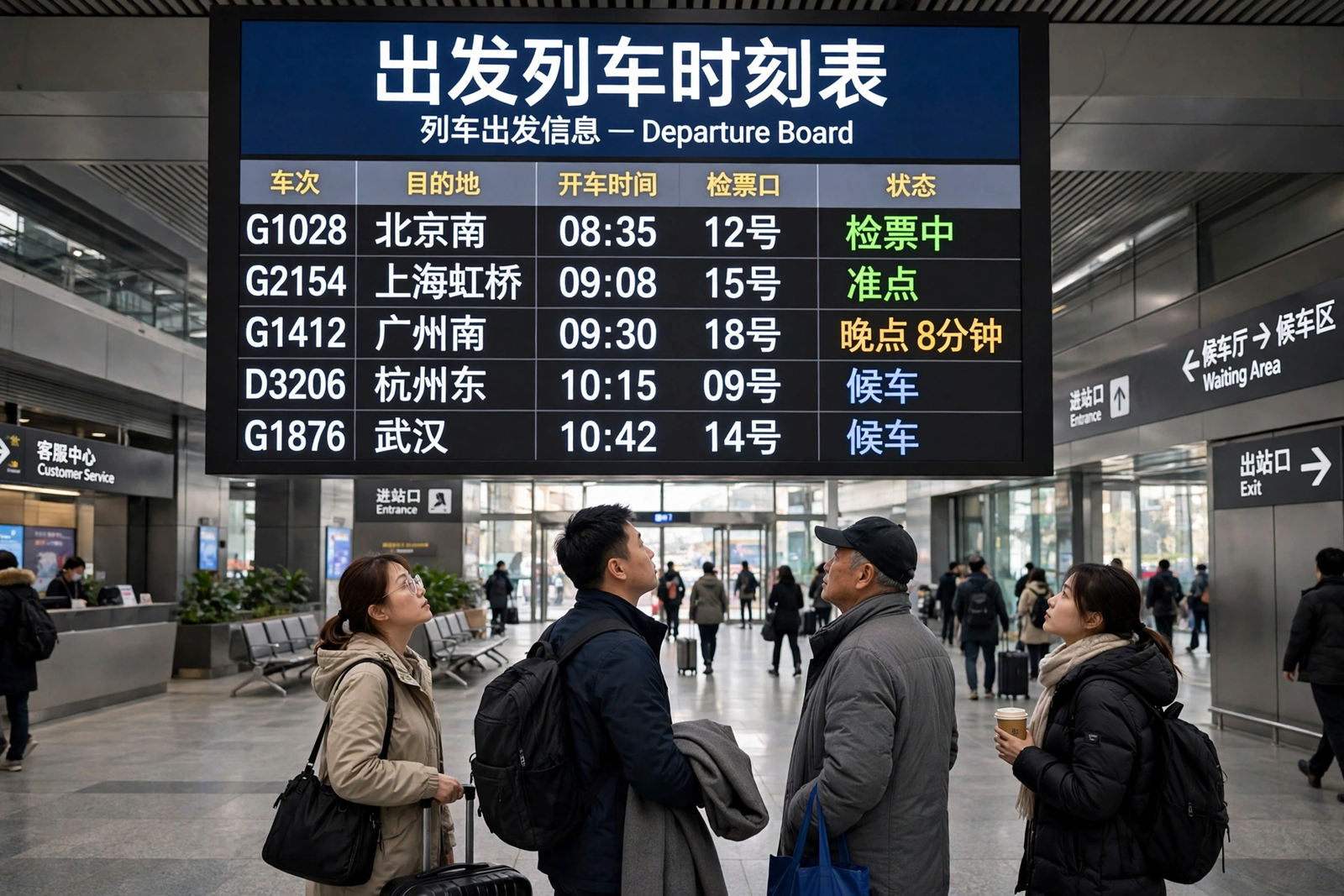
Asking and answering about time in Chinese
Here are the sentences you will actually use, with the polite versions first.
现在几点?Xiànzài jǐ diǎn? — “What time is it now?” The question every learner asks first. The answer follows the formula: 现在三点半。Xiànzài sān diǎn bàn. “It is 3:30 now.”
你几点起床?Nǐ jǐ diǎn qǐchuáng? — “What time do you get up?” Answer with a time and a part of the day: 我早上七点起床。Wǒ zǎoshang qī diǎn qǐchuáng. “I get up at 7 in the morning.”
我们几点见面?Wǒmen jǐ diǎn jiànmiàn? — “What time shall we meet?” A good reply: 我们下午三点见面吧。Wǒmen xiàwǔ sān diǎn jiànmiàn ba. “Let’s meet at 3 in the afternoon.”
电影几点开始?Diànyǐng jǐ diǎn kāishǐ? — “What time does the film start?” 电影晚上七点半开始。Diànyǐng wǎnshang qī diǎn bàn kāishǐ. “The film starts at 7:30 in the evening.”
Notice the pattern every time: part of the day first, then the hour, then the minutes. Once that order is in your muscle memory, the rest is just numbers.
Common mistakes when telling time in Chinese
Watch out for these three. Every learner makes them; the good news is they are easy to fix.
Saying the hour after the minutes. English says “five to three”; Chinese says 差五分三点, minutes first. Say it the Chinese way and people understand you instantly. Say it the English way and they have to translate in their heads.
Forgetting the part of the day. “八点见” (bā diǎn jiàn, “see you at 8”) is a coin toss between morning and evening. Always add 早上, 下午 or 晚上 unless the context is obvious.
Mixing up 分 and 分钟. “三点五分” (sān diǎn wǔ fēn, 3:05) is a time on the clock. “五分钟” (wǔ fēnzhōng, five minutes) is a length of time. One says when, the other says how long. Keep them apart and your sentences will sound right.
Your one-week time-telling checklist
Time is the easiest vocabulary to practise, because the clock is always there:
☐ Say the time out loud in Chinese every time you check your phone today
☐ Learn 半, 差 and 刻, and use each one in a sentence before the weekend
☐ Ask someone “现在几点?” and answer with the part of the day included
☐ Set your phone’s clock display to Chinese for one day and read the times aloud
☐ Write your schedule for tomorrow in Chinese: wake-up, meals, bedtime
☐ Teach one family member to say their favourite time of day in Chinese
A week of this and the clock stops being a test. It becomes the most patient teacher you own.

Quick Quiz
Test yourself on telling time in Chinese. Click an answer to see if you are right — your score is at the top.
Score: 0/5
1. What does 三点半 mean?
2. How do you say 2:55, “five minutes to three”?
3. Which word means minutes as a length of time, in “wait five minutes”?
4. 晚上八点 is…
5. 三点一刻 is…
Quick answers about telling time in Chinese
Do Chinese speakers use the 24-hour clock?
On timetables, tickets and official signs, yes — 14:30 is common in writing. In conversation, people almost always use the 12-hour clock with a part of the day: 下午两点半, “2:30 in the afternoon”. Speak that way and you will sound natural.
What is the difference between 点 and 小时?
点 is a point on the clock (“at 3 o’clock”). 小时 xiǎoshí is an hour as a length of time (“three hours”). “三个小时” means “three hours long”; “三点” means “at 3 o’clock”. Different jobs, different words.
How do I say “on time” and “late” in Chinese?
准时 zhǔnshí means “on time” and 迟到 chídào means “to be late”. “对不起,我迟到了” (duìbuqǐ, wǒ chídào le) — “Sorry, I’m late” — is a sentence worth learning early. You will use it.
Is 刻 still used by young people?
Less than it used to be, but everyone understands it, and older relatives use it constantly. Learn it for listening even if you usually say the minutes yourself.
Time is the first real conversation most learners have in Chinese — and it is entirely within reach. Start today: look at the clock, say the time out loud, and add the part of the day. If you want a guided path with audio, real dialogues and practice built in, explore our Chinese programme and our English programme for learners who love the same everyday, speak-first method.