
Have you ever been stuck not knowing how to say “mine”, “yours” or “this”, “that” in Chinese? Mix up just one small character and the sentence changes meaning straight away: “this is my book” becomes “that is your book”. The good news is that the whole HSK 1 pronoun list with example sentences fits into just a few dozen words — learn them in one sitting and you can use them all day long, from introducing yourself, asking the way and shopping to chatting with your Chinese friends.
This article lists the full set of HSK 1 pronouns to the latest standard: personal pronouns, demonstrative pronouns, question words and how to form possession with 的. Every word comes with the Hanzi, pinyin with tone marks, the meaning in English and a ready-to-use example sentence. At the end there are exercises with explained answers, a quick 5-question quiz and a Q&A section. The article is for Vietnamese learners studying on their own or revising for the HSK, at HSK 1–3 level.
Which HSK standard does this article follow? HSK 2.0 or HSK 3.0?
Let’s be clear right from the start so you don’t study from the wrong syllabus. Two HSK standards are in circulation side by side. The old standard HSK 2.0 (from 2011) sets HSK 1 at 150 vocabulary words. The new standard, HSK 3.0 built on the Chinese language proficiency framework published in 2021, sets HSK 1 at 500 words; while the newest HSK test syllabus (HSK 考试大纲, published by the Center for Language Education and Cooperation in November 2025 and applying to tests from 13 December 2026) sets HSK 1 at 300 words. Three different numbers, but the good news is that the pronoun group barely changes at all: every pronoun in this article belongs to HSK 1 under both standards.
There is one exception worth remembering: 它 (tā) — the pronoun for things and animals — belonged to HSK 2 under the old standard, but the new HSK 3.0 test syllabus has moved it down to HSK 1. If you are learning from an old book and don’t see 它 in the HSK 1 list, that is exactly why. Reference source: HSK 考试大纲 (the official HSK test syllabus). If you’d like an overview of this change, see the article What’s different in the new HSK 3.0 on LingoBubbo.
Personal pronouns: I, you, he, she
Personal pronouns are the group you will use in every sentence. Chinese doesn’t conjugate verbs by person, so as long as you remember the right pronoun, your sentence is already half right. The table below gives the full set of HSK 1 personal pronouns.
| Hanzi | Pinyin | Meaning | Notes |
|---|---|---|---|
|
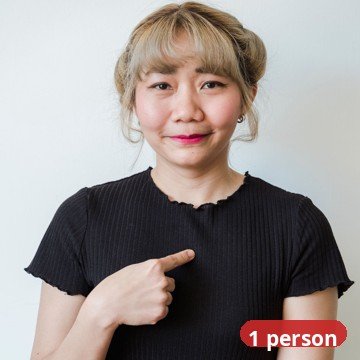
我
|
wǒ | I, me | first person singular |
|
你

|
nǐ | you | informal address, between equals |
|
他

|
tā | he, him | male |
|
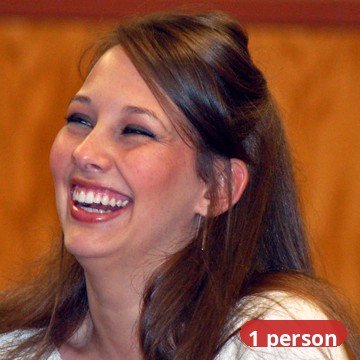
她
|
tā | she, her | female |
|
它

|
tā | nó | things, animals |
|
我们

|
wǒmen | we, us | 们 is read with the neutral tone: men |
|
你们

|
nǐmen | you (plural) | 们 is read with the neutral tone: men |
|
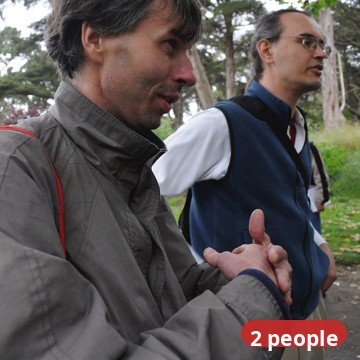
他们
|
tāmen | they (male or mixed group) | 们 is read with the neutral tone: men |
|
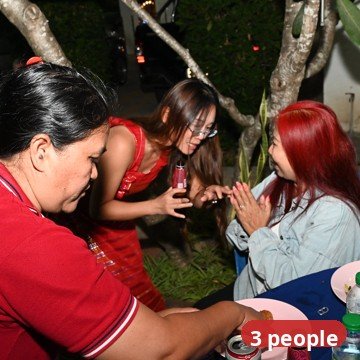
她们
|
tāmen | they (female) | 她们 is used only for an all-female group |
|
它们
|
tāmen | they (things/animals) | things, animals (plural) |
Listen to the example sentences below and read along. Note that the three characters 他, 她 and 它 are read exactly the same — all tā — and differ only in writing. When you listen, guess the meaning from the context; when you write, choose the character according to gender or what it refers to.
- 我是学生。 (Wǒ shì xuésheng.) — I am a student.
- 你是中国人吗? (Nǐ shì Zhōngguórén ma?) — Are you Chinese?
- 他是我的朋友。 (Tā shì wǒ de péngyou.) — He is my friend.
- 她是我的老师。 (Tā shì wǒ de lǎoshī.) — She is my teacher.
- 我们是同学。 (Wǒmen shì tóngxué.) — We are classmates.
- 你们是老师吗? (Nǐmen shì lǎoshī ma?) — Are you teachers?
- 他们是学生,她们也是学生。 (Tāmen shì xuésheng, tāmen yě shì xuésheng.) — They are students, and they (the women) are students too.
A small tip for beginners: the character 们 (men) is always read with the neutral tone, unstressed. Don’t read it as “mèn” or “mén” — just read it lightly and quickly, attached to the pronoun in front of it, and you’ve got it right. And remember the most familiar greeting of all: 你好 (nǐ hǎo) — when read in a flow, two third tones sitting side by side make the first one change into a second tone, so it sounds like “ní hǎo”, though the pinyin is still written nǐ hǎo.
This – that: 这 and 那, here – there
To point at something right in front of you, use 这 (zhè, this); to point at something far away, use 那 (nà, that). This pair turns up in every situation: pointing at things in the supermarket, asking the way, introducing people you know. Alongside it is the pair for places: 这里 (zhèlǐ, here) and 那里 (nàlǐ, there), whose spoken forms are 这儿 (zhèr) and 那儿 (nàr).
| Hanzi | Pinyin | Meaning | When to use it |
|---|---|---|---|
|
这

|
zhè | this | thing/person nearby |
|
那

|
nà | that | thing/person far away |
|
这里

|
zhèlǐ | here | place nearby |
|
那里

|
nàlǐ | there | place far away |
|
这儿

|
zhèr | here | spoken form, common in the North |
|
那儿

|
nàr | there | spoken form, common in the North |
- 这是我的书。 (Zhè shì wǒ de shū.) — This is my book.
- 那是你的笔吗? (Nà shì nǐ de bǐ ma?) — Is that your pen?
- 这是谁的手机? (Zhè shì shéi de shǒujī?) — Whose phone is this?
- 那是老师的车。 (Nà shì lǎoshī de chē.) — That is the teacher’s car.
- 这是我们的家,那是你们的学校。 (Zhè shì wǒmen de jiā, nà shì nǐmen de xuéxiào.) — This is our home, that is your school.
Did you notice that the sentence “这是谁的手机?” uses both 这 and 谁? Pronouns in Chinese very often travel together like that: demonstrative + question word, personal pronoun + possessive. Learning the words one by one makes them easy to forget; learning them inside complete sentences makes them stick far longer.

Possession with 的: mine, yours, his
To say “someone’s”, take a personal pronoun and add 的 (de) after it. The formula is just one line: pronoun + 的 + noun. No agreement for gender, no agreement for number — 我的 serves for men and women alike, singular and plural alike.
| Possessive phrase | Pinyin | Meaning |
|---|---|---|
|
我的

|
wǒ de | my / mine |
|
你的

|
nǐ de | your / yours |
|
他的
|
tā de | his |
|
她的
|
tā de | her / hers |
|
它的
|
tā de | its |
|
我们的
|
wǒmen de | our / ours |
|
你们的
|
nǐmen de | your / yours (plural) |
|
他们的
|
tāmen de | their / theirs |
Listen to the set of possessive sentences below. Note that 的 is always read with the neutral tone, as “de”, unstressed.
There is one exception that books often mention but learners still forget: before a noun denoting a family member or a close relationship, Chinese speakers usually drop 的. They say 我妈妈 (wǒ māma, my mother) — hardly anyone says 我的妈妈; they say 我家 (wǒ jiā, my home) instead of 我的家. But with things, keep it exactly as it is: 我的书 (my book), 你的笔 (your pen). A quick rule for remembering: the closer the relationship, the more likely 的 is dropped.
And don’t confuse possessive 的 with 得 and 地 — all three characters are read “de” but are written differently and used differently. The article telling 的, 地 and 得 apart in Chinese explains each case in detail — have a read when you have some free time.
Question words: asking who, what, which, where, how many
This group is the key to forming questions. Memorise just the 8 words below and you can ask about almost anything at HSK 1 level: people, things, choices, places, quantities and manner.
| Hanzi | Pinyin | Meaning | How it is used |
|---|---|---|---|
|
谁

|
shéi | ai | asks about people |
|
什么

|
shénme | what | asks about things and matters |
|
哪

|
nǎ | which one | always goes with a measure word: 哪个, 哪本 |
|
哪里

|
nǎlǐ | where | asks about places (also read 哪儿 nǎr) |
|
几

|
jǐ | how many (small number) | asks about small quantities, goes with a measure word |
|
多少

|
duōshao | how many / how much | asks about large quantities, asks prices |
|
怎么

|
zěnme | how, in what way | asks about manner or method |
|
怎么样

|
zěnmeyàng | how, in what state | asks about a state or condition, asks for opinions |
Listen to this set of sample questions — each one uses a different question word:
- 你是谁? (Nǐ shì shéi?) — Who are you?
- 这是什么? (Zhè shì shénme?) — What is this?
- 哪一个是你的? (Nǎ yí gè shì nǐ de?) — Which one is yours?
- 你住在哪里? (Nǐ zhù zài nǎlǐ?) — Where do you live?
- 你有几本书? (Nǐ yǒu jǐ běn shū?) — How many books do you have?
- 这个多少钱? (Zhège duōshao qián?) — How much does this cost?
- 你怎么去学校? (Nǐ zěnme qù xuéxiào?) — How do you go to school?
- 你今天怎么样? (Nǐ jīntiān zěnmeyàng?) — How are you today?
The two pairs in this group that are confused most easily are 几 and 多少, and 怎么 and 怎么样. About 几 and 多少: 几 goes with a measure word and asks about small quantities (usually under 10) — 你有几本书?; 多少 needs no measure word and asks about large quantities or prices — 你有多少本书?, 这个多少钱?. About 怎么 and 怎么样: 怎么 asks how something is done — 你怎么去学校? (by what means do you go?); 怎么样 asks about a state or asks for an opinion — 你今天怎么样? (how are you today?). Remember these two pairs and you avoid half of all question mistakes at HSK 1.
5 mistakes Vietnamese learners make most often with HSK 1 pronouns
Using “tā” without distinguishing 他, 她 and 它 when writing. They sound identical but are written completely differently. Write about a female teacher using 他 and the character is wrong on the spot. A tip: 他 carries the person radical (亻) and points to a man, 她 carries the woman radical (女), and 它 carries the roof radical (宀) and points to things.
Adding 的 before family members. Writing “我的妈妈” is not entirely ungrammatical, but to a native speaker’s ear it sounds awkward. Just say 我妈妈, 我爸爸, 我家, 我朋友 — that is the most natural way.
Confusing 几 and 多少. Asking “你有几本书?” is right; asking “你有多少钱书?” is wrong, because 多少 does not go with the measure word 本 in that way. To ask about many books, say “你有多少本书?”.
Forgetting the measure word after 哪. 哪 cannot stand alone in front of a noun: you must say 哪个 (which one), 哪本书 (which book), 哪个人 (which person). Saying “哪书” leaves the measure word out.
Reading 们 with a full tone. 们 is always the neutral tone, men. Reading “wǒmén” sounds heavy and gets the sentence rhythm wrong. Read it fast and lightly, attached to the pronoun in front of it: wǒmen, nǐmen, tāmen.
Exercises: do them right away — answers come with explanations
Listen once more to the combined review audio below, then do the 5 exercises. The answers sit right after each exercise — but have a go yourself first.
Exercise 1 — Fill in the personal pronoun. (a) ___ 是老师。(female teacher) (b) ___ 是中国人?(asking the person opposite you) (c) ___ 是学生。(several female friends) — Answers: (a) 她 (tā) — the teacher is female, so use 她; (b) 你 (nǐ) — you are asking the person facing you; (c) 她们 (tāmen) — the group is all female, so use 她们, not 他们.
Exercise 2 — Choose 这 or 那. The book in your hand: ___ 是我的书。 The car far away: ___ 是老师的车。 — Answers: 这 (near) for the book in your hand, 那 (far) for the car in the distance. Near takes 这, far takes 那 — that is all there is to it.
Exercise 3 — Choose 几 or 多少. (a) 你有 ___ 个孩子? (b) 这件衣服 ___ 钱? — Answers: (a) 几 — it asks about a small quantity and goes with the measure word 个; (b) 多少 — it asks about a price, so no measure word is needed.
Exercise 4 — Translate into Chinese. “This is my book. That is your pen.” — Answer: 这是我的书。那是你的笔。(Zhè shì wǒ de shū. Nà shì nǐ de bǐ.) Note the order: demonstrative first, possessive second — don’t reverse it the Vietnamese way.
Exercise 5 — Fix the mistake. Where does the sentence “我的妈妈是老师。” sound awkward? — Answer: drop the 的 and say 我妈妈是老师。(Wǒ māma shì lǎoshī.) — My mother is a teacher. Before a noun denoting a family member, 的 is usually omitted.
Summary table: all HSK 1 pronouns in a single table
Photograph this table or copy it into your notebook — this is every pronoun you need for HSK 1, following the new HSK 3.0 test syllabus (300 words, tests from 13 December 2026), and it also matches the old HSK 2.0 standard, except for 它, which has only just been moved down into HSK 1.
| Group | The words | How to remember them |
|---|---|---|
| Personal | 我 你 他 她 它 我们 你们 他们 她们 它们 | singular + 们 = plural |
| Demonstrative | 这 那 这里 那里 这儿 那儿 | near = 这, far = 那 |
| Question words | 谁 什么 哪 哪里 几 多少 怎么 怎么样 | who – what – which – where – how many (small) – how many/much – how |
| Possessive | pronoun + 的 | drop 的 before family members |
Send this table to a study friend who is revising for HSK 1 — one table that helps you memorise a whole topic is well worth sharing. You can also get more listening practice with the article HSK 1 listening practice on the topic of names and nationalities, because introducing names and nationalities is where personal pronouns turn up the most.
Quick quiz: have you got the HSK 1 pronouns down yet?
Click the answer you choose — you’ll know right away whether it is right or wrong.
Your score: 0/5 — click an answer to check right away.
Question 1. How is “我” read, and what does it mean?
Question 2. Which sentence asks “Whose book is this?”
Question 3. “你有___本书?” — you have 3 books, which word goes in the blank?
Question 4. “___妈妈是老师。” — which word goes in the blank to sound most natural?
Question 5. To point at something far away, which word do you use?
Frequently asked questions about the HSK 1 pronoun list with example sentences
他, 她 and 它 are all read the same — so how do you tell them apart when listening? When listening, you go by the context: talking about a female teacher, it is definitely 她; talking about a table, it is 它. Only when writing do you need to pick the right character. The HSK 1 listening test usually gives you clear context, so rest assured.
When may you drop 的 in a possessive phrase? Drop 的 before nouns denoting family members, close relationships, or an organisation you belong to: 我妈妈 (my mother), 我家 (my home), 我们学校 (our school). With things and ordinary nouns, keep the 的: 我的书, 你的笔.
What tone is 们 read in? 们 is always read in the neutral tone — men, with no tone mark. Read it fast and lightly, attached to the pronoun in front of it: wǒmen, nǐmen, tāmen.
Which pronoun in this article appears only in the new standard? 它 (tā) — for things and animals — belonged to HSK 2 under the old HSK 2.0 standard, but the new HSK 3.0 test syllabus has moved it down to HSK 1. If you are studying from an old book and can't find 它 there, just learn it in addition — it may appear in the new test.
Once you've finished the pronouns, what should you learn next? Learn numbers and how to ask prices — because "how much is this?" uses both the question word 多少 and numbers. LingoBubbo's HSK 1 listening practice for counting numbers is the most sensible next step.
Learn this pronoun group by heart and you can already say your first proper Chinese sentences: introduce who you are, ask who the person opposite you is, point out whose things are whose, ask the way, ask prices. Tomorrow, try using 5 sentences from this article to chat with a study friend, or talk to yourself in front of the mirror — only when it comes out of your mouth is it truly memorised. Tell me how it went in the comments: which sentences could you use right away, and which ones still trip you up? And send this HSK 1 pronoun list with example sentences to a friend who is revising for HSK 1, so the two of you can learn the pronoun table together. If you want to continue along the roadmap, start from LingoBubbo's Chinese page — every article there already comes with vocabulary, audio and a quiz ready.
📷 Photo credits: real photos from the open photo libraries Openverse / Wikimedia Commons / Flickr (CC0, CC BY, CC BY-SA licences) — one real-life photo for each word, no AI drawings. Stroke-order animation: Make Me a Hanzi data (HanziWriter).