
You sit down in a café in Beijing. The server walks over, smiles, and asks you a question. You catch one word — 喝 (hē, to drink) — and the rest flies past like a train. Sound familiar? Listening is the hardest part of HSK 1 for most learners, not because the words are hard, but because real speech never waits for you. The fix is simple: practice with short dialogues about one topic at a time, listen first, and read the transcript only after. This lesson does exactly that, with the drinks topic — the words you will actually hear in a café, a restaurant, and a friend’s kitchen.
This lesson follows the HSK 3.0 syllabus, the current official standard for the HSK exam. Under HSK 3.0, Level 1 covers 300 words (up from 150 under the older HSK 2.0), and the listening section tests exactly the kind of short, everyday exchanges you will practice below. The official syllabus is published by the Center for Language Education and Cooperation, and every word in this lesson is at HSK 1 level — the vocabulary of the first months of study.
How to Use This Listening Lesson
Do not read the transcripts first. That is the one rule. Listening practice only works if your ears do the work before your eyes do. Here is the routine that HSK teachers recommend:
- 1. Listen once with your eyes closed. Just catch what you can.
- 2. Listen again and write down the words you recognize — even one or two is a win.
- 3. Read the transcript and check what you missed.
- 4. Listen a third time while reading, then once more without reading.
Four listens, about two minutes each. That is the whole method. Now, the words.
The Words You Need First
Before you press play, learn the ten words in the table. If you know these, you will understand almost every line in the four dialogues below.
| Chinese | Pinyin | English meaning |
|---|---|---|
| 水 | shuǐ | water |
| 茶 | chá | tea |
| 咖啡 | kāfēi | coffee |
| 牛奶 | niúnǎi | milk |
| 果汁 | guǒzhī | juice |
| 喝 | hē | to drink |
| 喜欢 | xǐhuan | to like |
| 想 | xiǎng | to want, would like |
| 请 | qǐng | please |
| 谢谢 | xièxie | thank you |
Two more small words will show up in the dialogues. 一杯 (yì bēi) means “one cup” or “one glass” — 杯 (bēi) is the measure word for drinks, and it works for water, tea, coffee, anything you pour. And 还是 (háishi) means “or” — but only inside a question. You will see exactly how it works in Dialogue 4.
Dialogue 1: What Would You Like to Drink?
This is the first question you will hear in any café. Listen first, then read.
Transcript:
A: 你想喝什么? Nǐ xiǎng hē shénme? What would you like to drink?
B: 我想喝水。你呢? Wǒ xiǎng hē shuǐ. Nǐ ne? I would like water. And you?
A: 我想喝茶。 Wǒ xiǎng hē chá. I would like tea.
Did you catch it? 你想喝什么 is the question that opens a thousand café conversations. 想 (xiǎng) means “would like” here — softer and more polite than 要 (yào, to want). And 你呢 (nǐ ne, “and you?”) is the shortest way to throw the question back. Learn these two lines and you can order a drink in any Chinese café tomorrow.

Dialogue 2: He Likes Coffee, She Likes Milk
This dialogue practices 喜欢 (xǐhuan, to like) — the verb that tells you what someone prefers. Listen for who likes what.
Transcript:
他喜欢喝咖啡。 Tā xǐhuan hē kāfēi. He likes to drink coffee.
她喜欢喝牛奶。 Tā xǐhuan hē niúnǎi. She likes to drink milk.
我喜欢喝果汁。 Wǒ xǐhuan hē guǒzhī. I like to drink juice.
Three sentences, one pattern: person + 喜欢喝 + drink. Now here is the listening trap that catches beginners: 他 (tā, he) and 她 (tā, she) sound exactly the same. You cannot tell them apart by ear — only by context, or by reading. In the HSK 1 listening test, the question will never depend on he-versus-she alone, because even native speakers cannot hear the difference. So do not worry about it. Focus on the drink word at the end of the sentence. That is where the answer lives.
Practice tip: say all three sentences out loud, then change the drink. 他喜欢喝茶。 她喜欢喝水。 我喜欢喝咖啡。 If you can swap the last word and keep the rest, you really own the pattern.
Dialogue 3: Ordering at the Café
This is the dialogue you will use most in real life. Listen first.
Transcript:
请给我一杯水。 Qǐng gěi wǒ yì bēi shuǐ. Please give me a glass of water.
谢谢。 Xièxie. Thank you.
请给我一杯茶。 Qǐng gěi wǒ yì bēi chá. Please give me a cup of tea.
请给我一杯… (qǐng gěi wǒ yì bēi…) — “Please give me one cup of…” — is the single most useful sentence in this whole lesson. Change the last word and you can order anything: 一杯咖啡 (a cup of coffee), 一杯牛奶 (a glass of milk), 一杯果汁 (a glass of juice). The measure word 杯 (bēi) stays the same for every drink. One word, endless orders.
Notice the politeness, too. 请 (please) opens the sentence, 谢谢 (thank you) closes the exchange. In a Chinese café, these two words cost you nothing and earn you a smile every time. The HSK listening test loves these little politeness words — they are often the difference between two answer choices that otherwise sound the same.
Dialogue 4: Water, Tea, or Coffee?
The last dialogue teaches 还是 (háishi, “or”) — the word for offering a choice. Listen for the three options.
Transcript:
你喜欢喝什么?水,茶,还是咖啡? Nǐ xǐhuan hē shénme? Shuǐ, chá, háishi kāfēi? What do you like to drink? Water, tea, or coffee?
我喜欢喝茶。 Wǒ xǐhuan hē chá. I like tea.
Here is the grammar point worth remembering: 还是 is for questions, and 或者 (huòzhě) is for statements. You ask 水还是茶? (water or tea?) but you say 我喝水或者茶 (I drink water or tea). Mix them up and a Chinese listener will still understand you — but the HSK exam will mark it wrong, and now you know the rule.
Listening Tips That Actually Work
Listen for the last word. In a drinks question, the answer is usually the drink word at the end of the sentence. Train your ear to wait for it instead of panicking at the beginning.
Don’t translate in your head. When you hear 水, picture a glass of water. When you hear 茶, picture a cup of tea. The picture is faster than the English word, and in listening, speed is everything.
Shadow the audio. After you read the transcript, play the audio again and speak along with it, half a second behind the speaker. This is called shadowing, and it is the fastest way to make your mouth keep up with your ears. Three rounds of shadowing per dialogue is enough.
Learn the question words, not just the nouns. The nouns — 水, 茶, 咖啡 — are easy. The words that carry the question — 想, 喜欢, 什么, 还是 — are what decide whether you understand. Spend your time there.
Common Listening Confusions
想 (xiǎng) vs 喜欢 (xǐhuan). 想 means “would like” right now: 我想喝水 (I would like water). 喜欢 means “like” in general: 我喜欢喝茶 (I like tea). In a café, 想 is what you say when you order. In a conversation about taste, 喜欢 is what you say.
还是 (háishi) vs 或者 (huòzhě). 还是 asks a choice: 水还是茶? 或者 states a choice: 我喝水或者茶. One for questions, one for statements. That is the whole rule.
他 vs 她. Same sound, different character. You cannot hear the difference, and neither can anyone else. Context tells you who it is. Never let this worry you in a listening test.
一杯 (yì bēi) — one cup of everything. 杯 is the measure word for all drinks. You never need a different one at HSK 1. 一杯水, 一杯茶, 一杯咖啡 — same pattern, every time.
Practice Exercises With Answers
Listen to each dialogue again, then answer without looking at the transcript. Check yourself below.
Exercise 1. In Dialogue 1, what does the second speaker want to drink? Answer: Water — 我想喝水.
Exercise 2. In Dialogue 2, who likes milk? Answer: She does — 她喜欢喝牛奶.
Exercise 3. In Dialogue 3, what does the speaker order first? Answer: A glass of water — 请给我一杯水.
Exercise 4. In Dialogue 4, which three drinks are offered? Answer: Water, tea, and coffee — 水,茶,还是咖啡?
Exercise 5. How do you say “Please give me a cup of coffee” in Chinese? Answer: 请给我一杯咖啡。(Qǐng gěi wǒ yì bēi kāfēi.)
How did you do? Five out of five means your ears are ready for the HSK 1 listening section. Three or four means you are close — listen to the dialogues once more tomorrow and try again. Below three? Read the transcripts once more, shadow each dialogue twice, and come back. Listening improves fast when you practice a little every day.
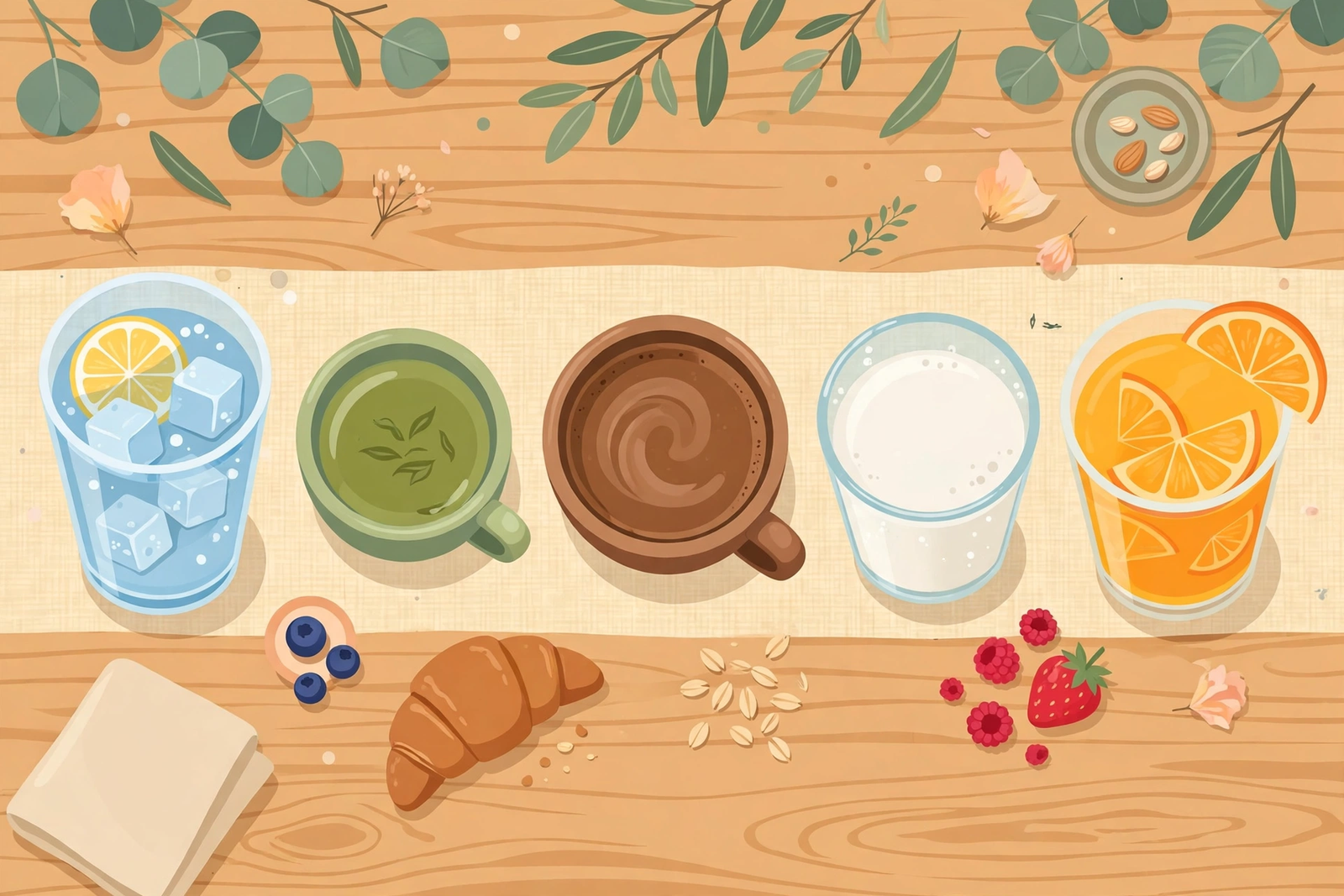
Quick Checklist: HSK 1 Listening — Drinks
| Check | What to remember |
|---|---|
| The question | 你想喝什么?— What would you like to drink? |
| The polite order | 请给我一杯… — Please give me one cup of… |
| The choice word | 还是 — “or” inside a question |
| The like word | 喜欢 — to like (in general) |
| The want word | 想 — would like (right now) |
| The measure word | 杯 — one cup/glass for every drink |
| The method | Listen first, transcript second, shadow third |
Quick Quiz
Try these five questions now. Click an answer to see right away if you are correct. Keep an eye on your score at the top.
Score: 0/5
1. In the dialogue, “我想喝水” — what does the speaker want?
2. 他喜欢喝咖啡 means…
3. “请给我一杯茶” — what is the speaker doing?
4. Which word means “to drink”?
5. 你喜欢喝水还是茶?— what is the speaker asking?
Keep Learning on LingoBubbo
Four dialogues, ten words, one topic — and you can already order a drink in a Chinese café. That is what HSK 1 listening really is: short, everyday exchanges, one topic at a time. Come back tomorrow and listen to the four dialogues again before you read anything. Your ears will surprise you. To keep building your listening skills, try the HSK 1 Listening and Reading Practice: 20 Quiz Questions for Beginners, and when you are ready for longer conversations, move up to HSK 2 Listening Practice: 15 Short Dialogues With Answers. For more lessons like this one, visit the Chinese lessons on LingoBubbo.
Now it is your turn. Listen to Dialogue 3 once more, then say it out loud without reading — 请给我一杯水。谢谢。 Then come back and tell us in the comments: what is your favorite drink in Chinese? Share this lesson with a friend who is preparing for HSK 1 — two minutes of listening a day is the habit that passes the test.
FAQ
Is this listening practice at HSK 1 level?
Yes. Every word in the four dialogues is at HSK 1 level under the current HSK 3.0 syllabus, which covers 300 words at Level 1. The dialogues are the same length and speed as the real HSK 1 listening section.
Should I read the transcript before listening?
No — listen first, with your eyes closed, and read only after two listens. Reading first turns a listening exercise into a reading exercise, and your ears learn nothing.
What is the difference between 想 and 喜欢?
想 (xiǎng) means “would like” right now — what you want in this moment. 喜欢 (xǐhuan) means “to like” in general — your taste. In a café you order with 想; in a conversation about preferences you use 喜欢.
Why do 他 (he) and 她 (she) sound the same?
Because they do — both are pronounced “tā.” Chinese distinguishes them only in writing. In listening, context tells you who it is, and the HSK test never depends on hearing the difference.
How is 还是 different from 或者?
还是 (háishi) offers a choice inside a question: 水还是茶? 或者 (huòzhě) offers a choice inside a statement: 我喝水或者茶. One for questions, one for statements.