
One hundred and fifty words sounds like a lot — until you sort them into groups. The moment a learner sees that the HSK 1 vocabulary list is really just ten small families of words, each one tied to a part of daily life, the whole level stops feeling scary. This is the grouping I use with my own students: learn one group at a time, use its words the same day, and the 150 words take care of themselves.
A quick note on how to use this page. Each group below shows a few example words with characters, pinyin, and English, plus the number of HSK 1 words in that group. I have not printed all 150 words here — a wall of words helps nobody — but the groups add up to the full list, and the examples show you exactly what each group feels like. Learn the examples first, then fill in the rest of the group from your textbook or course.
The HSK 1 vocabulary list in 10 groups
| Group | Words | Example words |
|---|---|---|
| 1. Greetings and politeness | 15 | 你好 nǐhǎo (hello), 谢谢 xièxie (thank you), 再见 zàijiàn (goodbye), 对不起 duìbuqǐ (sorry), 请 qǐng (please) |
| 2. People and family | 12 | 我 wǒ (I), 你 nǐ (you), 他 tā (he), 她 tā (she), 爸爸 bàba (dad), 妈妈 māma (mum), 朋友 péngyou (friend), 老师 lǎoshī (teacher) |
| 3. Numbers and time | 20 | 一 yī (one), 二 èr (two), 三 sān (three), 十 shí (ten), 今天 jīntiān (today), 明天 míngtiān (tomorrow), 现在 xiànzài (now), 点 diǎn (o’clock) |
| 4. Food and drink | 18 | 水 shuǐ (water), 茶 chá (tea), 米饭 mǐfàn (cooked rice), 面条 miàntiáo (noodles), 苹果 píngguǒ (apple), 吃 chī (to eat), 喝 hē (to drink) |
| 5. Home and everyday objects | 12 | 家 jiā (home), 学校 xuéxiào (school), 书 shū (book), 桌子 zhuōzi (table), 椅子 yǐzi (chair), 门 mén (door), 电话 diànhuà (telephone) |
| 6. School and work | 15 | 学生 xuésheng (student), 汉语 hànyǔ (Chinese language), 学习 xuéxí (to study), 读 dú (to read), 写 xiě (to write), 听 tīng (to listen), 说 shuō (to speak) |
| 7. Body and health | 12 | 眼睛 yǎnjing (eyes), 手 shǒu (hand), 头 tóu (head), 生病 shēngbìng (to be ill), 医院 yīyuàn (hospital), 医生 yīshēng (doctor), 药 yào (medicine) |
| 8. Places and weather | 15 | 中国 zhōngguó (China), 北京 běijīng (Beijing), 商店 shāngdiàn (shop), 天气 tiānqì (weather), 雨 yǔ (rain), 冷 lěng (cold), 热 rè (hot) |
| 9. Daily-life verbs | 18 | 去 qù (to go), 来 lái (to come), 看 kàn (to look), 爱 ài (to love), 喜欢 xǐhuan (to like), 买 mǎi (to buy), 睡觉 shuìjiào (to sleep), 起床 qǐchuáng (to get up) |
| 10. Questions and describing words | 13 | 什么 shénme (what), 谁 shéi (who), 哪儿 nǎr (where), 怎么 zěnme (how), 大 dà (big), 小 xiǎo (small), 好 hǎo (good), 多 duō (many) |
Add them up and you get 150 — but notice something encouraging. You already recognise the shape of most of these groups from your own life. A learner does not memorise 150 strangers; they name 150 things they already know, in a new language.
How to learn one group a week (or faster)
Here is the rhythm that works for most families. Pick one group on Monday. Learn five or six of its words with their sounds and tones — say them aloud, do not just stare at them. By Wednesday, use them in tiny sentences: 我喜欢苹果 (wǒ xǐhuan píngguǒ, I like apples) or 这是我的书 (zhè shì wǒ de shū, this is my book). By the weekend, play a game: label objects around the house, quiz each other at dinner, or race to name everything in the group. Then move on. Ten groups, ten weeks, and HSK 1 is done — with words that actually stuck.
Two details make the difference. First, always learn a word with its tone. 苹果 is píngguǒ, not “pingguo” — the tones are part of the word, the way stress is part of an English word. Second, learn words in pairs or sentences, never alone. 买 (mǎi, to buy) is forgettable; 买苹果 (mǎi píngguǒ, to buy apples) is a picture you can remember.
The groups that unlock sentences fastest
If you want quick wins, start with groups 1, 3, and 10. Greetings plus numbers plus question words already let a learner ask and answer real questions: 你叫什么? (nǐ jiào shénme?, what is your name?), 你几岁? (nǐ jǐ suì?, how old are you?), 这是多少? (zhè shì duōshao?, how much is this?). Children love this stage because suddenly they can interrogate the whole family in Chinese — and they will.
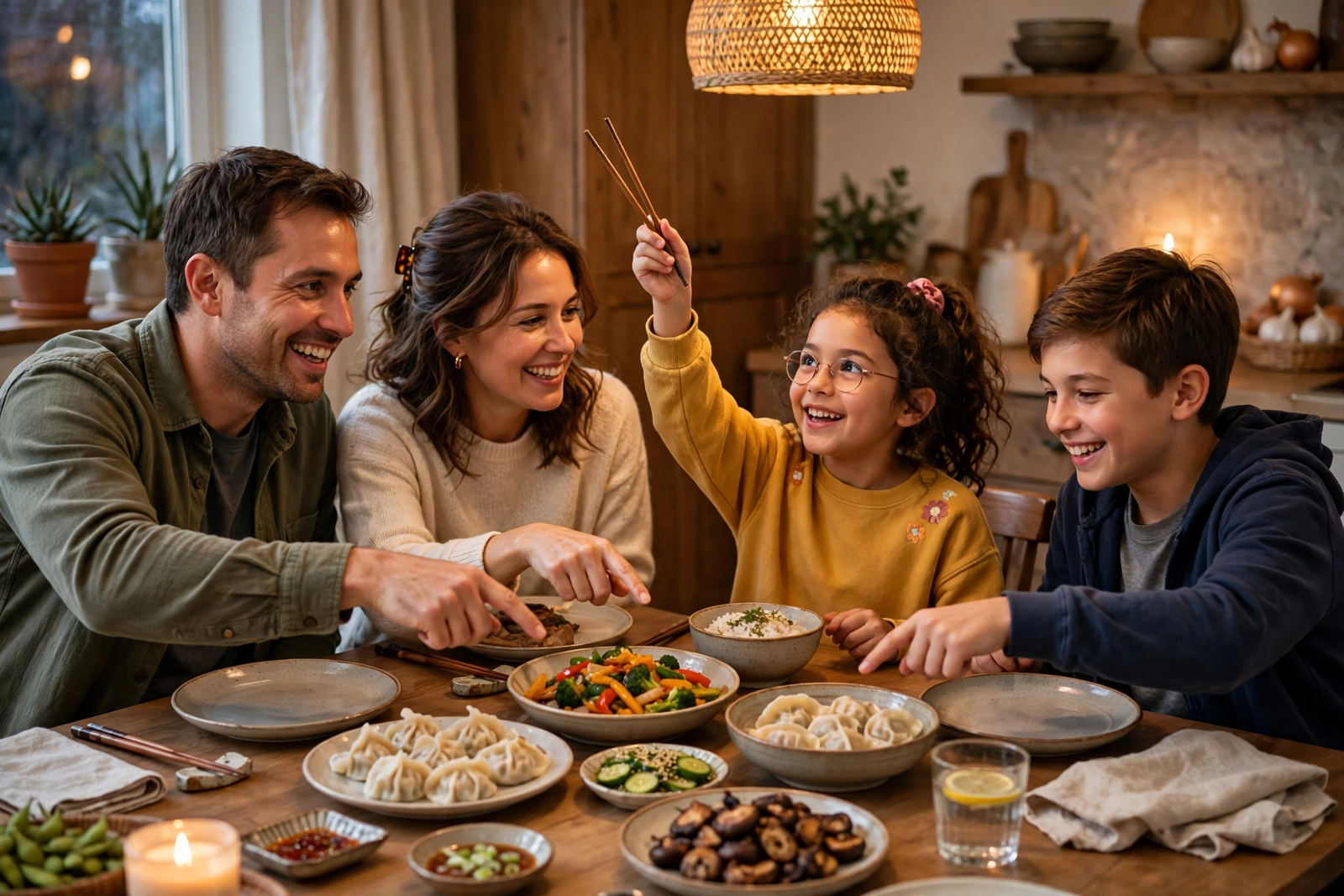
After that, food words (group 4) are the secret motivator. A child who can order 米饭 (mǐfàn) and 面条 (miàntiáo) at a restaurant has a reason to keep going that no sticker chart can match. Use the dinner table as your classroom at least once a week: name three foods in Chinese before anyone eats.
Mistakes that slow down HSK 1 vocabulary
The biggest one is learning words only by reading them silently. Chinese is a spoken language first, and a word you have never said aloud is a word you will not recognise when someone says it to you. Read every new word out loud three times, with the tone, before moving on.
The second mistake is the opposite: drilling one group until it is perfect before touching the next. Perfection at this stage is a trap. It is better to know all ten groups roughly than one group perfectly, because real sentences mix groups constantly — a question about food needs a number, a person, and a verb all at once.

Quick Quiz
Test yourself on the HSK 1 vocabulary list in groups. Click an answer to see if you are right — your score is at the top.
Score: 0/5
1. Into how many groups does the post sort the 150 HSK 1 words?
2. Which groups does the post say unlock sentences fastest?
3. What does 苹果 (píngguǒ) mean?
4. In the one-group-a-week rhythm, what should be happening by Wednesday?
5. With 20 to 30 minutes a day, how long does the post say the 150 words usually take?
Questions about the HSK 1 vocabulary list
Do I need to write all 150 characters by hand?
For the HSK 1 exam, you need to recognise the characters and understand them, but handwriting every one is not the fastest path for most learners. Recognise all 150, practise writing the most useful 50 or so, and let the rest come with reading.
How long should the 150 words take?
With 20 to 30 minutes a day, most learners cover the list in two to four months. If your family is learning together and using the words at home, it often goes faster — because the words get used, not just reviewed.
What comes after HSK 1?
HSK 2 adds another 150 words and turns these building blocks into real conversations: shopping, directions, and talking about plans. The groups above are the foundation; HSK 2 is where they start paying off.
Want the 150 words taught with audio, characters, and games instead of a list? Our Chinese programme teaches every HSK 1 word the way this article groups them — try the free HSK 1 trial lessons and start with group one tonight.