
You passed HSK 3, opened an HSK 4 word list, and the numbers did not match anything you expected. One list says 1,200 words. Another says 3,245. A third mentions handwriting, speaking, and grammar points you never saw on the old exam. Which one is real? All of them, in a way. The HSK changed, and HSK 4 is where the change bites hardest. This guide explains the HSK 4 new standard in plain English, shows you exactly what to adjust in your study plan, and gives you a 16-week roadmap you can start tonight.
A note on versions, up front: this post distinguishes two systems throughout. HSK 2.0 is the six-level exam most learners still sit. HSK 3.0 is the nine-level standard published in 2021 (official code GF0025-2021, in effect since 1 July 2021), with a revised exam syllabus published in November 2025. Whenever a number below says “HSK 3.0,” it comes from the 2021 standard unless the sentence says otherwise. Check the official site, chinesetest.cn, before you register, because test centers switch versions on their own schedules.
First, Which HSK 4 Are You Sitting? HSK 2.0 vs HSK 3.0
Here is the comparison that causes most of the confusion. The same level number means something very different under the two systems:
| HSK 2.0 (the old exam) | HSK 3.0 (2021 standard) | |
|---|---|---|
| Levels | 6 | 9, in three bands: elementary (1-3), intermediate (4-6), advanced (7-9) |
| HSK 4 words (total) | 1,200 | 3,245 |
| HSK 4 characters | Not specified | 1,200 |
| HSK 4 grammar points | Not specified | 286 |
| Skills counted | Listening, reading, writing | Listening, speaking, reading, writing, plus characters and grammar |
Read that table again. Under HSK 2.0, HSK 4 asked for 1,200 words and nothing else was counted. Under HSK 3.0, the same level number asks for 3,245 words, 1,200 characters, and 286 grammar points. That is nearly three times the vocabulary, and the exam now tracks what you can actually do with the language, not just how many words you recognize.
One more wrinkle: the November 2025 exam syllabus trims the 2021 numbers for the exam itself, to roughly 2,000 words for Level 4, with implementation from July 2026. So you will see two different “HSK 3.0” word counts online, and both are real. The 2021 standard is the full framework. The 2025 syllabus is the exam list. For your study plan, aim at the bigger number. If the exam asks for less, you walk in over-prepared. That is a good problem to have.
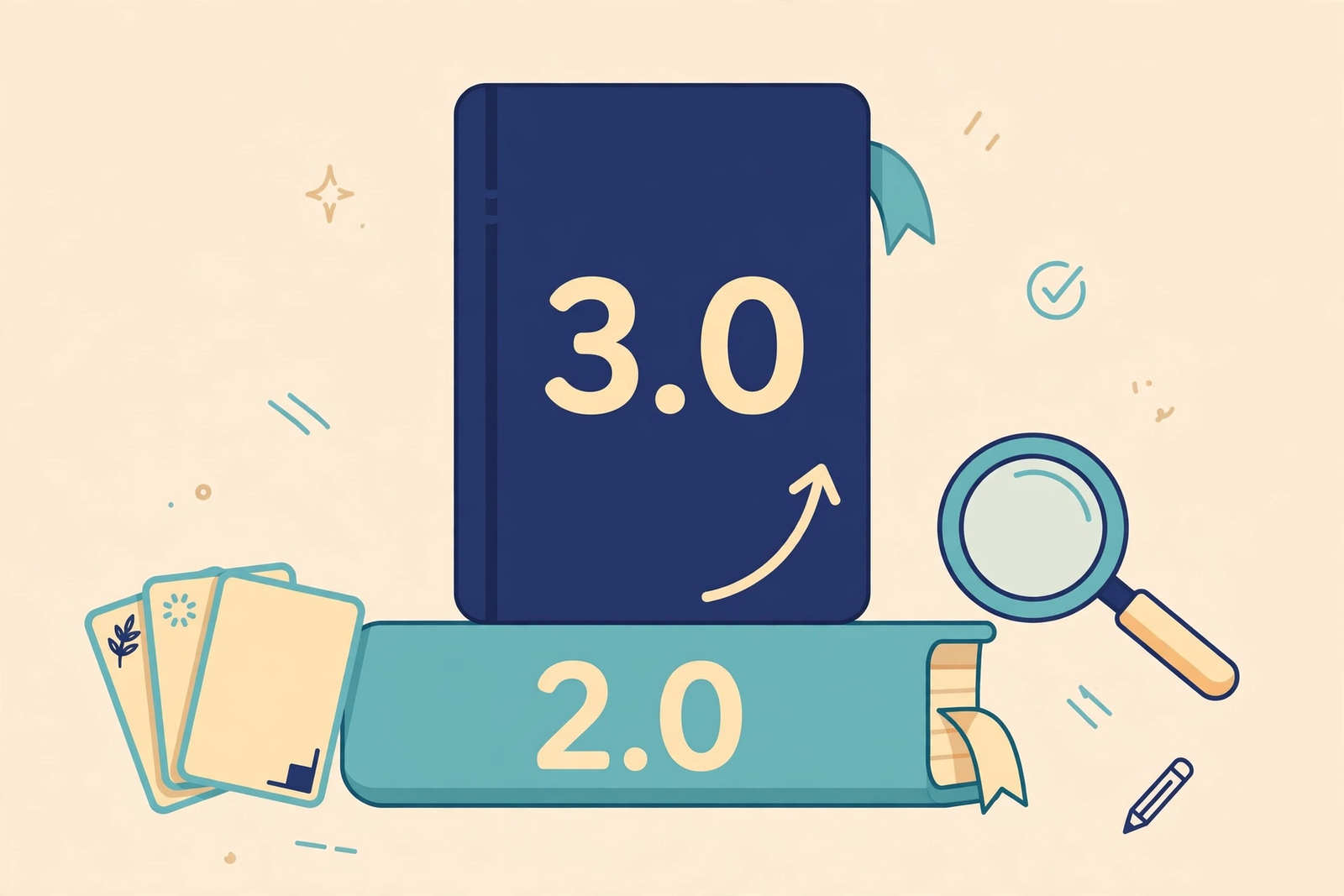
And here is the part that surprises people most: someone who passed old HSK 4 with 1,200 words is roughly at new HSK 2 or early HSK 3 in vocabulary terms. The level numbers did not move up together. A new HSK 3 asks for almost four times as many words as an old HSK 3. So if your certificate says HSK 4 and you are aiming at the new HSK 4, you are not topping up a finished level. You are climbing most of a new one. That sounds harsh, but it is better to hear it now, in a blog post, than in an exam hall.
What Actually Changes for an HSK 4 Learner
The word count gets the headlines, but three quieter changes matter just as much for your daily study.
Characters are counted now, twice. HSK 2.0 only ever listed words, which let learners pass reading-heavy levels with shaky character knowledge. HSK 3.0 sets separate lists for characters you read and characters you write, with 300 new characters per level up to Level 6. For HSK 4, that means 1,200 characters in total, and a subset you must be able to handwrite. Typing pinyin into a phone and picking the right character from a menu will not build that skill. Your plan needs handwriting time, every week, from the start.
Grammar is a list, not a feeling. The standard counts grammar points: 286 by Level 4, with 76 new ones at this level. Patterns like 越来越 (yuè lái yuè, more and more) stop being “something you have seen” and become something you must produce correctly. You will meet them in the writing section, where a wrong pattern costs real marks.
Speaking joins the exam. The new standard adds a speaking test from Level 3 upward, and the top band adds translation. HSK 4 learners can no longer treat speaking as something to fix “after the exam.” Say the sentences out loud as you learn them. Your mouth needs the practice as much as your eyes do.
None of this makes HSK 4 impossible. It makes it honest. The new standard tests whether you can actually use Chinese at an intermediate level: read real text, write real sentences by hand, hold a real conversation. That is a fairer goal, and it is a more useful one.
Your HSK 4 New Standard Study Plan: 16 Weeks, Four Phases
Sixteen weeks is a realistic runway for a learner who already holds HSK 3 and can study about an hour a day. If you have less time, stretch the phases. If you have more, compress them. The shape matters more than the dates.
Weeks 1-4: Audit and rebuild the base. Take a full HSK 3 mock test and mark every gap honestly. Then rebuild your foundation the new way: learn words with their characters, not just their pinyin. Write each new character by hand five times before you move on. Start a listening habit of 15 minutes a day, and say every example sentence aloud. Listen to the first clip and repeat each sentence after the speaker, slowly, before you read on.
我觉得学习汉语很有意思。(Wǒ juéde xuéxí Hànyǔ hěn yǒu yìsi.) — I think learning Chinese is really interesting.
他每天坚持学习两个小时。(Tā měitiān jiānchí xuéxí liǎng gè xiǎoshí.) — He studies for two hours every day, without missing a day.
这个问题比较难,但是我能解决。(Zhège wèntí bǐjiào nán, dànshì wǒ néng jiějué.) — This problem is quite hard, but I can solve it.
Weeks 5-10: Build volume. This is the heavy lifting. Learn 25 to 30 new words a day, grouped by topic, and review yesterday’s words before you add new ones. Study one grammar pattern a day and write three sentences with it. One of the most useful patterns at this level is 越来越, which means “more and more.” It goes before an adjective or a verb phrase, and it turns a flat statement into a story of change. Listen to how it sounds in a real sentence.
我的中文水平越来越高了。(Wǒ de Zhōngwén shuǐpíng yuè lái yuè gāo le.) — My Chinese level keeps getting higher and higher.
汉语越来越难,但是越来越有意思。(Hànyǔ yuè lái yuè nán, dànshì yuè lái yuè yǒu yìsi.) — Chinese gets harder and harder, but also more and more interesting.
Weeks 11-14: Test yourself for real. Take one full mock test each week under timed conditions, then spend two days fixing only what the test exposed. This is also when handwriting practice pays off: write one short paragraph a day by hand, about your day, your plans, or your opinion on something. No typing. No pinyin input. Your hand has to learn what your eyes already know.
Weeks 15-16: Polish and rest. Stop adding new words. Review your mistake notebook, re-read your best model answers, and do one final mock test in week 15. In the last three days before the exam, study lightly: listen, speak, sleep well. Cramming new vocabulary the night before an HSK 4 exam helps nobody.
Five HSK 4 Words Worth Learning First
New-standard word lists are long, so start where the words do the most work. These five appear in real HSK 4 reading, listening, and writing again and again. Learn each one inside a sentence, not alone on a card. Listen to the clip first, then read the sentences and say them aloud.
坚持 (jiānchí) — to persist, to keep at it. 每天坚持学习很重要。(Měitiān jiānchí xuéxí hěn zhòngyào.) — Sticking with it every day matters.
解决 (jiějué) — to solve. 遇到问题要想办法解决。(Yùdào wèntí yào xiǎng bànfǎ jiějué.) — When you meet a problem, find a way to solve it.
意见 (yìjiàn) — opinion. 请说说你的意见。(Qǐng shuōshuo nǐ de yìjiàn.) — Please share your opinion.
提高 (tígāo) — to improve, to raise. 我想提高我的听力。(Wǒ xiǎng tígāo wǒ de tīnglì.) — I want to improve my listening.
决定 (juédìng) — to decide. 我决定每天学习两个小时。(Wǒ juédìng měitiān xuéxí liǎng gè xiǎoshí.) — I have decided to study two hours every day.
Now try them in a short conversation, the kind of exchange the listening section loves. Listen first without reading, then check the text.
A: 你准备得怎么样了?(Nǐ zhǔnbèi de zěnmeyàng le?) — How is your preparation going?
B: 我每天复习两个小时,听力进步了很多。(Wǒ měitiān fùxí liǎng gè xiǎoshí, tīnglì jìnbù le hěn duō.) — I review two hours a day, and my listening has improved a lot.
A: 那很好,继续加油!(Nà hěn hǎo, jìxù jiāyóu!) — That is great, keep it up!
Notice how much work five words do. 坚持 carries the whole idea of a study habit. 解决 turns a complaint about a hard problem into a plan. 意见 is the word you need when the writing task asks for your view on something. Learn words like these first, and the rest of the list gets easier, because every new sentence you meet will reuse them.
Three Mistakes That Waste Months
Trusting an old word list. If your app or textbook still shows 1,200 words for HSK 4, it is a HSK 2.0 list. Studying from it and sitting the new exam is like training for a 10-kilometer race and arriving at a marathon. Before you buy anything or download anything, check which version the material follows. The cover should say so. If it does not, that is your answer.
Skipping handwriting. This is the mistake even careful learners make, because typing feels like writing. It is not. On the new exam, characters you can only recognize will not save you in the writing section. Five minutes of handwriting a day, every day, beats an hour once a week. Keep a small notebook just for this, and date every page so you can see the pile grow.
Treating the number as the goal. 3,245 words is a big number, and big numbers invite a counting mindset: learn the list, pass the test. But the new standard counts grammar and characters for a reason. A learner who knows 3,000 words and cannot write a correct sentence will struggle. A learner who knows 2,000 words and can use them, write them, and say them will do far better. Chase the skill, and the number follows.
A Realistic Week on the New Plan
You do not need a perfect schedule. You need a repeatable one. Here is a week that fits around work, school, or family life, built from the same pieces as the 16-week plan above. Save it, print it, or copy it into your planner.

Your HSK 4 weekly checklist:
- Monday to Friday: 25 new words, written by hand, with one example sentence each
- Every day: 15 minutes of listening, and every new sentence said aloud
- Tuesday and Thursday: one grammar pattern, three sentences written with it
- Wednesday: handwriting practice, one paragraph about your day
- Saturday: one timed reading section and one listening section from a mock test
- Sunday: review the whole week, fix the mistakes, and rest
Two hours a day is plenty if the two hours are real. An hour of focused study beats three hours of half-watching videos with a textbook open on your lap. And if a day falls apart, do ten minutes instead of zero. Ten minutes keeps the chain alive. Zero breaks it.
Quick Quiz
Test what you learned from this post. Click an answer to see if you are right, and your score is at the top.
Score: 0/5
1. Under the HSK 3.0 standard published in 2021, how many words does HSK 4 require in total?
2. HSK 3.0 measures three things at every level. Which trio is correct?
3. What does 越来越 (yuè lái yuè) mean?
4. Which is the correct pinyin for 坚持?
5. In vocabulary terms, an old HSK 4 certificate (HSK 2.0, 1,200 words) is closest to which HSK 3.0 level?
FAQ
Is my old HSK 4 certificate still valid? Yes. Certificates already issued stay valid, and institutions that asked for HSK 4 under the old system still recognize them. The change affects what future exams test, not what you already earned. But if a school or employer asks for the new HSK 4, expect the higher bar.
Do I have to start over if I studied from HSK 2.0 materials? No. Your 1,200 words still count, and they are the core of the new list. What changes is the size of the job ahead: roughly 2,000 more words, plus characters you can write and grammar you can use. Keep your old notes. Add to them.
When does HSK 3.0 fully replace HSK 2.0? The transition is underway but not finished. A finalized exam syllabus was published in November 2025 for implementation from July 2026, and the test organizer has announced the new exam opens worldwide on 13 December 2026, while regular test dates for levels 1-6 still use HSK 2.0 until a formal switch is announced. Check chinesetest.cn and your test center before you register for any date.
How long does the new HSK 4 take to prepare for? From a solid HSK 3, about four months at an hour a day, following the plan above. From zero, much longer, and that is fine. The honest answer is that the new standard rewards steady work over a longer time, not a sprint.
Where can I read about the other new-standard levels? Start with our guide to what is new in HSK 3.0, then read HSK 3 under the new standard: which skills change? and HSK 2 under the new standard: the knowledge structure you need to see how the levels build on each other.
Your Turn: Audit Your Plan Tonight
The HSK 4 new standard is not a reason to panic. It is a reason to plan. Tonight, take ten minutes and check three things: which version your study materials follow, how many of the 1,200 HSK 4 characters you can write by hand, and whether your week includes listening, speaking, and handwriting or just silent reading. Whatever is missing goes into your plan first. That is the whole adjustment.
Keep going with the Chinese lessons on LingoBubbo, where the words, sentences, and dialogues in this post appear in full lessons with more practice. If this guide cleared up the confusion for you, send it to a friend who is also staring at two different word lists and wondering which one to trust. And tell us in the comments: which version will you sit, and what is the first thing you are changing in your study plan?