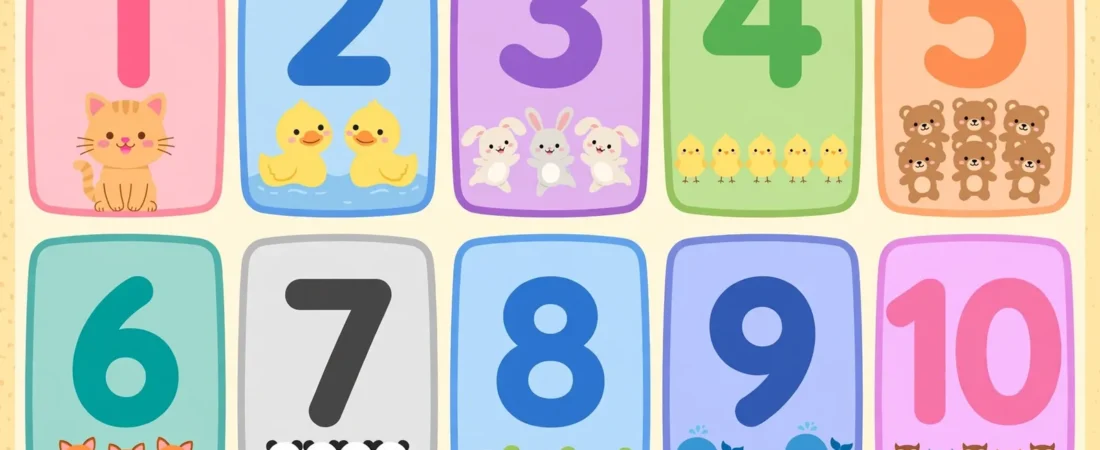
One, two, three. Your child can already count in English. Now imagine them counting to ten in Korean before dinner tonight, giggling the whole time. It only takes ten little words, and one of them sounds like a sneeze.
Korean numbers 1 to 10 are the perfect first step into Korean for kids. They are short, they are fun to say, and children use them everywhere: counting snacks, counting steps, counting stuffed animals lined up on the bed. This guide teaches both sets of Korean numbers, the ones for counting things and the ones for counting minutes and money, with a five-minute game and a chant your child will sing all week. No worksheets required. Just you, your child, and ten fingers.
## Wait, why does Korean have TWO sets of numbers?
Here is the first surprise, and the one that confuses almost every parent. Korean has two ways to count from 1 to 10. They are both correct. They are just used for different things.
**Native Korean numbers** are the old Korean words: 하나 (hana), 둘 (dul), 셋 (set). Use them to count things you can touch: apples, friends, fingers, toys.
**Sino-Korean numbers** come from Chinese long ago: 일 (il), 이 (i), 삼 (sam). Use them for phone numbers, money, dates, minutes, and floors in a building.
Your child does not need to master both sets today. Start with the native set, because that is the one for counting toys and snacks, which is what kids actually do. Then meet the Sino-Korean set so your child recognizes it when it shows up on a clock or a price tag. We will show you exactly when to use each one below.
## Native Korean numbers 1 to 10: count things you can touch
Here is the full set. Say each word out loud with your child. Clap once per number.
| Number | Hangul | Romanization | Say it like | Meaning |
|—|—|—|—|—|
| 1 | 하나 | hana | hah-nah | one |
| 2 | 둘 | dul | dool | two |
| 3 | 셋 | set | set | three |
| 4 | 넷 | net | net | four |
| 5 | 다섯 | daseot | dah-sut | five |
| 6 | 여섯 | yeoseot | yuh-sut | six |
| 7 | 일곱 | ilgop | il-gop | seven |
| 8 | 여덟 | yeodeol | yuh-duhl | eight |
| 9 | 아홉 | ahop | ah-hop | nine |
| 10 | 열 | yeol | yuhl | ten |
Two words deserve a little extra practice. **다섯 (daseot, five)** has a soft “t” sound at the end, almost like a whisper. **여덟 (yeodeol, eight)** starts with a “yuh” sound and ends with a soft “l” – say it slowly the first few times and it will click. And here is a fun trick: hold up your fingers as you count. One finger for 하나, two for 둘, all the way to ten fingers for 열. Your child’s hands become the flashcards.
## Sino-Korean numbers 1 to 10: money, time, and phone numbers
Now the second set. These words sound a little more formal, and your child will hear them on the clock, on price tags, and in phone numbers.
| Number | Hangul | Romanization | Say it like | Meaning |
|—|—|—|—|—|
| 1 | 일 | il | il | one |
| 2 | 이 | i | ee | two |
| 3 | 삼 | sam | sahm | three |
| 4 | 사 | sa | sah | four |
| 5 | 오 | o | oh | five |
| 6 | 육 | yuk | yook | six |
| 7 | 칠 | chil | chil | seven |
| 8 | 팔 | pal | pahl | eight |
| 9 | 구 | gu | goo | nine |
| 10 | 십 | sip | ship | ten |
Notice how short these are. Most of them are one syllable. 일, 이, 삼, 사, 오 – they roll off the tongue like a little drumbeat. Try saying them fast with your child: il-i-sam-sa-o-yuk-chil-pal-gu-sip. It sounds like a song already, and that is no accident. Korean children chant these on the playground.
A quick way to remember the difference: if you can hold it in your hand, count it the native way. If it has a number on a sign, a clock, or a price tag, use the Sino-Korean way. Three apples? 셋 (set). Three o’clock? 삼 시 (sam si). Three dollars? 삼 달러 (sam dalleo).
## The 5-minute counting game: toy parade
Here is the game. It takes five minutes, it needs no preparation, and it works every single time.
**What you need:** ten small toys, ten pieces of fruit, or ten blocks. Anything your child can line up.
**How to play:**
1. Line the toys up in a row, like a parade.
2. Point at each toy and count together in Korean, native numbers first: 하나, 둘, 셋, 넷, 다섯…
3. Now count backwards from 열 to 하나. Backwards is harder, and kids love a challenge.
4. Take one toy away and ask, “How many now?” Your child counts again.
5. Switch roles. Let your child point while you count, and make a silly mistake on purpose. Children love catching a parent’s mistake, and correcting you is the best practice there is.
**Level up:** once your child is confident with the native numbers, count the same toys with Sino-Korean numbers. Then mix it up: “Count the red toys in native Korean, and the blue toys in Sino-Korean.” That tiny bit of switching is exactly how the brain learns to keep two systems straight.
Play this game once a day for a week. By day three, most kids count to ten without looking at the table. By day seven, they are correcting you.
## The counting chant: sing it in the car
Songs stick in a child’s memory far better than lists do. Here is a simple chant to the tune of counting on fingers. Clap on every number.
하나, 둘, 셋, 넷, 다섯,
여섯, 일곱, 여덟, 아홉, 열!
One, two, three, four, five,
Six, seven, eight, nine, ten!
Sing it in the car, in the bath, while waiting for dinner. Add a jump on 열. Add a spin on 다섯. The sillier it gets, the faster it sticks. If your child likes it, record them singing it and send it to grandma. A proud audience is the best motivation a young learner can get.
And here is the Sino-Korean chant, same idea, faster beat:
일, 이, 삼, 사, 오,
육, 칠, 팔, 구, 십!
One, two, three, four, five,
Six, seven, eight, nine, ten!
## 5 common mistakes (and how to fix them)
**Mixing up the two sets.** This is the number one mistake, and adults make it too. Saying 일 for three apples sounds odd to a Korean ear, the way saying “three o’clock” as “three apples” would sound odd in English. Fix it: always ask, “Am I counting a thing, or a time?” Things take native numbers. Time and money take Sino-Korean.
**Saying 셋 as “set” with a hard T.** The ㅅ sound in 셋 is soft, almost like a gentle “s.” Fix it: smile when you say it. A smile naturally softens the ending sound.
**Forgetting that numbers change before a counter.** This is an advanced detail, so do not worry about it today, but know it exists: 하나, 둘, 셋, and 넷 shorten to 한, 두, 세, and 네 before a counter word. So “one apple” is 사과 한 개 (sagwa han gae), not 사과 하나 개. Your child will pick this up naturally later. For now, just counting 1 to 10 is a real win.
**Counting too fast.** Speed is not the goal. Clear sounds are the goal. Fix it: count slowly, one finger per number, and let your child finish each word before you move on.
**Only practicing at the desk.** Numbers learned sitting still fade fast. Fix it: count in real life. Count the stairs to the front door. Count the grapes on the plate. Count the red cars on the drive to school. Every real count is worth ten flashcard drills.
## Practice together: 3 quick challenges
Try these with your child tonight. Keep it light, keep it short, and stop while it is still fun.
**Challenge 1: The snack count.** Put ten small snacks on a plate, like blueberries or crackers. Your child counts them in native Korean before eating. One number per snack, out loud. Then they eat their favorite one and count again: nine left.
**Challenge 2: The clock detective.** Look at a clock together. What time is it? Three o’clock is 삼 시 (sam si). Five o’clock is 오 시 (o si). Use the Sino-Korean numbers, because time always uses them. Your child just learned a real-life rule.
**Challenge 3: The phone number game.** Pick a family member’s phone number and read two digits of it in Sino-Korean. “Zero” in Korean phone numbers is 공 (gong). So a number starting 010 becomes 공 일 공 (gong il gong). Kids feel very grown-up reading a real phone number.
## When to use which set: the easy rule
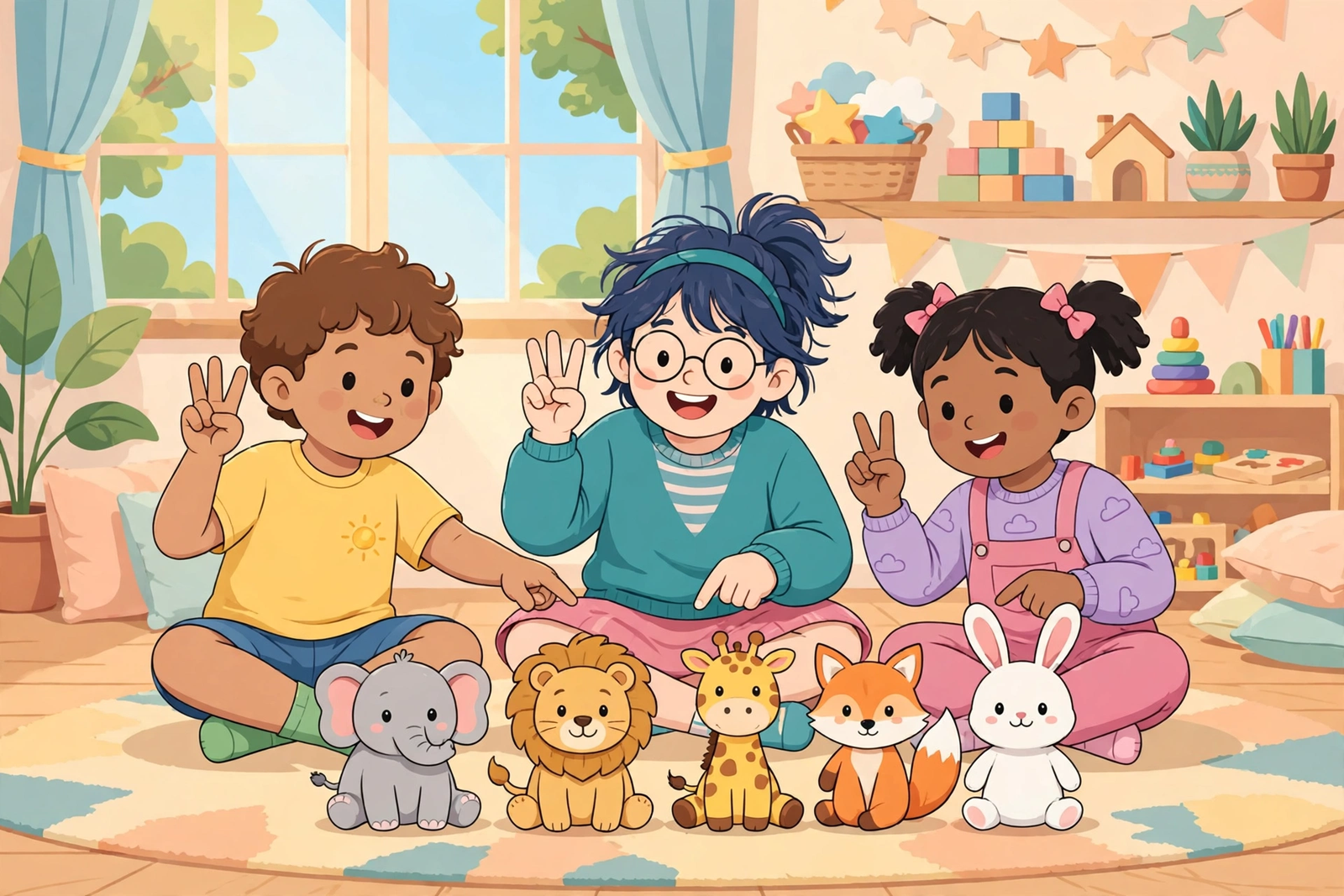
Here is the rule in one short table. Stick it on the fridge.
| Count this | Use this set | Example |
|—|—|—|
| Toys, snacks, friends, fingers | Native Korean | 셋 사과 – three apples |
| Time (o’clock) | Sino-Korean | 삼 시 – three o’clock |
| Money | Sino-Korean | 삼 달러 – three dollars |
| Phone numbers | Sino-Korean | 일 이 삼 – one two three |
| Age (in years) | Native Korean | 다섯 살 – five years old |
| Floors in a building | Sino-Korean | 삼 층 – third floor |
| Days of the month | Sino-Korean | 삼 일 – the third day |
One funny exception to know: age uses the native set. A five-year-old is 다섯 살 (daseot sal), not 오 살. Kids love learning this exception because it feels like a secret rule only they know.
If you want to go deeper into when each set is used, read our guide on [Korean numbers: native vs Sino-Korean](https://lingobubbo.com/korean-numbers-native-vs-sino/).
## Quick Quiz
Test yourself on Korean numbers. Click an answer to see if you are right — your score is at the top.
Score: 0/5
1. Which set of numbers do you use to count things you can touch, like toys and apples?
2. What does 열 (yeol) mean?
3. In the toy parade game, after counting up together, what do you do next?
4. Age is the funny exception. How do you say a five-year-old?
5. Three o’clock is 삼 시 (sam si). Which set does time use?
## Your turn: count to ten today
That is all it takes: ten words, two sets, one game, and one song. Sit down with your child tonight, line up ten toys, and count the parade together. 하나, 둘, 셋… by the third toy, your child will be leading the count. By 열, they will want to do it again.
Keep learning with the [Korean lessons on LingoBubbo](https://lingobubbo.com/tieng-han/), where numbers grow into words, words grow into sentences, and your child keeps counting in Korean every day. If this guide helped your family, send it to another parent whose child is starting Korean. And tell us in the comments: how far could your child count in Korean after one game of toy parade?