You write Chinese characters that “look about right”, but Chinese people can tell at a glance that the stroke order is wrong? Stroke order (笔顺 bǐshùn) isn’t a rigid rule meant to make life hard for learners — it helps characters stay balanced, lets you write faster and makes them easier to recognise. Write in the right order and your characters will look far better, even as a beginner.
This post gathers 7 stroke-order rules and applies them to the 22 HSK 1 characters beginners get wrong most often, with a self-check exercise at the end. You don’t need to memorise all 22 characters at once. Learn the 7 rules first, then practise a small group each day, and your writing will quietly improve before you know it.
Why does stroke order matter so much?
Many learners think: as long as the character comes out looking right, who cares about the order? But Chinese characters aren’t drawings. Write the same character in the wrong order and the strokes crowd each other, the character’s centre of gravity shifts, and it looks “off” even if you can’t point to exactly what’s wrong. Write in the right order and it’s the opposite: each stroke supports the next, the white space is even, and the character stands firmly inside its square.
There’s another practical benefit: when you look up a word by drawing it by hand on your phone, the app recognises strokes in the order you draw them. Draw in the wrong order and the app guesses the wrong character, and you end up thinking you remembered the meaning wrong. Get the order right from the start and learning new characters later is faster too, because your hand already knows the rhythm: top to bottom, left to right, outside in.
Learn the stroke names before the rules
You only need to remember a few stroke names that come up in this post: the horizontal stroke (一, written left to right), the vertical stroke (丨, top to bottom), the left-falling stroke (丿, from top right down to bottom left), the right-falling stroke (乀, from top left down to bottom right), the dot (丶), the turning stroke (a bent stroke, like a right angle), and the hook stroke (curving up at the end). When I say “horizontal first, vertical after”, picture your hand going across first, then down.
7 stroke-order rules
- Top before bottom: 三 (sān, three) is written from the top horizontal stroke down.
- Left before right: 林 (lín, forest) writes the tree on the left first, then the tree on the right.
- Horizontal before vertical: 十 (shí, ten) writes the horizontal stroke first, the vertical stroke after.
- Left-falling before right-falling: 人 (rén, person) writes the left-falling stroke first, the right-falling stroke after.
- Outside before inside, closing stroke last: 田 (tián, field) writes the outer frame first, the inner strokes after, and the bottom horizontal stroke closes the frame last of all.
- Middle before the two sides: 小 (xiǎo, small) writes the hooked vertical stroke in the middle first, then the two dots on either side; 山 (shān, mountain) writes the middle vertical stroke first, then the two vertical strokes at the sides.
- Enter the house first, close the door after: 日 (rì, sun) writes the left vertical stroke, the horizontal-turning stroke, the middle horizontal stroke, then the bottom horizontal stroke closes the frame last of all.
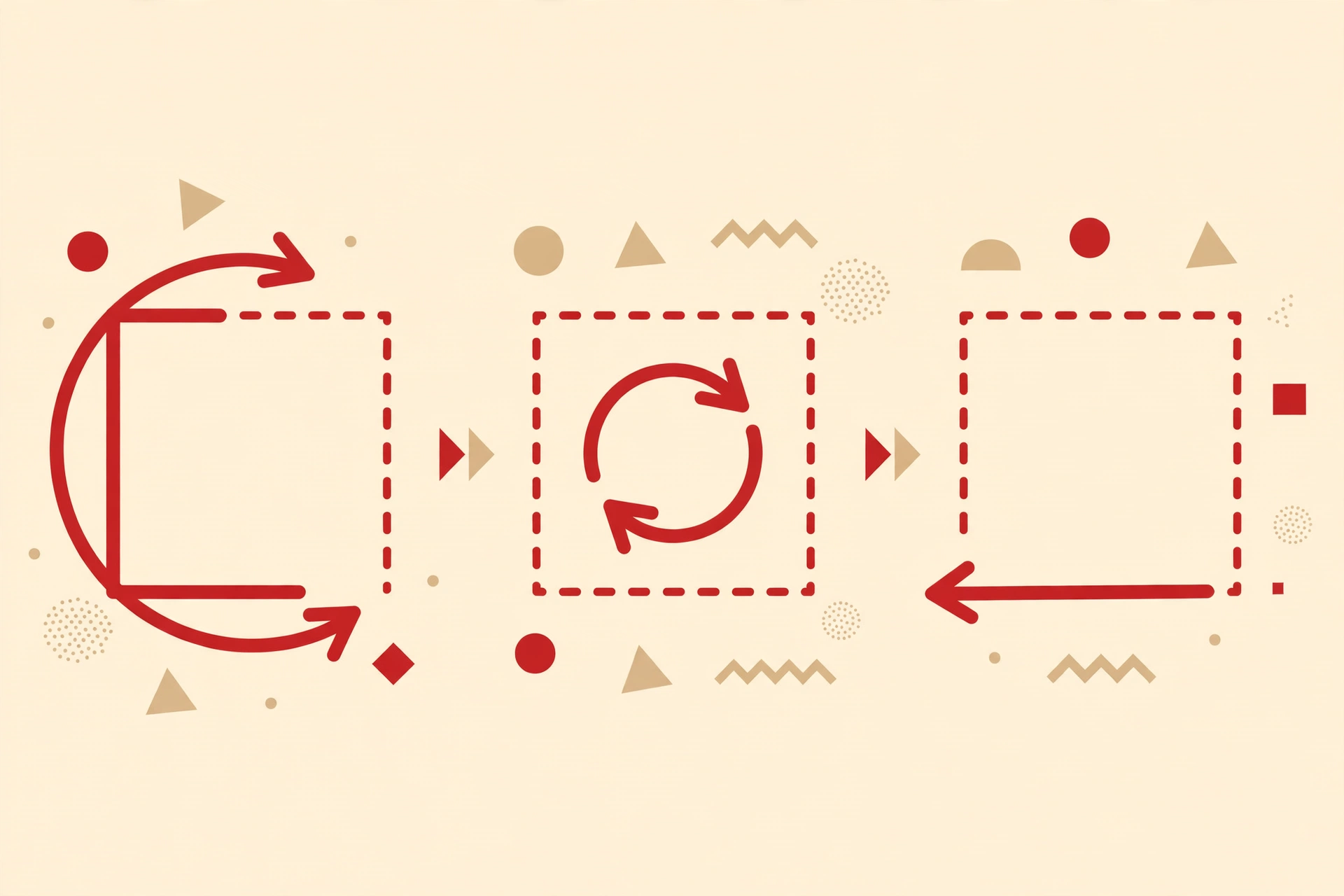
If you can only remember one sentence, remember this one: enter the house first, close the door after. Every square-framed character like 口, 日, 田 follows that rhythm: draw the frame, do the inside, and only then close it with the final stroke at the bottom. Drawing a fully closed frame right at the start and filling it in afterwards is the most common mistake — and also the easiest to fix.
22 HSK 1 characters and the stroke orders to remember
Group: numbers and sky & earth
- 一 (yī, one) — 1 horizontal stroke. 二 (èr, two) — 2 horizontal strokes, top to bottom. 三 (sān, three) — 3 horizontal strokes, top to bottom.
- 十 (shí, ten) — horizontal first, vertical after. 大 (dà, big) — only 3 strokes: the top horizontal stroke first, then the left-falling stroke, then the right-falling stroke (大 is the character 人 with one horizontal stroke added on top; it has no vertical stroke).
- 天 (tiān, sky) — 4 strokes: the top horizontal, the second horizontal, the left-falling stroke, the right-falling stroke. Don’t confuse 天 with 木: 木 has a vertical stroke in the middle, 天 doesn’t.
- 山 (shān, mountain) — middle vertical first, the left vertical-turning stroke, then the right vertical. 月 (yuè, moon) — left-falling stroke, horizontal-turning stroke, horizontal, horizontal.
🎧 Listen: Listen to the characters in the numbers and sky & earth group being read aloud: 一, 二, 三, 十, 大, 天, 山, 月.
This group is the easiest to practise because all the characters have few strokes. If you often write 大 with 4 strokes (adding a vertical stroke in the middle), check again right away: 大 has only 3 strokes — the middle vertical stroke belongs to a different character. 天 is the opposite: many learners forget the second horizontal stroke and write something that looks like 大. Put the two characters side by side, write each one 5 times, and your eyes will tell them apart straight away.
Group: people and family
- 人 (rén, person) — left-falling first, right-falling after. 女 (nǚ, female) — left-falling-dot, left-falling, horizontal.
- 子 (zǐ, child) — horizontal-left-falling (or horizontal-turning), hooked vertical, horizontal. 小 (xiǎo, small) — hooked vertical in the middle first, left dot, right dot.
- 中 (zhōng, middle) — middle vertical first, horizontal-turning, horizontal, then the final vertical stroke runs through the frame and finishes below it.
- 木 (mù, tree) — horizontal, vertical, left-falling, right-falling. 林 (lín, forest) — write the tree on the left first, then the tree on the right. 水 (shuǐ, water) — hooked vertical in the middle first, horizontal-left-falling on the left, left-falling, right-falling.
🎧 Listen: Listen to the characters in the people and family group being read aloud: 人, 女, 子, 小, 中, 木, 林, 水.
This group has the two characters easiest to write back-to-front: 人 and 小. Vietnamese learners are used to writing left to right like Latin letters, so they often write 人 from right to left, or write 小 stroke by stroke from left to right. Remind yourself of one sentence before you put pen to paper: for 人, left-falling first; for 小, middle first. Write the first 10 characters slowly and your hand will remember faster than writing 100 wrong ones quickly.
Group: objects and square frames
- 口 (kǒu, mouth) — vertical, horizontal-turning, horizontal closing the frame. 日 (rì, sun) — vertical, horizontal-turning, horizontal, horizontal closing the frame.
- 田 (tián, field) — vertical, horizontal-turning, horizontal, vertical, horizontal closing the frame. 王 (wáng, king) — horizontal, horizontal, vertical, horizontal.
- 火 (huǒ, fire) — dot, left-falling, left-falling, right-falling (written top to bottom, left to right). 门 (mén, door) — dot, vertical, horizontal-turning.
🎧 Listen: Listen to the characters in the objects and square frames group being read aloud: 口, 日, 田, 王, 火, 门.
The square-frame group is the group that “gives away” stroke order most clearly. 口 has only 3 strokes, yet many learners write it with 4 because they draw a closed frame and then add strokes inside. 日 and 田 are the same: the stroke that closes the frame at the bottom is always the last stroke. Practise this group on squared paper, one character per square, and you’ll see your characters become noticeably more balanced after a few days.
3 classic writing mistakes
- Writing 田 like drawing a square and then ruling lines inside: many people finish the outer frame first and only then rule in the inside strokes — that breaks the “close it last” rule. The bottom of the frame must be the last stroke, not the second.
- Writing 人 from right to left: the left-falling stroke (on the left) always comes first, the right-falling stroke (on the right) always comes after. Write it the other way round and the character loses its balance.
- Writing 小 from left to right: 小 writes the middle stroke first, then the two dots — not one after another from left to right like Latin letters.
If your child makes these three mistakes too, don’t scold them — adults learning Chinese characters make exactly the same ones. The gentlest fix is to have your child write more slowly and count the strokes aloud: “one, two, three” for each character. Once they can count them, their hand finds the right rhythm.
A 7-day practice plan for these 22 characters
Days 1–2: practise only the numbers and sky & earth group, each character 5 times, writing slowly and counting the strokes. Days 3–4: practise the people and family group, paying special attention to 人 and 小. Day 5: practise the objects and square frames group, reciting the sentence “enter the house first, close the door after”. Day 6: write all 22 characters again without looking at the post, and mark any you got wrong. Day 7: rewrite only the marked characters, each one 10 times in the correct order. After one week, you’ll have a clean, beautiful set of characters to show off, instead of a notebook full of the same mistakes repeated.

Self-check exercise (answers are in the rules above)
Write the following characters on paper without looking at the post, then compare the order: 人, 大, 天, 小, 山, 田, 日, 口, 木, 水. Getting 8/10 right means you’ve mastered the rules; for any character you got wrong, write it 5 more times in the correct order — 5 correct repetitions are worth more than 50 careless ones.
🎧 Listen: Listen to a sentence for writing practice: 我写汉字。我的汉字写得很漂亮。
If you’d like to guess the meaning of new characters faster instead of only writing beautifully, read the post Chinese characters for beginners: 20 radicals that help you guess the meaning of words you’ve never learnt on LingoBubbo. Write in the right order + guess meanings from radicals, and Chinese characters will turn from a “fear” into a “joy” for you. If your child is afraid of writing Chinese characters, also read the post Your child is learning Chinese but hates writing characters: 7 ways to help them love characters again, and if you want to know whether the characters you’re writing are simplified or traditional, see the post How do simplified and traditional Chinese characters differ? Which should beginners learn?.
Frequently asked questions about practising Chinese character writing
Q: Is stroke order marked in the HSK exam?
A: The current HSK exam mainly tests listening, reading, sentence writing and typing, and rarely marks stroke order directly. But writing in the right order makes your characters neater, easier to read and easier to look up by hand, so it is still well worth practising.
Q: Should I practise with a pencil, a ballpoint pen or a brush?
A: When you’re starting out, a pencil or ballpoint pen is enough on squared paper. Only use a brush once you know the stroke orders by heart, because a brush is harder to control.
Q: How many characters a day is the right amount to practise?
A: 5–8 characters a day, each written 5 times in the correct order, is far better than dashing off 30 characters carelessly. Quality over quantity, especially with Chinese characters.
Quick Quiz
Try these 5 questions without looking back at the post. Tap an answer to see right away whether it’s right or wrong.
Question 1. Which stroke does 十 write first?
Question 2. Which stroke does 小 write first?
Question 3. Which stroke does 田 write last?
Question 4. In what order is 人 written?
Question 5. How many strokes does 天 have?
Share this post with parents or friends who are practising writing Chinese characters — sometimes just fixing one character, 人, makes a whole notebook page look better. Which character do you get wrong most often? Leave a comment and tell me.
Want to follow a 90-day roadmap?
HSK 1 lessons on LingoBubbo are always free — and the roadmap package gives you a day-by-day study schedule + an exclusive workbook (not on the website) + a weekly “what can I say now?” checklist + 186 flashcards, learn as if you had a teacher beside you. From just $4.99, one payment, no subscription.