
You buy English flashcards for your child, and a week later the cards have vanished who-knows-where? That’s because children aged 3–6 memorise language through daily life, not at a study desk. A sentence heard at exactly the right moment (just as they sit down at the table, just as they snuggle under the blanket) will stay in your child’s head far longer than ten vocabulary words learnt on paper.
The “one sentence a day” method is very simple: each day, teach your child exactly one sentence from the list below — say it at exactly the right moment and repeat it all day. After 30 sentences (one month), your child will have a stock of “everyday English” for greeting, asking permission and expressing feelings in English naturally. Every sentence comes with its Vietnamese meaning, so parents can understand it clearly first and then teach it to their child.
Morning: 5 sentences to greet the new day
- Good morning! — Good morning!
- How are you? — How are you?
- I’m fine, thank you. — I’m fine, thank you.
- Wake up, sweetie! — Wake up, sweetie!
- Brush your teeth. — Brush your teeth.
Mealtimes: 6 sentences for enjoying your food
- Time to eat! — Time to eat!
- Yummy! — Yummy!
- Thank you, Mommy. — Thank you, Mummy.
- I want some water. — I want some water.
- Eat a little more. — Eat a little more.
- I’m full. — I’m full.
Playtime: 6 sentences for exploring together
- Let’s play together! — Let’s play together!
- What is this? — What is this?
- This is a puppy. — This is a puppy.
- I like red. — I like red.
- You draw so well! — You draw so well!
- One more time! — One more time!
Good manners: 5 polite sentences to remember
- Please. — Please.
- Thank you. — Thank you.
- I’m sorry. — I’m sorry.
- It’s okay. — It’s okay.
- You’re welcome. — You’re welcome.
Feelings: 3 sentences that speak your love
- I’m happy! — I’m happy!
- Don’t cry. — Don’t cry.
- I love you. — Mummy loves you.
Bedtime: 5 sentences to end the day gently
- Time for a bath. — Time for a bath.
- Good night! — Good night!
- See you tomorrow. — See you tomorrow.
- Time to sleep. — It’s time to sleep.
- Sweet dreams. — Sweet dreams.
4 tips to make “1 sentence a day” really work
- Say it at the right time, in the right place: the sentence Time to eat! is only said when the food is served; Good night! is only said when the lights go off. Context is the “glue” that keeps the sentence in your child’s memory.
- Repeat during the day: a sentence heard 5–7 times in different moments becomes a reflex. Heard once and then dropped, it’s forgotten by the very next day.
- Add actions for little ones: say How are you? and wave your hand; say Thank you and bow your head. Children aged 3–4 remember through their bodies better than through their ears.
- Don’t correct, don’t push: imperfect pronunciation is perfectly normal in the first month. Praise every time your child dares to speak — the confidence to say it out loud is the goal; accuracy comes later.
Where to go after these 30 sentences?
Once your child knows a few sentences by heart, read together following the 5 steps for reading bilingual stories from LingoBubbo — stories are where these simple sentences meet and become a story, and your child will remember them far longer than by learning them by rote.
If your family is starting to expose your child to English early, the post giving your child an “English bath” from age 1 will help you choose the right things to listen to and the right amount of time each day, so you avoid lots of listening that never sinks in.
Want to go further after these 30 sentences? Visit the LingoBubbo English learning centre — vocabulary, sentence patterns and roadmaps for beginners, all free. One sentence a day today, your child’s bilingual journey tomorrow.
Have a listen: your child’s morning
Children aged 3–6 learn by ear more than by eye. Before teaching your child to say a new sentence, let them hear it first — slowly, clearly, several times. The morning conversation below reads exactly the sentences in this post, in a slow voice for your child to copy. Play it for your child just as they wake up, then say the sentences together with them once more.

🎧 Have a listen: morning greeting sentences
After listening, try asking your child: “How are you?” and wait for them to answer “I’m fine, thank you.” It doesn’t matter if they answer wrongly or with a lisp — at this age, daring to speak up is already impressive. Praise your child, then ask again tomorrow. That’s all it takes.
Why does “one sentence a day” work so well for children aged 3–6?
Many parents worry: at only one sentence a day, when will my child ever be able to speak? But young children’s brains don’t learn the way adults’ do. Children don’t need a lot — they need the right moment, the right place, and enough repetition. A sentence heard at exactly the right moment becomes a reflex; ten sentences learnt on paper drift away after a single night.
There are three reasons this approach suits ages 3–6. First, the sentences are short, so your child can remember them whole without feeling overwhelmed. Second, the sentences are tied to daily routines — eating, bathing, going to sleep — so your child understands straight away what each sentence is for, with no long explanation needed. Third, one sentence a day becomes a habit for the whole family: parents don’t feel the pressure of “teaching their child to study”, and children don’t feel the pressure of “having to study”. The whole family is simply talking to each other — in one more language.
One small note: don’t teach a new sentence when your child is tired, hungry or crying. The first English sentence of the day should come when your child is happy and relaxed. A “Good morning!” said with a smile will stay far longer than a “Brush your teeth!” said in a rush.
Mealtimes and playtime: listen together with your child
Mealtimes are when children learn fastest — because they’re happy, they’re eating food they like, and the words come with a concrete action. “Time to eat!” is said right when the food is served. “Yummy!” is said the moment your child tastes the first bite. “I want some water.” is said when they’re thirsty. Every sentence has its own moment.
Playtime is the same. “Let’s play together!” is an invitation to play, “What is this?” is a curious question, and “This is a puppy.” is the answer. These three sentences link together into a small conversation — you ask, your child answers, then you swap roles: your child asks, you answer. Learning through play, playing while learning — your child never feels they are “doing schoolwork”.
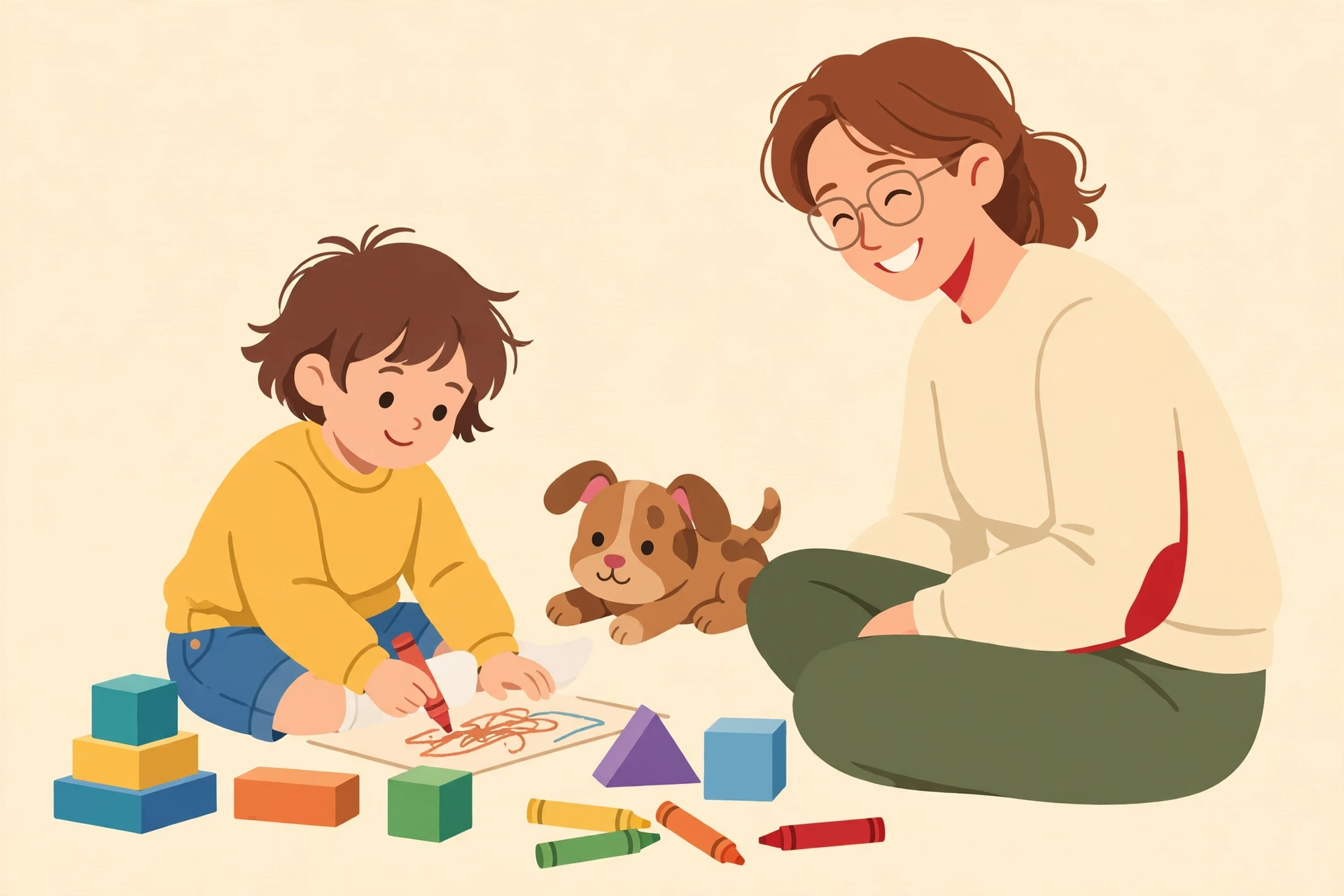
🎧 Have a listen: sentences for mealtimes and playtime
After listening together, play a little “quiz” game: hold up a toy and ask “What is this?” If your child can answer “This is a puppy.”, clap and praise them straight away. If they can’t answer yet, give the model answer once and ask again. Don’t fire the question three times in a row — your child will feel as if they’re being tested.
Good manners and feelings: small sentences, big meanings
The five polite sentences — “Please”, “Thank you”, “I’m sorry”, “It’s okay”, “You’re welcome” — are an asset your child will carry for life, in Vietnamese or in English alike. Teaching these sentences needs no separate lesson time. Your child asks for something, and you prompt “Please.” They receive a gift, and you prompt “Thank you.” They spill some water, and you say “It’s okay.”, then teach them to say “I’m sorry.” Context does the teaching instead of explanations.
The three feeling sentences work the same way. “I’m happy!” is said when your child gets to play a game they love. “Don’t cry.” is what you say when they fall over and hurt themselves — gently, without shouting. “I love you.” is said every night before sleep. These sentences aren’t just English; they are how your child learns to say their feelings out loud instead of keeping them inside. A child who can say “I’m happy!” and “I’m sorry.” in two languages is a child growing up with a rich emotional vocabulary.
Bedtime: ending the day gently
The five end-of-day sentences — “Time for a bath.”, “Good night!”, “See you tomorrow.”, “Time to sleep.”, “Sweet dreams.” — should become a fixed evening ritual. Little children love repetition: hear exactly the same sentences, in exactly the same order, every single night, and they’ll start saying them along before they even notice. Some children, after just one week, already say “Good night!” before their mum gets the chance.
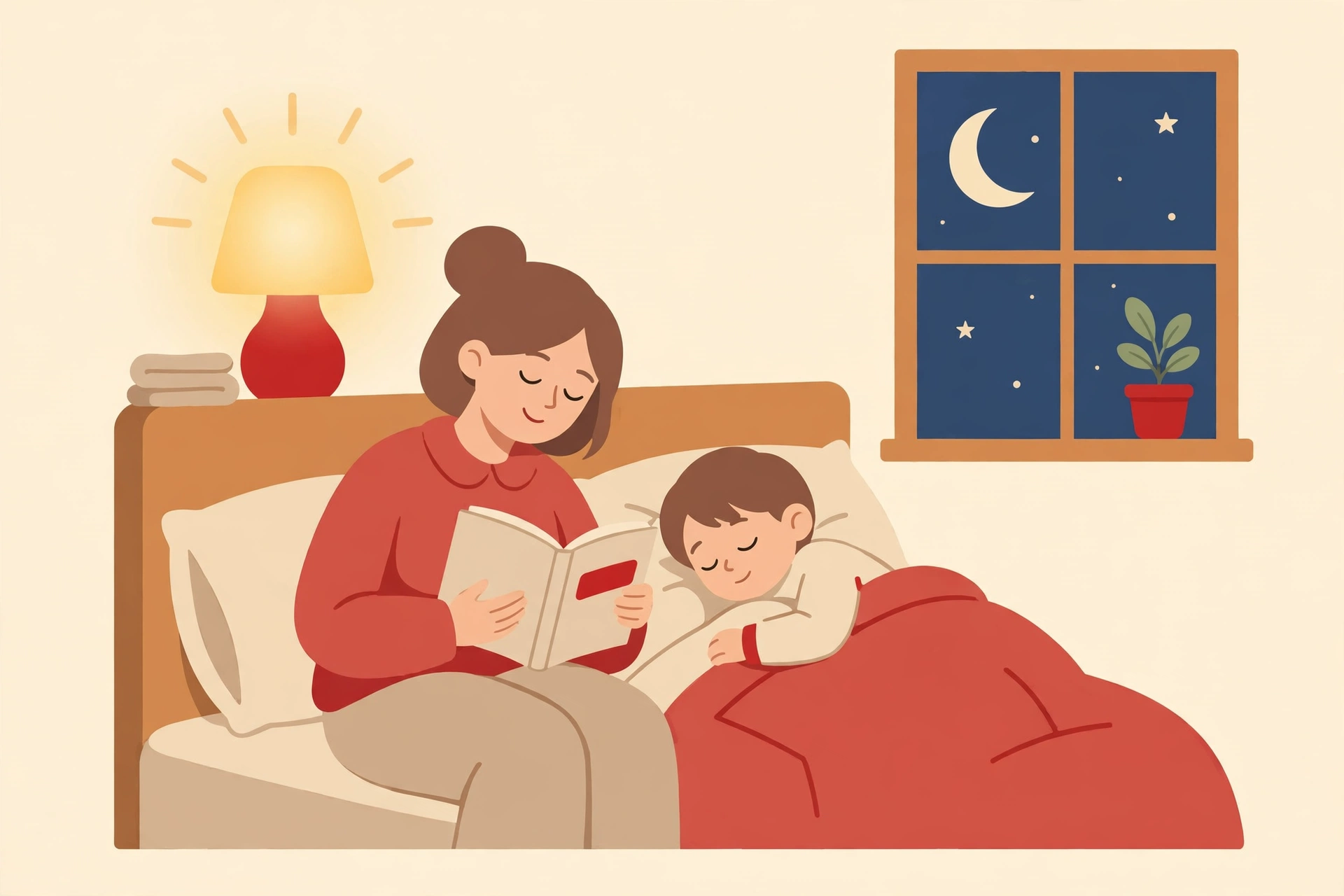
🎧 Have a listen: polite sentences and good-night sentences
After this clip, try hugging your child and saying “I love you.”, then wish them “Sweet dreams.” They’ll remember that warm feeling — and the English sentence that goes with it will stay for a very long time. That is the most natural way of all to learn a language at this age.
A suggested 30-day schedule for busy parents
You don’t have to follow the order in this post. Just follow your family’s routine: in the first week, use only the 5 morning sentences and the 5 bedtime sentences — because those are the two most fixed moments of the day. In the second week, add the 6 mealtime sentences. In the third week, add the 6 playtime sentences. In the final week, add the 5 polite sentences and the 3 feeling sentences. By the end of one month you’ll have all 30 sentences — and on no day did your family have to “sit down at a desk and study”.
If a day is too busy, skipping it is fine. Don’t try to teach two sentences the next day to make up for it — little children don’t need making up; they need regularity. One sentence a day, regularly, is better than ten sentences crammed into the weekend. And if your child forgets yesterday’s sentence, just teach it again as if it were new; don’t say “but Mummy taught you this yesterday”. Forgetting is normal — repeating is how learning happens.
After these 30 sentences, your child has a basic stock of communication sentences for greeting, asking permission and expressing feelings. If your family would like your child to get familiar with one more language in the same way, the post one Chinese sentence a day with your child uses exactly the one-sentence-a-day method and is lovely for learning in parallel. And if your child is a little older and enjoys learning vocabulary by school topics, the post 20 Korean words about school for kids is a fun, gentle next step.
One sentence a day today, your child’s bilingual journey tomorrow. Start tonight — when the lights go off, hug your child and say “Good night! Sweet dreams!” Send this post to another parent who is learning English with their child, so both families can start together. And if you have a good trick that helps your child remember sentences faster, leave a comment and share it with everyone.
Quick Quiz
Answer the 5 questions below together with your child, to review the 30 English sentences in this post! Score: 0/5
Question 1. Your child wakes up in the morning. Which sentence do they say to say good morning?
Question 2. When your child wants to drink some water, which sentence do they say?
Question 3. “Thank you, Mommy.” — what does it mean?
Question 4. Before going to sleep, which sentence do parents wish their child?
Question 5. When asked “How are you?”, how does your child answer?