
Say 分 (fēn, to divide) and 风 (fēng, wind) out loud. Can you hear the difference? Most learners cannot — not at first. The two syllables look almost the same, and to an untrained ear they sound almost the same. But to a Chinese listener, they are two completely different words. Mix them up and “the wind is strong today” becomes something nobody understands. This guide will fix that in one sitting: you will learn exactly what your mouth does for en and eng, train your ear with ten minimal pairs, and test yourself with five short exercises.
Here is the good news: en vs eng is not a talent problem. It is a tongue problem — literally. Once you know where your tongue goes, the difference becomes easy to feel, and once you can feel it, you can hear it. Everything below is built around that one idea. And if you already worked through an vs ang, you will recognize the pattern: same front-versus-back idea, different vowel.
What en and eng actually are
Pinyin syllables have two parts: the beginning sound and the final sound. In en and eng, the beginning is the same vowel e, and the ending is what changes. The ending is called a nasal final, because the sound comes out through your nose.
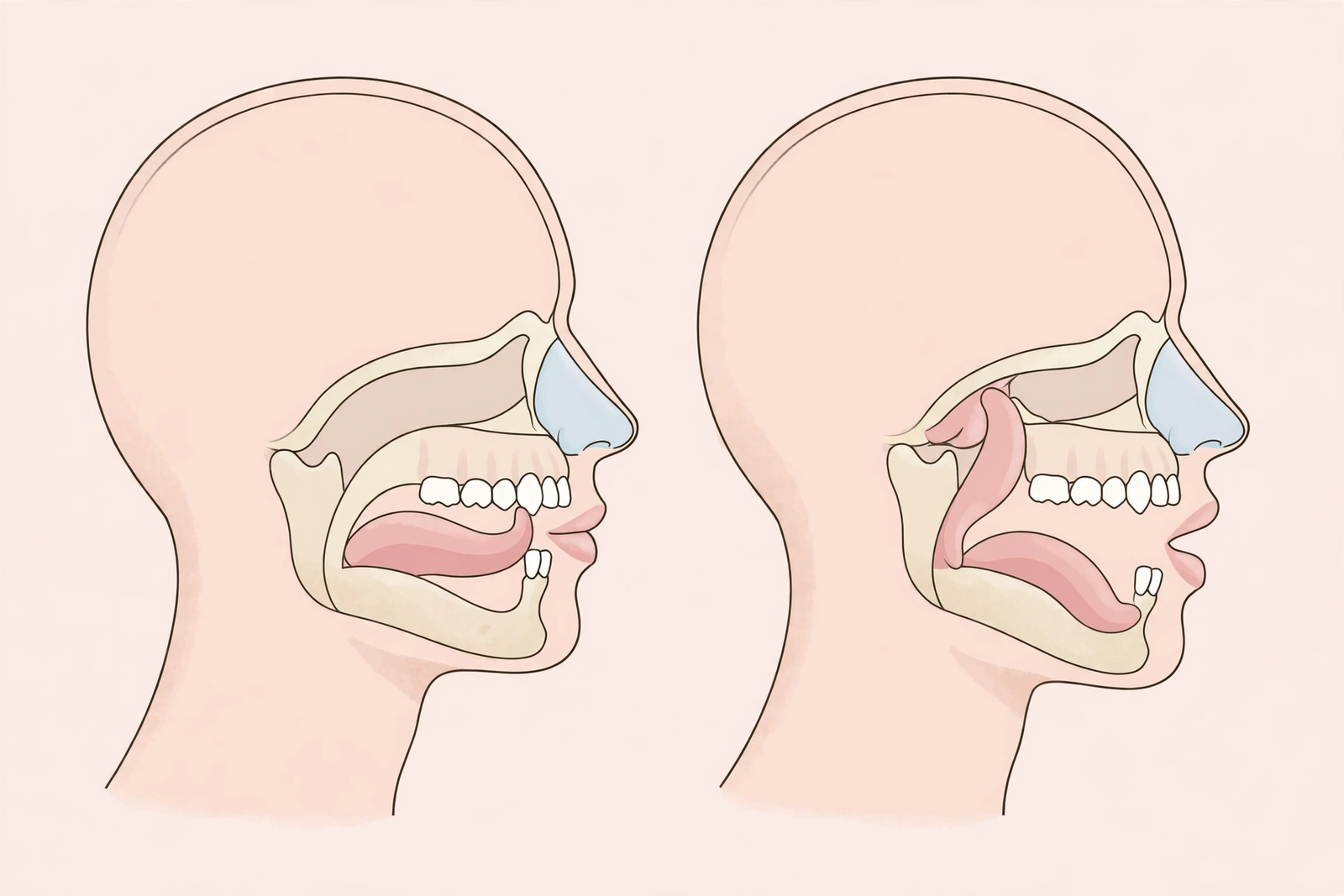
- en ends with -n, the front nasal. Say the English word “in.” Your tongue tip touches the ridge right behind your upper teeth. That is exactly where it goes for Chinese en.
- eng ends with -ng, the back nasal. Say the English word “sung” and hold the last sound. Your tongue tip stays down, and the back of your tongue rises to touch the soft palate at the back of your mouth. That is exactly where it goes for Chinese eng.
Try it now: en, eng, en, eng. Feel the tongue tip touch the front for en, then feel the back of the tongue lift for eng. The vowel in front is the same both times. Only the ending moves. If you can feel that movement, you already understand the difference — your ear just needs a little practice to catch up.
One more detail that helps: the e in en and eng is a short, relaxed “uh” sound, like the e in the English word “her” said quickly, or the “un” in “button.” Keep it short and relaxed. If you stretch it into a long “ay” or “ee,” the final will sound wrong no matter where your tongue goes.
Ten minimal pairs: train your ear
A minimal pair is two words that differ in only one sound. Read each pair slowly, out loud, three times. Exaggerate the ending on purpose — that is how your ear learns to hear it.
| en | Meaning | eng | Meaning |
|---|---|---|---|
| bēn 奔 | to run | bēng 绷 | to stretch tight |
| chén 晨 | morning | chéng 城 | city |
| fēn 分 | to divide | fēng 风 | wind |
| gēn 跟 | to follow | gēng 更 | more |
| kěn 肯 | willing | kēng 坑 | pit |
| mén 门 | door | méng 蒙 | to cover |
| pén 盆 | basin | péng 朋 | friend |
| shēn 身 | body | shēng 生 | to be born |
| zěn 怎 | how | zèng 赠 | to give as a gift |
| rèn 认 | to recognize | rēng 扔 | to throw |
Look at the pairs and notice something: the meanings are completely different. 门 (mén) is a door, 蒙 (méng) means to cover. Say the wrong one and your sentence changes completely. That is why this distinction matters so much — it is not a small accent detail. It changes the word.
Now listen to the first five pairs and shadow them: say each syllable a half-second after you hear it, and feel your tongue move between the front and the back.
And here are the second five pairs. Same drill: listen, repeat, and feel the ending.
If the pairs still sound the same to you, do not worry. That is normal on day one. Say them yourself, slowly, with your hand on your throat: for eng, you will feel a small vibration further back, and the sound lasts a fraction longer. Your mouth knows the difference before your ear does. Trust your mouth, and your ear will follow within a few days of practice.
The en and eng families: in, un, ing, ong
The finals en and eng never travel alone. They combine with the vowels i and u to make bigger finals, and the same front-versus-back rule applies to the whole family.
The en family (front nasal -n):
- en — fēn, mén, zěn
- in — jīn 金 (gold), xīn 心 (heart), lín 林 (forest)
- un — lún 轮 (wheel), dùn 顿 (pause), kùn 困 (sleepy)
- ün — yùn 运 (luck), qún 群 (group), xùn 训 (to train)
The eng family (back nasal -ng):
- eng — fēng, chéng, shēng
- ing — jīng 京 (capital), xīng 星 (star), líng 零 (zero)
- ong — lóng 龙 (dragon), dòng 动 (to move), kōng 空 (empty)
Three things to remember about these families. First, in and ing are the pair learners mix up most, because 心 (xīn, heart) and 星 (xīng, star) both start with a quick i sound — slow down on the ending. Second, un pairs with ong, not with “ung”: the u plus eng is spelled ong, as in 龙 (lóng, dragon). Third, the ün family has no eng partner: there is no “üng” in Mandarin, so if you think you hear one, it is ün. And when j, q, and x meet ün, the two dots on the ü disappear in writing — qún, xùn — but the sound stays ü.
Listening self-check: can you hear it yet?
Time to test your ear. The clip below says five words, one at a time. Before you press play, grab a piece of paper. Listen to each word and write down en or eng. Then check your answers against the list that follows the clip.
The five words were: fēn (en), chéng (eng), gēn (en), fēng (eng), shēn (en). How many did you get right? Three out of five on your first try is a good start. Five out of five means your ear is already trained. If you scored lower, replay the clip and say each word yourself right after you hear it — feeling the ending in your own mouth is what teaches your ear.
Five short exercises
Do these in order. Each one takes about two minutes.
Exercise 1: Listen and choose. Replay the self-check clip above. For each of the five words, say out loud whether it ends in en or eng before you look at the answers. Saying your guess out loud matters — silent guessing does not train your ear.
Exercise 2: Fill in the ending. Write the missing letters for each word, then say the whole word out loud.
- 风 f__ng (wind) — answer: fēng
- 门 m__n (door) — answer: mén
- 城 ch__ng (city) — answer: chéng
- 分 f__n (to divide) — answer: fēn
- 身 sh__n (body) — answer: shēn
Exercise 3: Match the character to the pinyin. Draw a line from each character to its pinyin: 风 — fēng, 跟 — gēn, 朋 — péng, 认 — rèn, 门 — mén, 生 — shēng. Then read the six words out loud in order. If you hesitated on any pair, repeat that pair five times.
Exercise 4: Say the pairs, three times each. Go back to the ten-pair table. For each pair, say the en word, then the eng word, three times in a row, slowly: fēn, fēng, fēn, fēng, fēn, fēng. Exaggerate the ending. Your tongue is learning a new movement, and slow, exaggerated practice is how new movements stick.
Exercise 5: Say the sentences.
- 我跟他是朋友。(Wǒ gēn tā shì péngyou.) — He and I are friends.
- 今天风很大。(Jīntiān fēng hěn dà.) — It is very windy today.
- 门开着,请进来。(Mén kāi zhe, qǐng jìnlái.) — The door is open, please come in.
- 你怎么了?(Nǐ zěnme le?) — What’s wrong with you?
- 我不认识他。(Wǒ bù rènshi tā.) — I don’t know him.
- 他生病了。(Tā shēng bìng le.) — He is sick.
Listen to the sentences, then read them out loud yourself. Notice how the en and eng words sit inside real sentences — 风 (fēng) in the middle of the second sentence, 门 (mén) at the start of the third. In real speech, the endings are quicker than in the table, but the tongue still goes to the same place. Practice at half speed first. Full speed comes later.
Common mistakes (and how to fix them)
Mistake 1: Making both endings sound like -n. This is the most common problem, and it usually comes from rushing. Slow down and finish each syllable. For eng, hold the -ng for a tiny beat longer than feels natural. It will feel strange for a week. Then it will feel normal.
Mistake 2: Saying eng like the English word “eng” in “length.” English “eng” has a flat, squeezed vowel. Chinese eng has a relaxed “uh” vowel plus -ng. Keep the vowel relaxed and let the back of the tongue do the work.
Mistake 3: Guessing instead of checking the chart. When you meet a new word, do not guess whether it is en or eng. Look it up in the Pinyin Chart and check the final. Guessing trains the wrong sound into your memory. Checking trains the right one.
Mistake 4: Practicing only with your eyes. Reading the table silently does almost nothing for pronunciation. Your mouth has to do the work. Read every pair out loud, every time. If you are in a quiet place, whisper — whispering still moves your tongue to the right place.
Mistake 5: Ignoring tones while you practice finals. Each word in the table has a tone, and the tone is part of the word. Practice the final and the tone together: fēn is first tone and flat, kěn is third tone and dipping. A correct final with a wrong tone is still the wrong word.
Your en vs eng cheat sheet
| Rule | Remember this |
|---|---|
| en ends with -n | Tongue tip touches behind the upper teeth |
| eng ends with -ng | Back of the tongue rises to the soft palate |
| The e is the same | Short, relaxed “uh,” like “her” said quickly |
| in / ing | xīn (heart) vs xīng (star) — slow down on the ending |
| un / ong | lún (wheel) vs lóng (dragon) — u plus eng is spelled ong |
| ün has no partner | There is no “üng” in Mandarin |
| When in doubt | Check the Pinyin Chart |

Quick Quiz
Try these five questions now. Click an answer to see right away if you are correct. Keep an eye on your score at the top.
Score: 0/5
1. Which syllable ends with the back nasal -ng?
2. What does 风 mean, and how is it pronounced?
3. Which pair is a correct en / eng minimal pair?
4. In the sentence “今天风很大” (It is very windy today), which word has the eng sound?
5. Which final does NOT exist in Mandarin?
Frequently asked questions
How long does it take to hear the difference between en and eng? Most learners start hearing it within a week of daily practice — about five minutes a day with the minimal pairs in this guide. Saying the pairs out loud yourself speeds it up, because your tongue teaches your ear.
Is it a big problem if I mix up en and eng? Yes, because it changes the word. 门 (mén, door) and 蒙 (méng, to cover) are different words, and listeners will hear the wrong one. The good news is that this is one of the easiest pronunciation problems to fix, because the tongue movement is easy to feel.
Should I practice en and eng with tones at the same time? Yes. Always practice the final and the tone together, because the tone is part of the word. A correct final with a wrong tone is still the wrong word. Say fēn flat for the first tone, and kěn dipping for the third tone, every time you practice.
What should I practice next after en and eng? The same front-versus-back idea shows up in an vs ang, with the vowel a instead of e. Work through both pairs and your ear will be trained for every nasal final in Mandarin.
Where can I check the pinyin of a new word? Use the Pinyin Chart on LingoBubbo. Look up any word and check whether its final is en or eng before you practice it — checking beats guessing every time.
Keep going
En vs eng is a small difference with a big payoff. Your tongue already knows what to do — tip at the front for en, back raised for eng. Practice the ten pairs for five minutes a day, do the listening self-check twice this week, and the difference will start jumping out at you in real conversations.
When you are ready for more pronunciation practice, explore the Pinyin Chart and our Chinese lessons for more minimal pairs and listening drills. Which pair was hardest for you — fēn/fēng or shēn/shēng? Tell us in the comments, and share this guide with a friend who is learning Chinese. Your practice partner might need it just as much as you do.