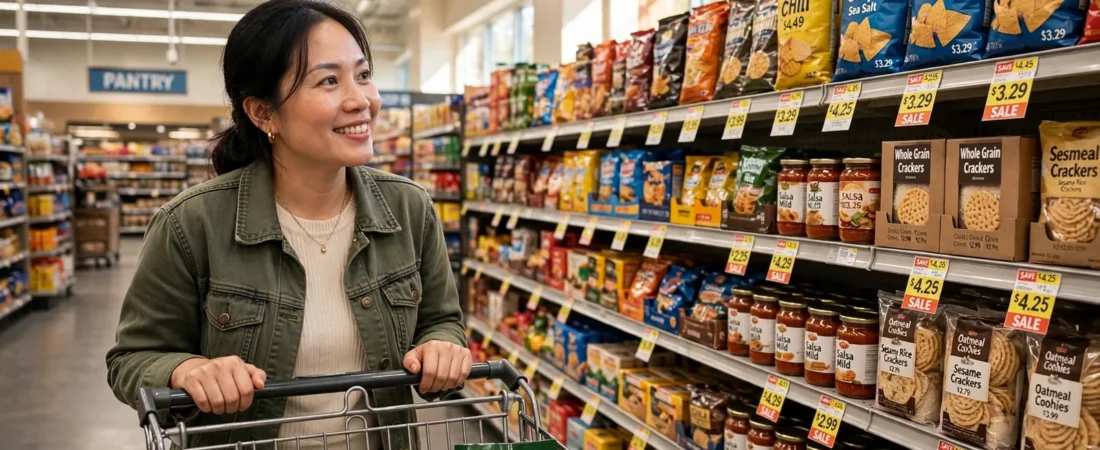
You push your trolley from one aisle to the next in a US supermarket, phone in hand, looking things up on Google Translate, and the bottle of fish sauce is still nowhere to be found. A staff member walks past; you want to ask, but you don’t know how to open the conversation in Spanish. Sound familiar? If you live in the US and are learning Spanish, the supermarket is the free classroom closest to home.
This article gathers a full set of 20 Spanish sentences for a US supermarket for asking prices, finding items, using coupons and paying — organised around one real shopping trip of yours, from the moment you step through the door to the moment you carry your bags home. Each sentence comes with a quick-read pronunciation guide, the English meaning and a small note on how it is used in the US. Learn these 20 sentences by heart, and next time you go shopping you can ask the staff in Spanish straight away — no need to open your phone.
How to read these 20 sentences so they really stick
Spanish has one pleasant feature: you read it the way it is written, with almost no exceptions. The letter j sounds like “kh” in Vietnamese, the letter ll sounds like “y”, the letter ñ sounds like “nh”. For everything else, just read the letters exactly as they are written and people will understand you. You don’t need perfect pronunciation — in the US, supermarket staff hear foreign accents every day; they are used to it.
The fastest way to learn: before a shopping trip, read aloud the 5 sentences from the group you need most. Inside the supermarket, use exactly one real sentence, even if it is only to ask a price. One sentence spoken for real sticks longer than ten sentences read in a book. And don’t forget to open with Disculpe (excuse me, sorry to bother you) or Perdón — in the US these two words sound very polite, and every staff member will happily help you.
Group 1: Asking prices in Spanish at a US supermarket — the 5 most-used sentences
Prices in US supermarkets are often given per pound (libra), per item, or per bag — not always per kilo as in Vietnam. Ask the price clearly before you put something in your trolley, so you don’t get a shock at the checkout.
- 1. ¿Cuánto cuesta esto? (KWAHN-toh KWES-tah ES-toh) — How much is this? The all-purpose price question; point at any item and it works.
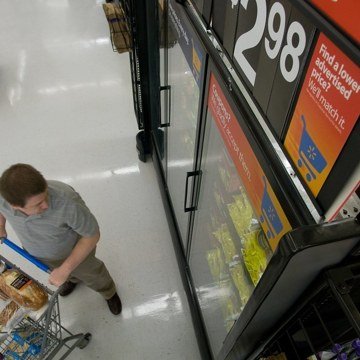
- 2. ¿Cuánto cuesta la libra de manzanas? (KWAHN-toh KWES-tah lah LEE-brah deh mahn-SAH-nahs) — How much is a pound of apples? In the US, fruit is often sold by the pound, so ask by the pound to match the price label on the shelf.
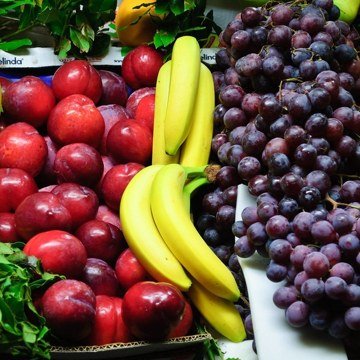
- 3. ¿Está en oferta este producto? (es-TAH en oh-FEHR-tah ES-teh proh-DOOK-toh) — Is this product on sale? The words en oferta mean “on special offer” — if you see yellow and red signs and it is not clear, just ask.
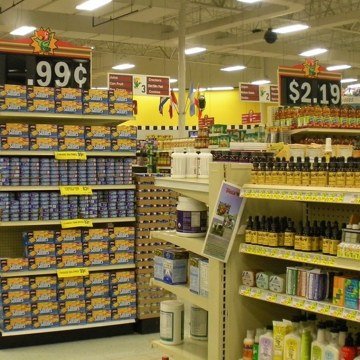
- 4. ¿Cuál es el precio por libra? (KWAHL es el PREH-see-oh por LEE-brah) — What is the price per pound? Use this when the price sign shows several levels and you want to be sure which line you are reading.
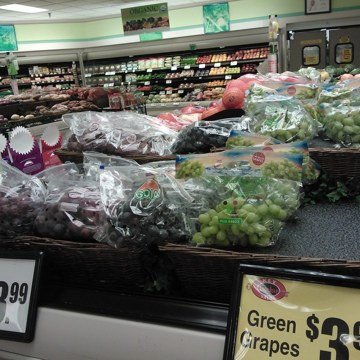
- 5. ¿Hay algún descuento hoy? (ahy ahl-GOON des-KWEN-toh oy) — Is there any discount today? Ask at the meat counter and the bakery counter — many supermarkets mark down items close to their expiry date during the day.
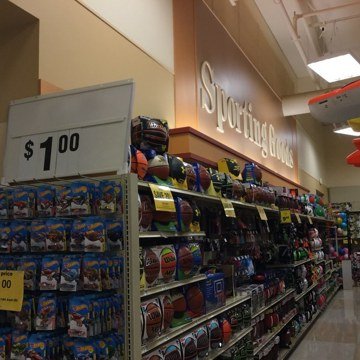
One small tip: shelf prices in the US do not include tax in some states, and a price of “2 for $5” means you only get that price when you buy 2. If you see a “2 for $5” sign but take only 1, you are charged the single-item price, which is higher. Ask sentence 1 before you take it, so you don’t regret it later.
Group 2: Finding items, finding aisles — 5 sentences that save you from walking in circles
US supermarkets are large, the aisles are numbered, and each aisle holds one kind of goods. Ask one right question and you save yourself ten minutes of wandering around.
- 6. Disculpe, ¿dónde está el pan? (dees-KOOL-peh, DON-deh es-TAH el pahn) — Excuse me, where is the bread? Swap el pan for the item you need and you are done.
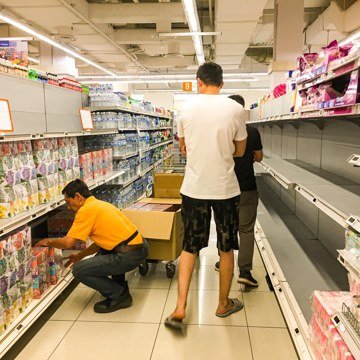
- 7. ¿En qué pasillo está la leche? (en keh pah-SEE-yoh es-TAH lah LEH-cheh) — Which aisle is the milk in? El pasillo is the aisle between the shelves — a word you will use the whole time in the supermarket.

- 8. ¿Dónde puedo encontrar el arroz? (DON-deh PWEH-doh en-kohn-TRAHR el ah-ROHS) — Where can I find the rice? Asian rice is usually in the “International” or “Asian foods” section, not in the regular rice section.
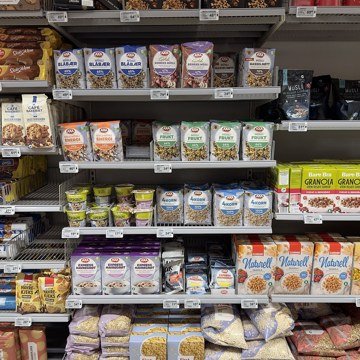
- 9. ¿Tienen leche sin lactosa? (TYEH-nen LEH-cheh seen lahk-TOH-sah) — Do you have lactose-free milk? The model sentence for every “no X” item: ¿Tienen… sin…?

- 10. Perdón, ¿me puede ayudar a encontrar esto? (pehr-DON, meh PWEH-deh ah-yoo-DAHR ah en-kohn-TRAHR ES-toh) — Excuse me, can you help me find this item? Show the staff member a photo of the item on your phone while you say this sentence — that is the most reliable way of all.
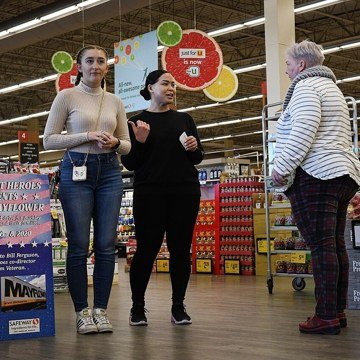

Remember, supermarket staff in the US very often say “It’s in aisle 7” — aisle is exactly pasillo. Once you catch the aisle number, you will find it straight away. And if they speak too fast, just smile and say ¿Puede repetir, por favor? (could you say that again, please?) — nobody will mind in the slightest.
Group 3: Asking staff, using coupons — 5 sentences that genuinely save money
Coupons (cupón) in the US are a shopping culture: newspaper leaflets, the supermarket app, coupons posted to your home. Know how to ask about coupons in Spanish and you save a few dollars every week at no cost to you at all.
- 11. ¿Tienen más de esto en el almacén? (TYEH-nen mahs deh ES-toh en el ahl-mah-SEN) — Do you have more of this in the stockroom? If the shelf is out of stock, ask this sentence and the staff will fetch some from the stockroom for you.

- 12. ¿Cuándo llega el producto nuevo? (KWAHN-doh YEH-gah el proh-DOOK-toh NWEH-voh) — When does the new stock arrive? If an item you like is out of stock, ask this so you know which day to come back.

- 13. Tengo un cupón para este producto. (TEN-goh oon koo-PON PAH-rah ES-teh proh-DOOK-toh) — I have a coupon for this product. Hand the coupon to the cashier before they scan that item.
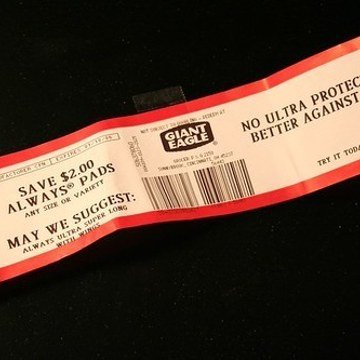
- 14. ¿Puedo usar dos cupones a la vez? (PWEH-doh oo-SAHR dos koo-POH-nes ah lah ves) — Can I use two coupons at the same time? Some supermarkets allow it and some don’t — ask first so you don’t waste the effort.

- 15. ¿Este cupón todavía es válido? (ES-teh koo-PON toh-dah-VEE-ah es VAH-lee-doh) — Is this coupon still valid? The till will not accept an expired coupon, so asking first saves you time standing at the checkout.
One more word worth remembering: el descuento means “discount”, la oferta means “special offer”. These two words appear on every advertising sign in the supermarket; if you can read them, you already understand half of the sign.
Group 4: Paying — 5 sentences at the checkout
Once you reach the checkout, everything moves fast: scan the items, pay, take the receipt. These five sentences are enough for both a staffed checkout and a self-checkout.
- 16. Voy a pagar con tarjeta. (voy ah pah-GAHR kohn tahr-HEH-tah) — I’ll pay by card. Say it in advance so the cashier doesn’t have to ask you again.
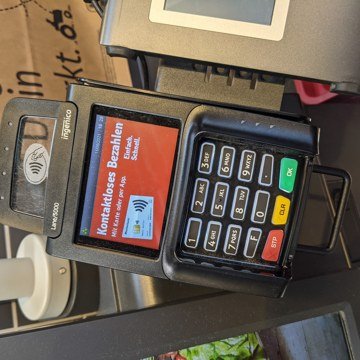
- 17. ¿Aceptan tarjetas de crédito? (ah-SEP-tahn tahr-HEH-tahs deh KREH-dee-toh) — Do you accept credit cards? Nearly all US supermarkets do, but a small stall at an outdoor market may not.
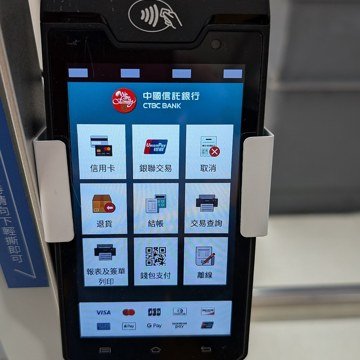
- 18. ¿Puedo pagar en efectivo? (PWEH-doh pah-GAHR en eh-fek-TEE-voh) — Can I pay in cash? This sentence is also useful when the card reader at the self-checkout breaks down.
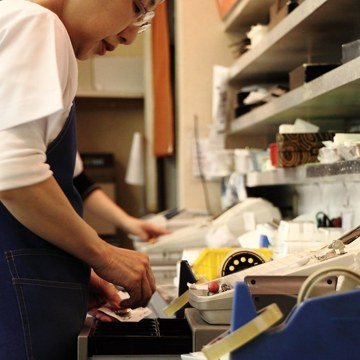
- 19. Necesito una bolsa, por favor. (neh-seh-SEE-toh OO-nah BOHL-sah, por fah-VOR) — Could I have a bag, please? In many states a plastic bag costs 10 cents each, and paper bags too — they are not always free as in Vietnam.
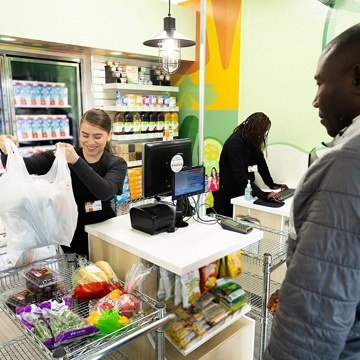
- 20. ¿Me puede dar el recibo, por favor? (meh PWEH-deh dahr el reh-SEE-boh, por fah-VOR) — Could you give me the receipt, please? Keep the receipt so you can check the prices afterwards, especially when you have used a coupon.
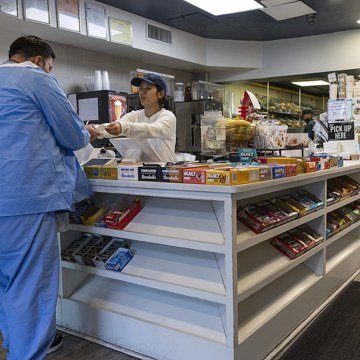

The self-checkout: 3 extra sentences, so you don’t get flustered
Many US supermarkets have self-checkouts (la caja automática, also called el autoservicio): you scan the items yourself and pay yourself. The machine speaks English, but if you need to call the staff member looking after the area, these 3 sentences work straight away:
- ¿Dónde está la caja automática? (DON-deh es-TAH lah KAH-hah ow-toh-MAH-tee-kah) — Where is the self-checkout?

- La máquina no acepta mi billete. (lah MAH-kee-nah noh ah-SEP-tah mee bee-YEH-teh) — The machine won’t accept my banknote.
- ¿Me puede ayudar con la caja automática? (meh PWEH-deh ah-yoo-DAHR kohn lah KAH-hah ow-toh-MAH-tee-kah) — Can you help me with the self-checkout?
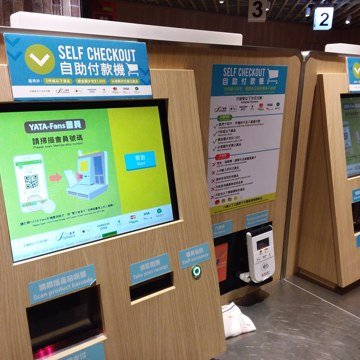
Self-checkout machines often get stuck at the weighing step: you put an item into the bag, the weight doesn’t match, and the machine beeps. When that happens, don’t panic — raise your hand and call a staff member over with the third sentence and it is sorted.
5 mistakes Vietnamese people often make at US supermarkets
Saying “la caja” without making your meaning clear. La caja means both the checkout counter and a box. If you ask “¿Dónde está la caja?” in a supermarket, everyone understands you mean the checkout, but ask in a stockroom and people will think you are looking for a cardboard box. Add the words para pagar (for paying) and your meaning is clear at once.
Forgetting “por favor” at the end of the sentence. We Vietnamese often state requests directly, whereas in the US adding por favor is the bare minimum of politeness. Without it, a request for help sounds like an order.
Reading “j” as “gi”. The letter j in caja (KAH-hah) or tarjeta (tahr-HEH-tah) is pronounced like “kh”, not “gi”. Read it as “ca-gia” and the staff member will need a few seconds to guess.
Assuming the bags are free. In California and many other states, plastic bags and paper bags at the supermarket all cost money, sometimes 10–25 cents each. Bringing your own cloth bag is the most economical choice — and the staff will praise you for it.
Asking the price without pointing at the item. The sentence “¿Cuánto cuesta esto?” is only right when your hand is pointing at that item or you are holding it up. If you stand far from the shelf and ask in general terms, the staff won’t know which item you are asking about.
Quick Quiz
Test yourself on Spanish at a US supermarket. Click an answer to see if you are right — your score is at the top.
Score: 0/5
1. How do you ask ‘How much is this?’ in Spanish?
2. What does ‘el pasillo’ mean in a supermarket?
3. According to the post, what does a ‘2 for $5’ sign mean?
4. Which sentence tells the cashier you have a coupon?
5. How is the Spanish letter ‘j’ pronounced, according to the post?
Summary table: the 20 sentences — which group should you remember first?
| Group | Situation | Sentence to remember first |
|---|---|---|
| 1. Asking prices | Standing in front of a shelf, not sure of the price | ¿Cuánto cuesta esto? |
| 2. Finding items | Walking in circles without finding what you need | ¿Dónde está…? / ¿En qué pasillo…?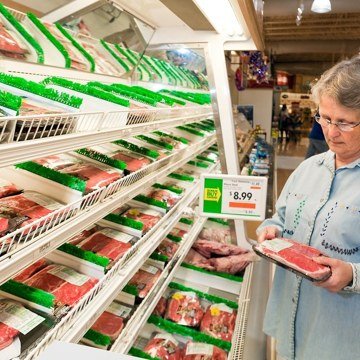 |
| 3. Staff, coupons | Out of stock, you have a coupon | Tengo un cupón para este producto. |
| 4. Paying | At the checkout | Voy a pagar con tarjeta. |
| Extra: self-checkout | The scanner is playing up | ¿Me puede ayudar con la caja automática? |
If you have only 5 minutes before a shopping trip: learn Groups 1 and 2 by heart, that is, 10 sentences. These two groups are 80% of what you need to say in the supermarket. Learn Groups 3 and 4 gradually afterwards — one more group a week is plenty.
Shopping at a US supermarket in Spanish is not as hard as you think — these 20 sentences are enough for a whole trip. Next time you go to Walmart or Target, try asking a staff member one sentence in Spanish and you will see them smile and answer straight away. Which supermarket do you go to most often, and which of these 20 sentences will you use this very week? Tell me in the comments. If you want to keep learning Spanish along a set path, start from LingoBubbo’s Spanish page — every article there already has vocabulary, examples and exercises ready. If you like learning through shopping situations at a market in Spain, read the article Going to the market in Spain without an interpreter: 20 sentences for bargaining and asking prices — the same shopping trip but completely different: on that side it is traditional markets and bargaining; on this side it is a US supermarket with self-checkouts and coupons. And if you are a complete beginner, drop by the article The first 50 Spanish words for beginners to build a foundation of vocabulary first.
📷 Situation photos in this article: real photos from Openverse, Wikimedia Commons and Flickr (CC0, CC BY, CC BY-SA or Public Domain licences).