
Say 我想买水 out loud — “I want to buy water” — and listen to what your voice actually does. If you pronounce every syllable with a careful falling-rising third tone, wǒ xiǎng mǎi shuǐ, you sound like a robot reading a dictionary. Real speakers say wó xiáng mái shuǐ. Three third tones in a row change their shape, and once you hear the pattern, your Chinese instantly sounds more natural. This guide shows you the one rule behind three third tones, how rhythm groups decide which tones change, and five short drills you can do today.
A quick note on the syllabus before we start: the third-tone change rule is the same in HSK 2.0 and HSK 3.0. Both versions teach it with the same beginner words — 你好, 我, 很, 想, 买, 水 — so everything in this post works whichever syllabus version you are studying. The rule never changes; only the word lists around it grow.
What happens when three third tones meet?
Mandarin has four tones plus a neutral tone, and the third tone is the trickiest of the four. On its own, it dips down and then rises back up: mǎ, “horse,” falls and climbs in one syllable. That full dip-and-rise takes time and effort. Now imagine three of them back to back. Your voice would have to dip and rise, dip and rise, dip and rise — three roller-coaster rides in a row. Nobody talks like that, not even native speakers. So Mandarin takes a shortcut, and the shortcut is called tone sandhi: tones change when they bump into each other.
You probably already know the two-tone version of this rule. When two third tones stand side by side, the first one turns into a second tone, a rising tone. 你好 is written nǐ hǎo, but everyone says ní hǎo. The first syllable rises; the last one keeps its full dip-and-rise. That is the whole foundation. Everything about three third tones is just this same idea, stretched across a longer chain.
Here is the one rule to remember for three third tones in a row: every third tone except the very last one changes into a second tone. The last syllable in the group keeps its third tone, because there is nothing after it pushing it to change. Read that again, slowly, because it covers almost every case you will meet as a beginner: change all but the last, and the last one stays put.
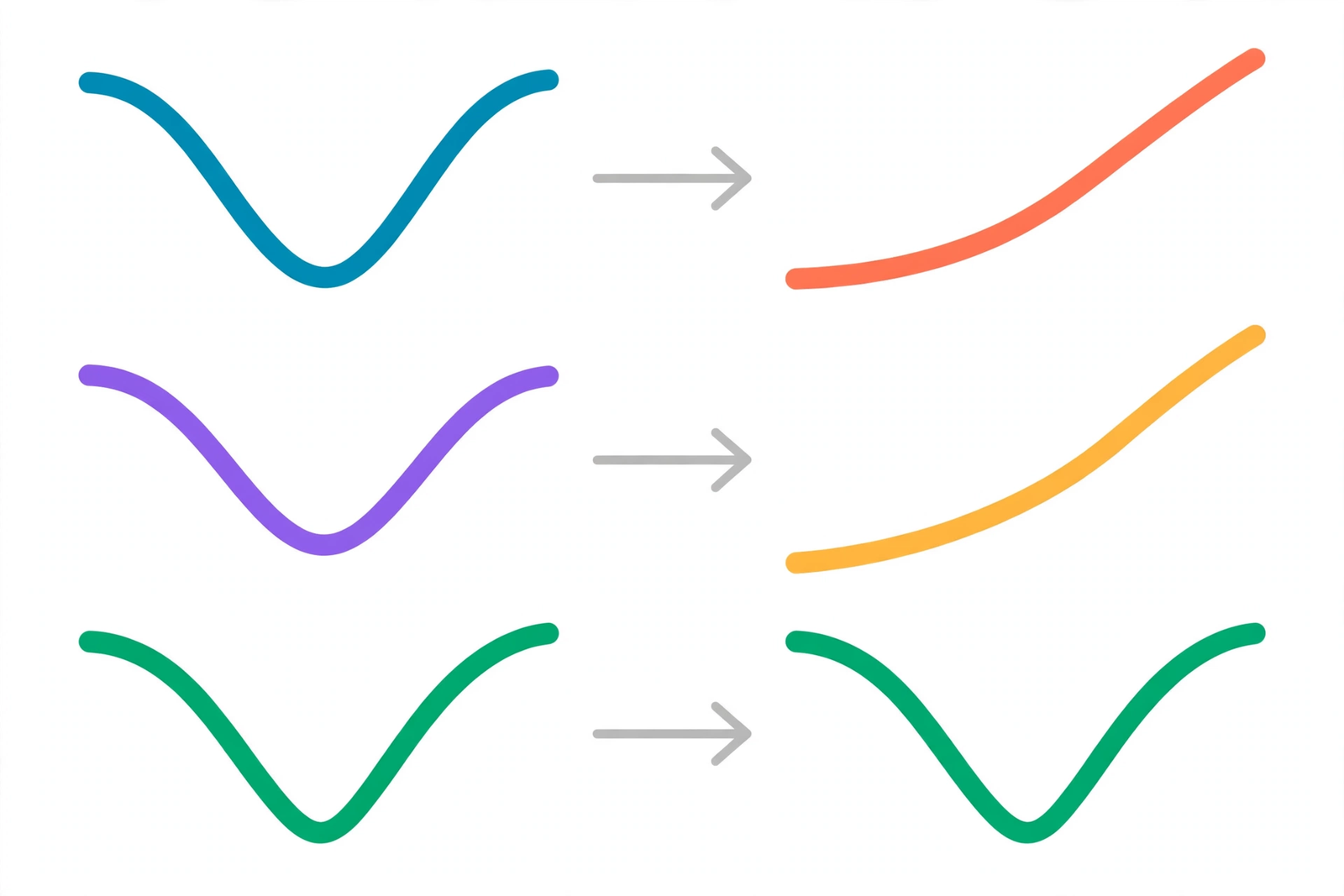
The one rule, in five everyday examples
Let us see the rule working on real words you already know. In each row, the left side shows the dictionary tones — the tones you would see in a textbook — and the right side shows what comes out of a real speaker’s mouth. Say both versions out loud and feel the difference in your throat.
| Written (dictionary tones) | Spoken (after the tone change) | Meaning |
|---|---|---|
| 我想买 wǒ xiǎng mǎi | wó xiáng mǎi | I want to buy |
| 请给我 qǐng gěi wǒ | qíng géi wǒ | Please give me |
| 我很冷 wǒ hěn lěng | wó hén lěng | I am very cold |
| 展览馆 zhǎn lǎn guǎn | zhán lán guǎn | Exhibition hall |
| 你买水 nǐ mǎi shuǐ | ní mái shuǐ | You buy water |
Look at the pattern in that table. In 我想买, the first two syllables rise (wó xiáng) and only the last one dips (mǎi). In 请给我, the same thing happens: qíng géi wǒ, with the final wǒ holding the third tone. Even 展览馆, a single three-syllable word, follows the rule: zhán lán guǎn. The word is one unit, but your voice still treats it as a chain and changes the first two.
One more example stretches the chain to four, just so you can see the rule is not limited to three. 我想买水 is wǒ xiǎng mǎi shuǐ on paper and wó xiáng mái shuǐ in speech — three rising tones and one dipping tone at the end. If you can say that sentence smoothly, you have already mastered the pattern. The number of syllables does not matter. Only the last one keeps its third tone.
Listen to the first practice clip and repeat after it, one sentence at a time. Do not rush. Say each sentence twice: once slowly, feeling the rise on the changed tones, and once at normal speed.
Rhythm groups: why grouping changes everything
So far so good — but here is the part most textbooks skip, and it is the reason this post talks about rhythm groups. In real speech, we do not pronounce long strings of syllables as one flat chain. We break them into small rhythm groups, little bundles of two or three syllables, with a tiny pause between bundles. And here is the key: the tone-change rule resets at the edge of each group. The last syllable of a group keeps its third tone even if another third tone follows in the next group.
Take 雨伞很小 — “the umbrella is very small.” On paper that is yǔ sǎn hěn xiǎo, four third tones in a row. But nobody says it as one long chain. We naturally group it as 雨伞 (umbrella) plus 很小 (very small). Inside the first group, 雨伞 follows the pair rule: yú sǎn. Inside the second group, 很小 does the same: hén xiǎo. Put it together and you get yú sǎn hén xiǎo — two rises, two dips, with a tiny breath between the groups. If you had applied the flat rule to all four syllables, you would have said yú sán hén xiǎo, which sounds wrong. The grouping saved you.
How do you know where the groups break? Follow the meaning. Words stick together; phrases split apart. 雨伞 is one word, so it forms one group. 很小 is a phrase, so it forms another. 我想买 splits as 我 | 想买, “I” plus “want to buy” — but in quick speech 想买 behaves like one group, so wó xiáng mǎi is what you hear. The more Chinese you know, the more automatic this becomes. Until then, here is a practical trick: say the sentence in the chunks you would translate it in. If you translate it as “I / want to buy / water,” those are your rhythm groups.
Listen to the second clip. It has two short sentences, and each one shows a different grouping. Repeat each sentence and try to feel where the tiny pause falls.
Five short drills to make the rule automatic
Knowing the rule is one thing. Saying it without thinking is another. These five drills take about ten minutes total. Do them in order, out loud, and do not move on until the drill in front of you feels easy.
Drill 1: The pair warm-up. Start with pairs, because pairs are the building blocks. Say these five pairs, changing the first tone each time: 你好 (ní hǎo), 很好 (hén hǎo), 给我 (géi wǒ), 买水 (mái shuǐ), 很小 (hén xiǎo). Say each pair three times. Your voice should rise on the first syllable and dip on the second. If the first syllable still dips, you are reading the dictionary, not speaking.
Drill 2: Add one more. Take each pair and add a third-tone word in front of it. 很好 becomes 我很好 (wó hén hǎo, “I am very well”). 买水 becomes 你买水 (ní mái shuǐ). 给我 becomes 请给我 (qíng géi wǒ). Notice how the new first syllable also rises. The chain rule does the work for you once you trust it.
Drill 3: The clap game. Clap once per syllable while you say 我想买水. Four claps, four syllables: wó — xiáng — mái — shuǐ. Now clap only on the syllables that rise. Three claps, on the first three syllables. The last syllable gets no clap because it dips. This sounds silly. It works anyway, because it forces your ear to hear which syllables rise and which one dips.
Drill 4: Real sentences. Use the sentences from the third audio clip. Say each one after the recording, then say it again from memory, then say it once more while looking away from the screen. If you can say 展览馆很大 — “the exhibition hall is very big” — without checking the pinyin, the pattern is starting to stick.
Drill 5: The listening test. Play the fourth clip and write down what you hear — just the pinyin, with the tones as you hear them, not as the dictionary writes them. Then check your answers against the table above. If you heard wó xiáng mǎi instead of wǒ xiǎng mǎi, your ear is already doing the right thing.

Three mistakes that make three third tones sound wrong
Mistake 1: Changing the last tone too. This is the most common error. Learners learn the rule, get excited, and change every third tone in the chain, including the last one. 我想买 comes out as wó xiáng mái, with no dipping tone anywhere. It sounds unfinished, like a sentence that never lands. Remember: the last third tone always keeps its dip. It is the anchor of the whole group.
Mistake 2: Pronouncing every tone from the dictionary. This is the opposite error, and it usually comes from reading pinyin too carefully. Wǒ xiǎng mǎi, syllable by syllable, each one dipping and rising, sounds like a robot. Native speakers will understand you, but they will hear the effort. Trust the change. Let the first tones rise.
Mistake 3: Forgetting the rhythm groups. A learner who knows the flat rule but not the grouping rule will say yú sán hén xiǎo for 雨伞很小, changing a tone that should have stayed put. The fix is simple: pause between groups. Even a tiny pause — the length of a blink — resets the chain. When in doubt, split the sentence into smaller pieces and apply the rule inside each piece.
Quick Quiz: three third tones in a row
Click the answer you choose — right or wrong, you will know immediately.
Score: 0/5 — click an answer to check it right away.
Question 1. How is 你好 actually pronounced in natural speech?
Question 2. How is 我想买 pronounced in natural speech?
Question 3. In 请给我, which syllable keeps its third tone?
Question 4. Why is 雨伞很小 spoken yú sǎn hén xiǎo, not yú sán hén xiǎo?
Question 5. How is 展览馆 pronounced in natural speech?
Frequently asked questions about three third tones
Is the rule different in HSK 2.0 and HSK 3.0? No. The third-tone change rule is identical in both versions of the syllabus. HSK 3.0 adds more vocabulary, but the tone rule itself does not change. Learn it once and it works for both.
Do I have to change the tones, or will people still understand me? People will understand you if you pronounce every third tone fully — but you will sound like you are reading from a textbook. Changing the tones is what makes your speech sound natural, and it is one of the fastest ways to sound more fluent.
What about four or five third tones in a row? The same rule applies: change every third tone except the last one in the group. 我想买水 (four third tones) becomes wó xiáng mái shuǐ. The chain just gets longer.
How do I know where a rhythm group ends? Follow the meaning. Words form one group, and phrases split where the meaning splits. When you are unsure, say the sentence in the chunks you would translate it in — those chunks are usually your rhythm groups.
Does this rule apply to other tones too? No. This rule is only for third tones meeting third tones. Other tone combinations have their own small rules — for example, 不 (bù) changes before a fourth tone — but those are separate lessons.
Your turn: say it out loud today
Here is your homework, and it takes five minutes. Pick one sentence from this post — 我想买水 is a good one — and say it ten times today: three times slowly, three times at normal speed, and four times while doing something else, like washing dishes or walking to the bus stop. If the tones come out wó xiáng mái shuǐ without you thinking about it, the rule has moved from your notebook into your mouth. That is the whole goal.
Want to keep building? The LingoBubbo pinyin chart lets you hear every syllable with its tones, and the Chinese lessons page has the full beginner path. Two related reads: Chinese Stroke Order: The Top-to-Bottom Rule That Makes Every Character Easier and HSK 1 Listening Practice: Drinks. Tell us in the comments: which three-third-tone sentence trips you up the most? Share this post with a study partner — tone drills are twice as fun with someone to clap along.