Featured this week
Pick a post below and start learning.
Find a Language Exchange Partner
Where to look and what to say first.
WORKAnswer Work Phone Calls in Professional English
Sound calm and clear on every call.
ESPAÑOLSpanish Small Talk: 20 Friendly Phrases
Sound friendly, not robotic.
Tips, trends, and real talk about learning English, Chinese, Korean, Spanish, and Vietnamese — new posts every day.
-

Learn Chinese Through Shopping Livestreams: 20 “Order-Closing” Lines Chinese Hosts Say Every Day
Open a Chinese shopping livestream and you’ll hear a fast, clipped, utterly everyday kind of Chinese — full of sentences HSK books never teach. If you watch Douyin or Taobao Live to hunt for bargains, or you simply want to understand real Chinese conversation, the 20 “order-closing” lines below are must-have vocabulary. This article breaks…
-

Asking Questions in Chinese Without Inverting Word Order: How to Use 吗 ma, 呢 ne and 吧 ba Correctly
Want to ask a question in Chinese but not sure how to phrase it? Good news: Chinese doesn’t flip word order the way English does. You just keep the word order of a statement and add a particle at the end of the sentence — and the three most important ones are 吗 (ma), 呢…
-

Don’t Just Say “Hola”: 10 Ways to Greet in Spanish Like a Native Speaker (from Polite to Super Casual)
You are learning Spanish and greet everyone with “¡Hola!”? There is nothing wrong with that, but native speakers can tell at once that you are a beginner — because they greet each other in a dozen different ways depending on the time of day, how close they are, and which region they come from. Greeting…
-

One Wrong Sound Changes the Meaning: 15 English Word Pairs That Leave You Red-Faced When You Mix Them Up
You walk into a café in America, confidently order in English, and the server brings out something completely different from what you wanted. You didn’t get the grammar wrong, and you didn’t use the wrong word — you just mispronounced exactly one sound. It sounds tiny, but one wrong sound can change the meaning of…
-

Practising HSK 1 Chinese Characters: Stroke Order for the 22 Characters Beginners Get Wrong Most
You write Chinese characters that “look about right”, but Chinese people can tell at a glance that the stroke order is wrong? Stroke order (笔顺 bǐshùn) isn’t a rigid rule meant to make life hard for learners — it helps characters stay balanced, lets you write faster and makes them easier to recognise. Write in…
-

Oppa, unnie, hyung, noona: Teach Your Child the Right Korean Forms of Address (Get It Wrong and It Counts as Rude)
Is your child into K-pop and Korean dramas, and starting to call everyone “oppa”? Hold on — in Korean, addressing an older brother or sister isn’t free choice: use the wrong word for the wrong person and it’s not only incorrect, it can even come across as rude. Luckily, there is just one rule: the…
-

The 把 (bǎ) Sentence in Chinese: How to Say “Give Me the Book” Like a Native Speaker
Want to say “give me the book” in Chinese, so you write 给我书 (gěi wǒ shū)? Your listener will still understand you, but the sentence sounds a bit “Western” — because when Chinese speakers want to emphasise handling or moving a specific object, they use the 把 (bǎ) sentence instead: 把书给我 (bǎ shū gěi wǒ).…
-

20 English Phrasal Verbs You Use Every Day Without Realising It
You open your eyes, turn off the alarm, get dressed, leave the house — and you’ve just “used” a good dozen phrasal verbs in your head without even noticing. Native speakers speak English with phrasal verbs far more than you’d think, and learning them is the fastest way to follow films and chat naturally. A…
-
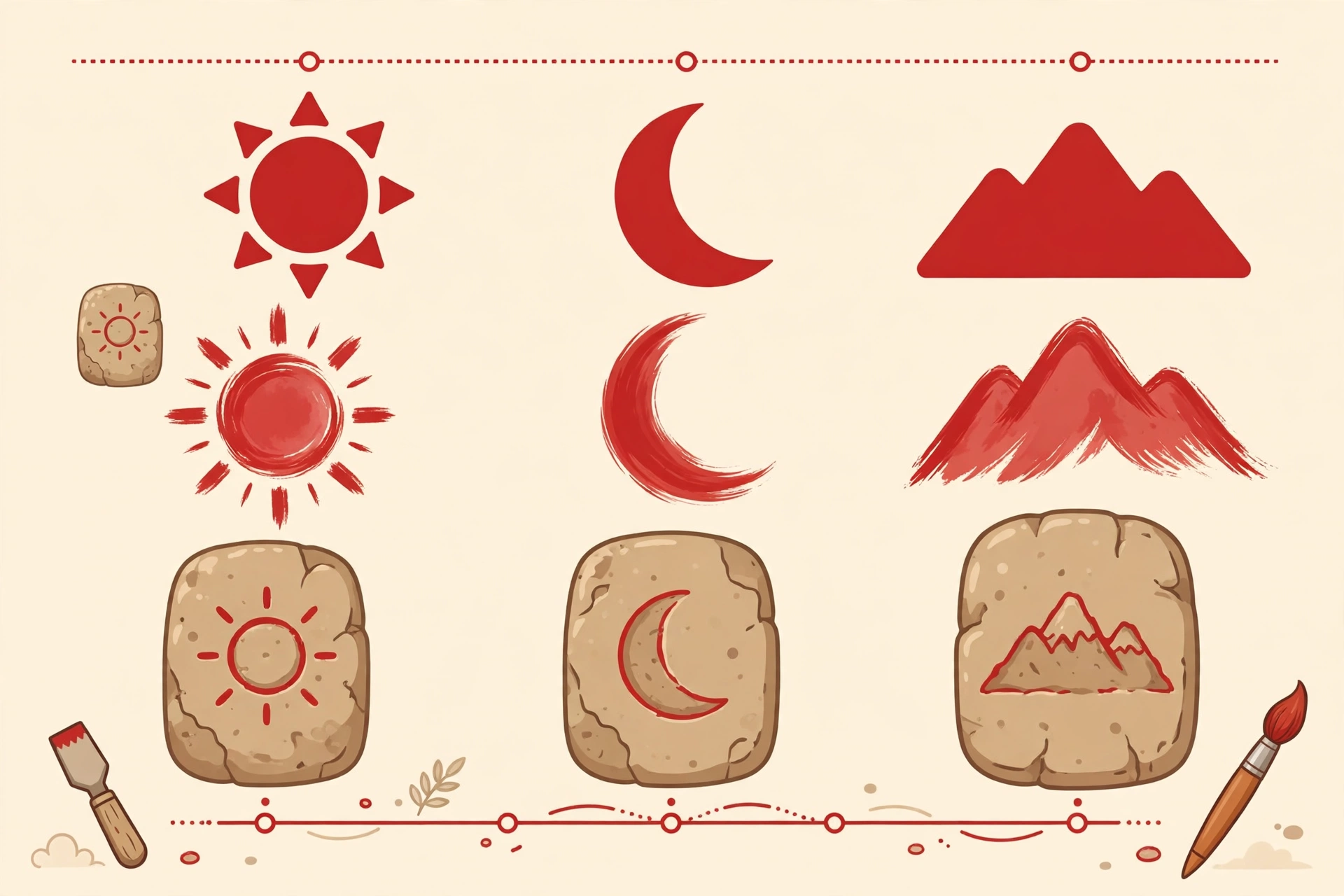
How Were Chinese Characters Created? The 6 Ways Characters Are Formed (the Six Principles) That Help You Remember Characters Twice as Fast
Do you learn Chinese characters by writing each one out 20 times and still forget it? The problem isn’t a bad memory — it’s that you’re learning characters as if they were random drawings. In fact, Chinese characters were created in exactly 6 rule-based ways, called the Six Principles of character formation (六书 liù shū).…
-

Teach Your Child to Count and Read Dates in Chinese Using a Wall Calendar
Every parent has a wall calendar at home — and it happens to be the best free Chinese-learning tool for your child. Just 10 minutes each morning pointing at the calendar, and your child will learn to count, and to read the days of the week, the dates and the months in Chinese, without needing…