Latest posts
-
Three Third Tones in a Row: How to Practice Them in Rhythm Groups
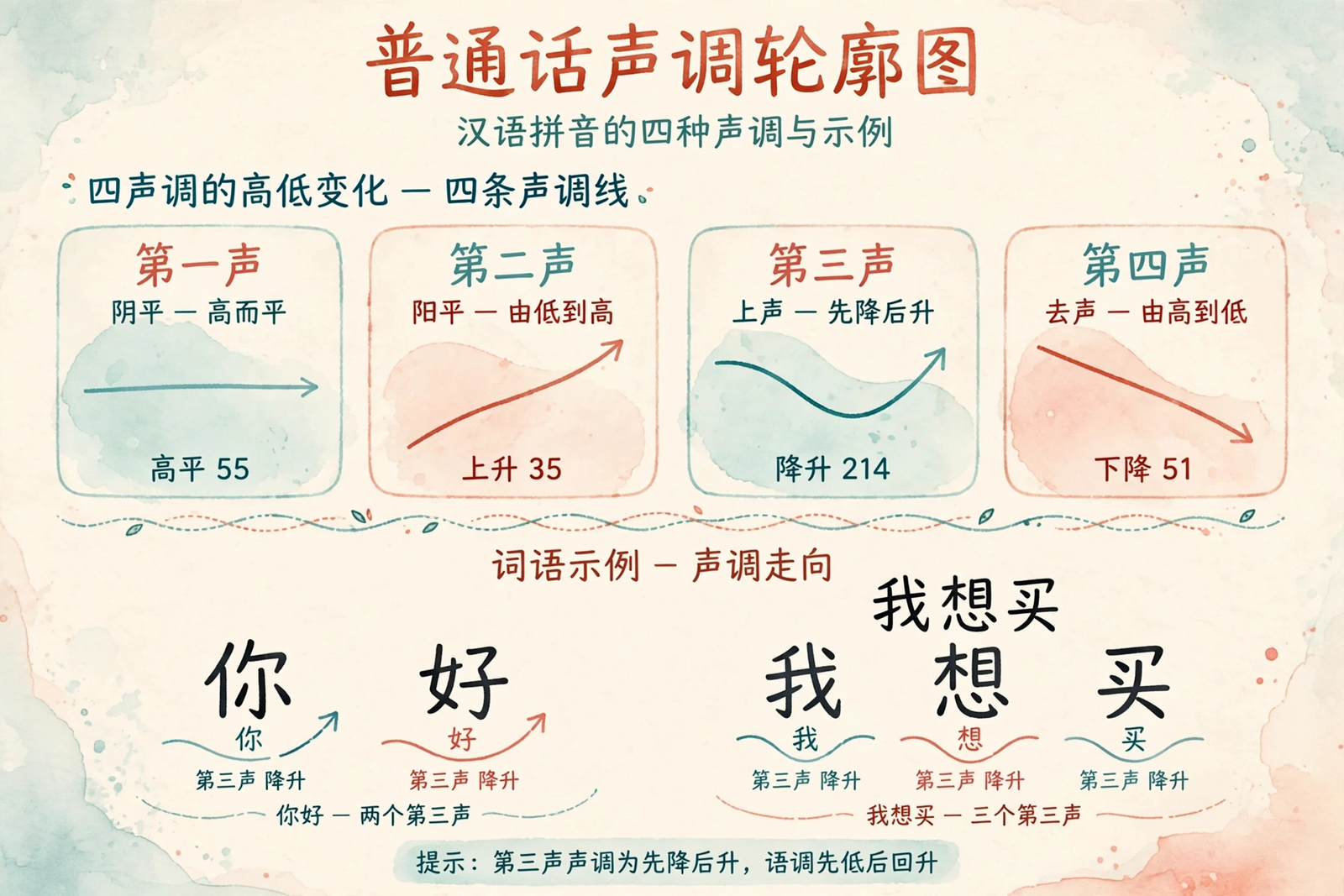
Say 我想买水 out loud — “I want to buy water” — and listen to what your voice actually does. If you pronounce every syllable with a careful falling-rising third tone, wǒ xiǎng mǎi shuǐ, you sound like a robot reading a dictionary. Real speakers say wó xiáng mái shuǐ. Three third tones in a row…
-
The Neutral Tone in Chinese: What It Is and When It Appears

Listen to a native speaker say 妈妈 (māma, mom). Now say it yourself: mā — ma. Did you hear it? The first syllable sings out, high and clear. The second one is barely there — short, soft, almost a whisper. That tiny, unstressed syllable is the neutral tone, and it is hiding in some of…
-
Two Third Tones in a Row: How to Say Them in a Real Sentence
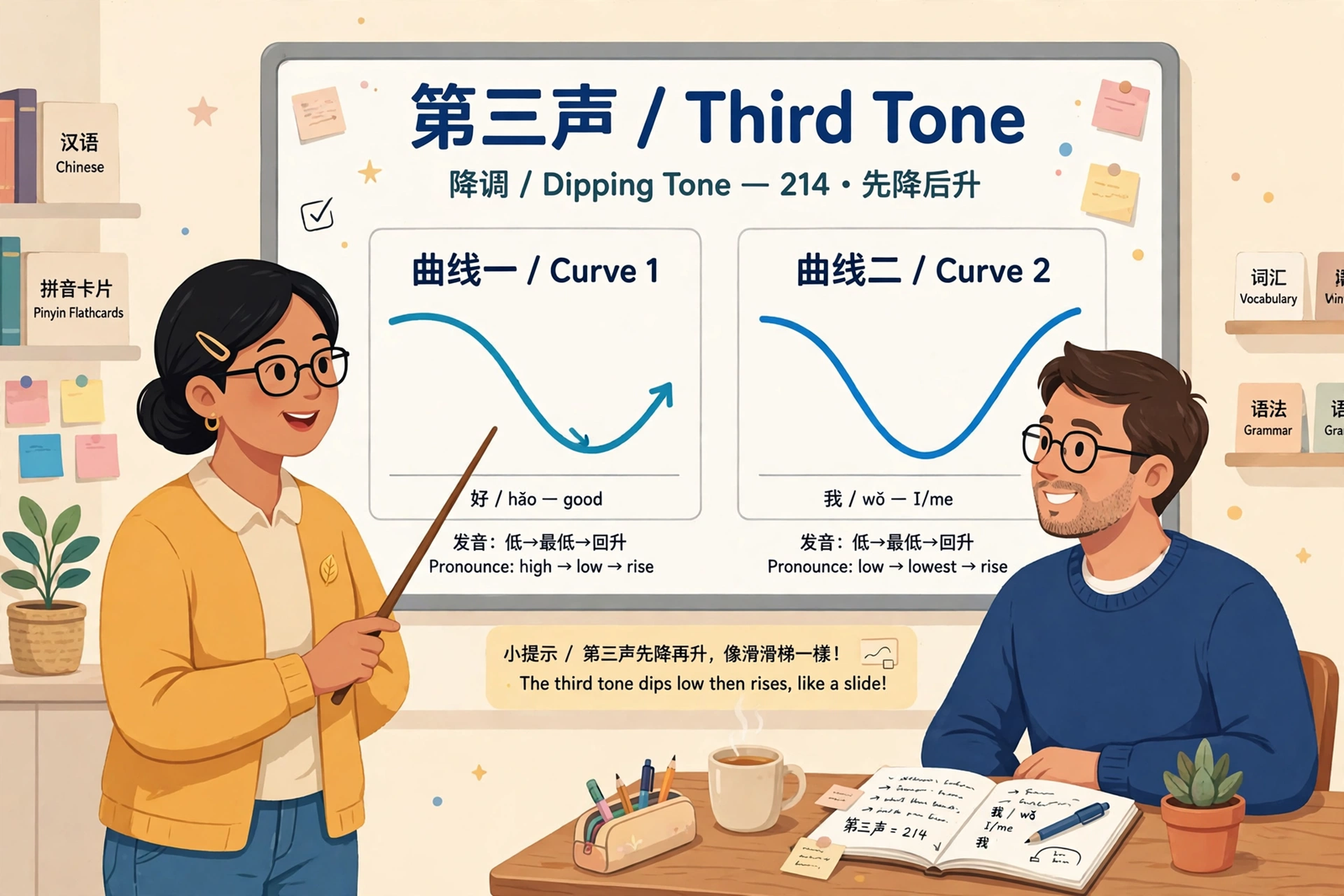
You learned it on day one: 你好 is nǐ hǎo. Two third tones, dip down and up, twice. Then you said it to a real person and something sounded off, or a native speaker said it back and it did not sound like what you practiced at all. What you heard was ní hǎo, and…
-
How 不 (bù) Changes Its Tone Before a Fourth Tone: The Rule, the Sound, and the Practice
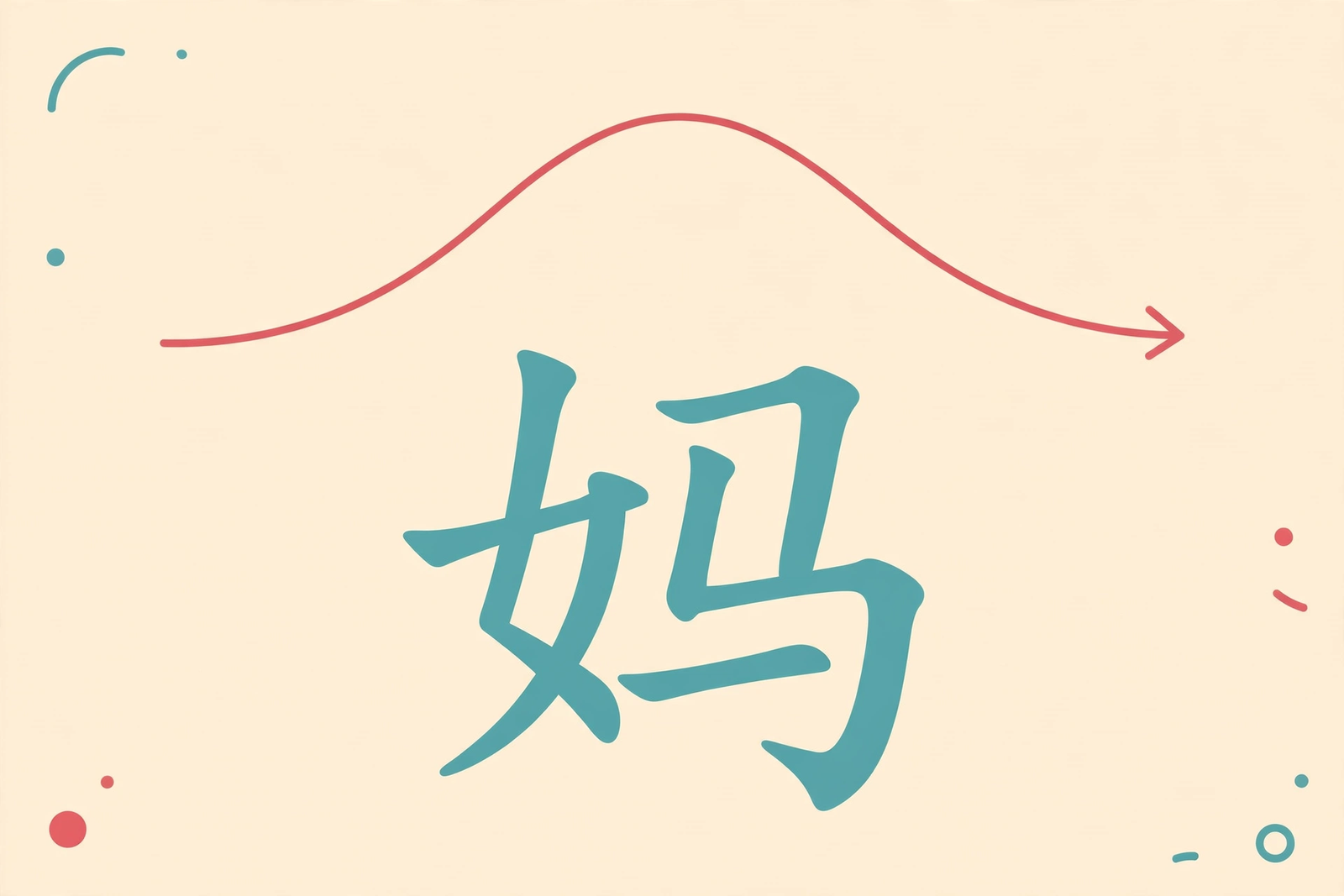
Say 不是 the way your textbook first taught you, bù shì, and a native speaker will still understand you. Say it the way they say it, bú shì, and something small but real changes: you stop sounding like a textbook and start sounding like a person talking. One tiny word, 不, quietly changes its tone…
-
The Fourth Tone in Chinese: How to Drop Your Voice Cleanly and Confidently

Say the word “no” like you mean it. Short, firm, dropping fast. That sound, that little cliff your voice falls off, is the fourth tone in Chinese. It is the easiest tone to hear and one of the easiest to say, and once you can drop your voice cleanly, a whole crowd of everyday words…
-
The 7-Day Chinese Tone Challenge: 10 Minutes a Day to Hear and Say Tones Clearly

Ten minutes a day. Seven days. That is the whole 7-day Chinese tone challenge, and by the end of the week you will hear the difference between 妈 (mā, mother) and 马 (mǎ, horse) without thinking about it, and you will say them right most of the time. No hour-long study sessions, no tone drills…
-
HSK 1 Listening Practice: Food — Hear It, Say It, Test Yourself

You open the HSK 1 listening test, the audio starts, and the speaker says a word you are sure you know — except you are not sure. Was it mǎi or mài? Was that rice or noodles? The sentence is gone before you can decide, and the next one has already started. If that has…
-
“Chinese Tongue Twisters: 10 Fun Lines That Fix Your Tones”

Ten real Chinese tongue twisters that train your tones the fun way — from 四是四 to the lion-eating poet. Say them slow, then fast, and hear the difference.
-
The Third Tone in Chinese: How to Read It When It Stands Alone

You say “你好” and Chinese listeners hear “ní háo” and nod approvingly, but say “我很好” and they frown? Or do you read the third tone with a really heavy “down-and-up” every time, sounding very… textbook? The problem comes down to one small secret: the third tone in Chinese is not always read the same way.…
-
Tone 2 in Chinese: How to Rise in Pitch Without Overdoing It

Have you ever said “mua” (buy) and had the listener think you said “bán” (sell)? In Chinese, rise in pitch just slightly wrong and the meaning changes completely. Tone 2 — the rising tone — is the tone Vietnamese learners overdo the most: assuming the higher you rise, the more correct it is, when in…